Wild Orchids in Europe: Where, When and How to See Them
Plan a trip to see wild orchids in Europe: how to choose a region and habitat, time your visit, and photograph them without harming them.
Last updated November 2026. Wild orchids Europe-wide grow in grassland, woodland, dunes and mountains, mostly in spring and early summer. Planning depends on region and habitat rather than one orchid season. This guide helps you pick a region, time the trip and see the flowers without harming them, and it fits into our wider European wildflower trip planning.
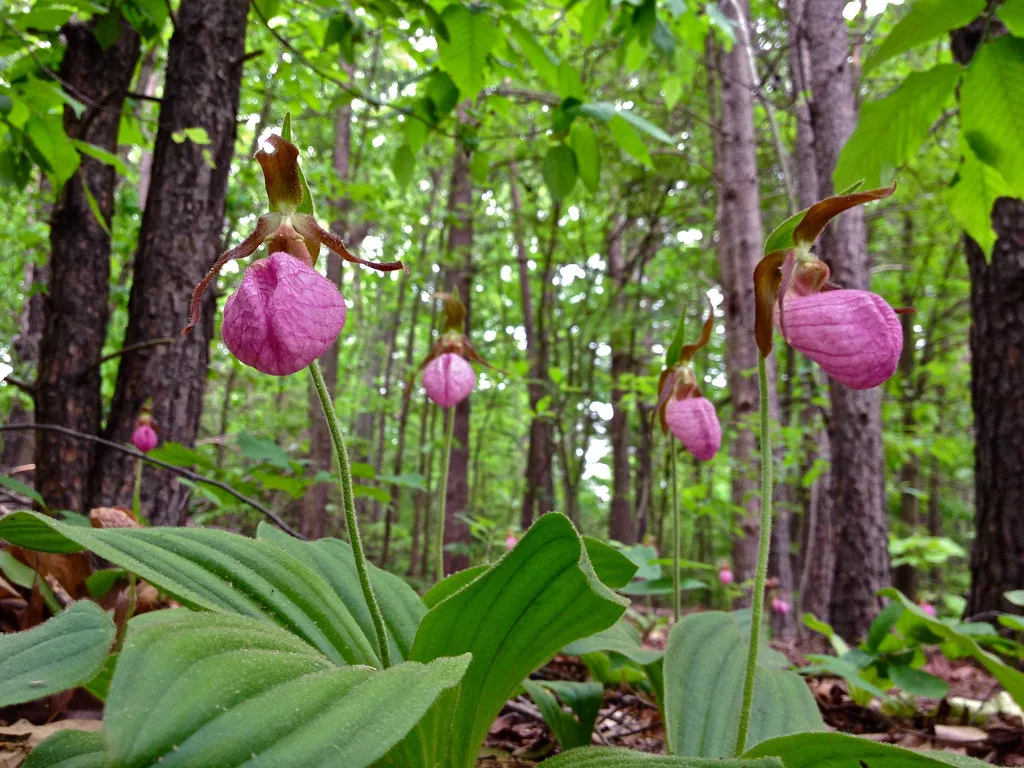
Featured image: LauraFlohrReynolds, CC BY-SA 2.0, via Flickr.

Quick answer: where and when to see wild orchids in Europe
Look for orchids on chalk and limestone grassland, in open woodland, in alpine meadows, on coastal dunes and in Mediterranean scrub. Flowering starts early in the south and at low elevation. It comes later in the mountains and the north. Individual species flower for short spells, so a single date rarely fits every plant. Choose the habitat first, then the region, then the week.
How to choose a region for wild orchids in Europe
Orchids are small and easy to walk past, so a region with open, unimproved ground and protected land works best. The table gives a starting comparison. It stays at habitat and genus level, because exact species lists and dates differ by site and by year. Ask the local reserve or park office for a current species list before you book.
| Region or habitat | What to look for | Season logic | Access and fit |
|---|---|---|---|
| Chalk grassland, Kent and the Chilterns, England | Grassland orchids such as Ophrys and Orchis groups | Spring into early summer; a mid-season spread | Public reserves and footpaths; suits casual walkers |
| Limestone pavement and grassland, the Burren, Ireland | Grassland orchids alongside other limestone flora | Spring and early summer | Walking country; check the geopark for guided options |
| Apennine highlands, Castelluccio area, Italy | Open mountain meadow flora; ask park staff about orchids | Later than the lowlands, as altitude delays flowering | Park rules apply; suits photographers |
| Dolomites and alpine meadows | Mountain meadow orchids among other alpine flowers | Late, once snow has gone | Trail-based; needs mountain weather planning |
| Picos de Europa, Spain | Meadow and woodland flowers; confirm orchids locally | Spring at low levels, later higher up | Rural trailheads; a car helps |
| Crete and Mediterranean scrub | Early Mediterranean orchids, including Ophrys | Early, before summer heat | Open scrub paths; suits botanists |
| Midi-Pyrénées, southwest France | Ophrys, Orchis, Anacamptis, Dactylorhiza and bird's-nest orchid | Spring; woodland species follow grassland ones | Field walks; suits photographers and botanists |
Match orchids to habitat
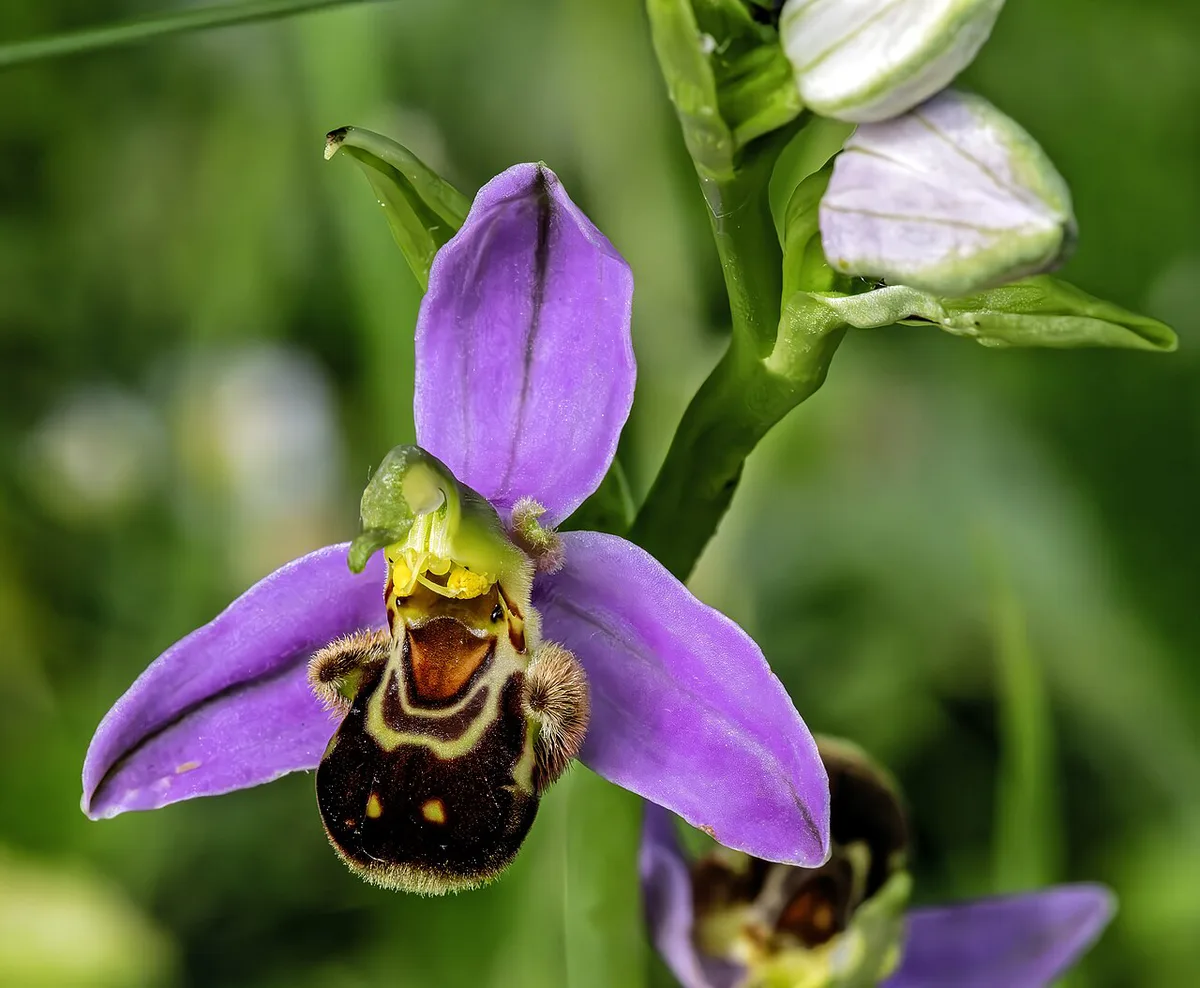
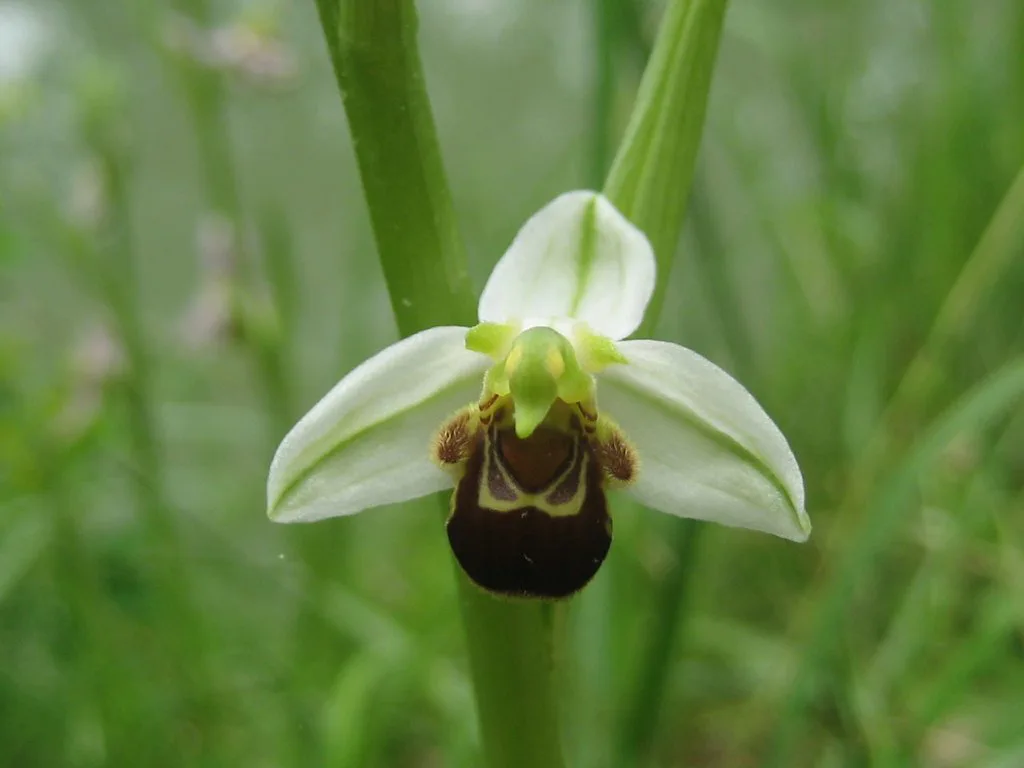
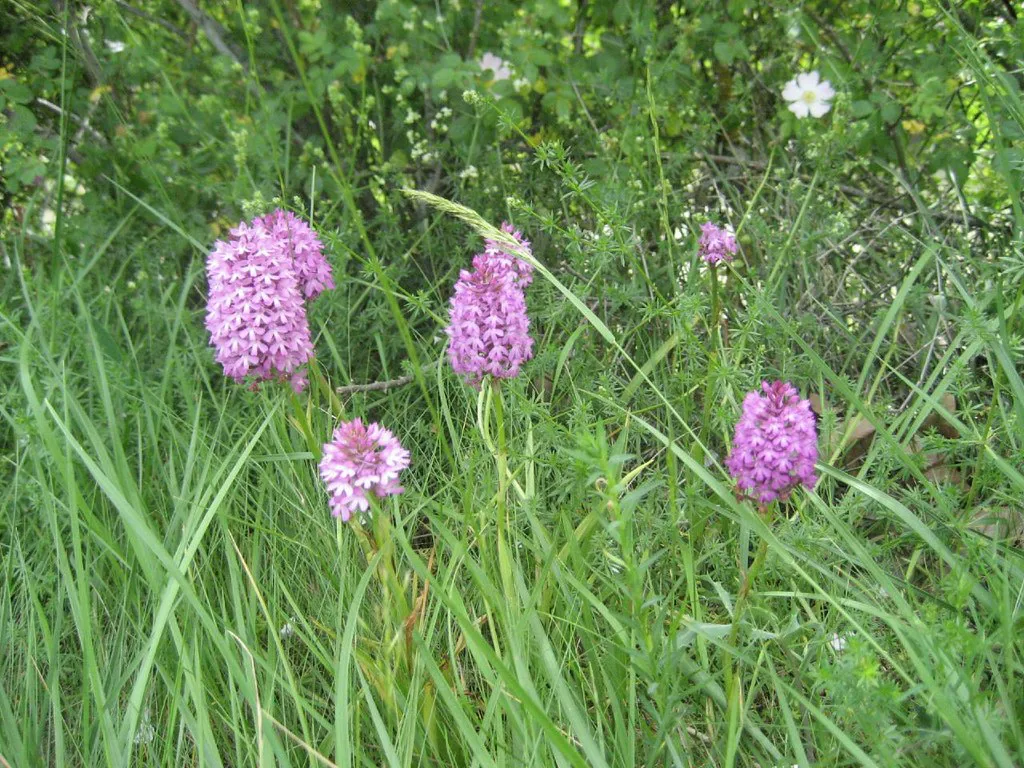
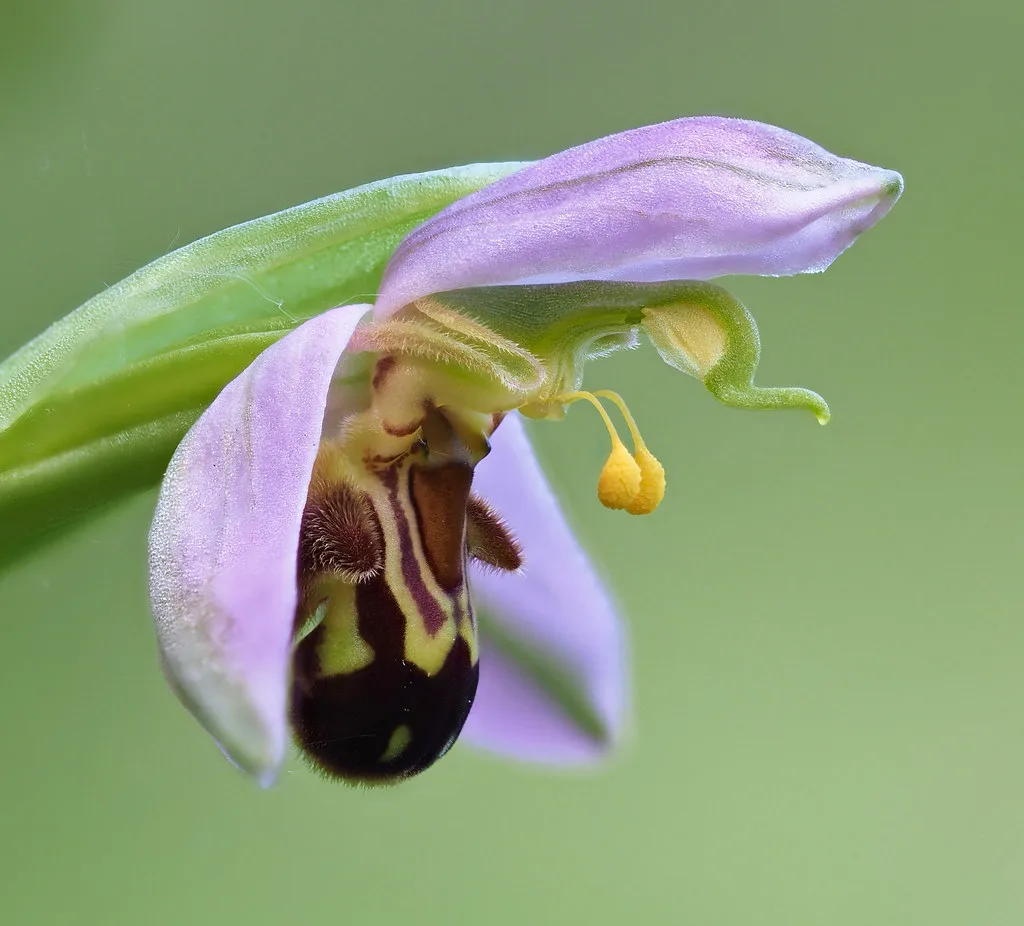
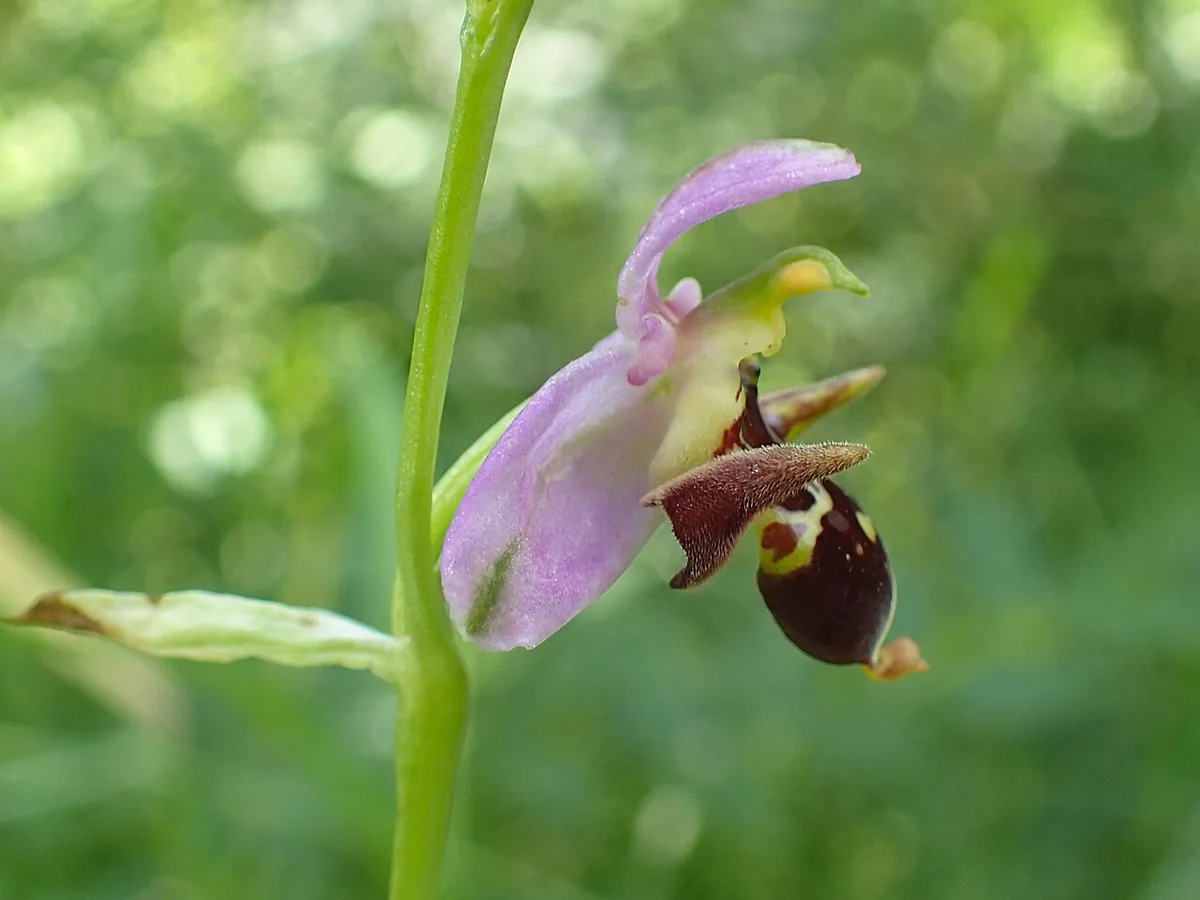
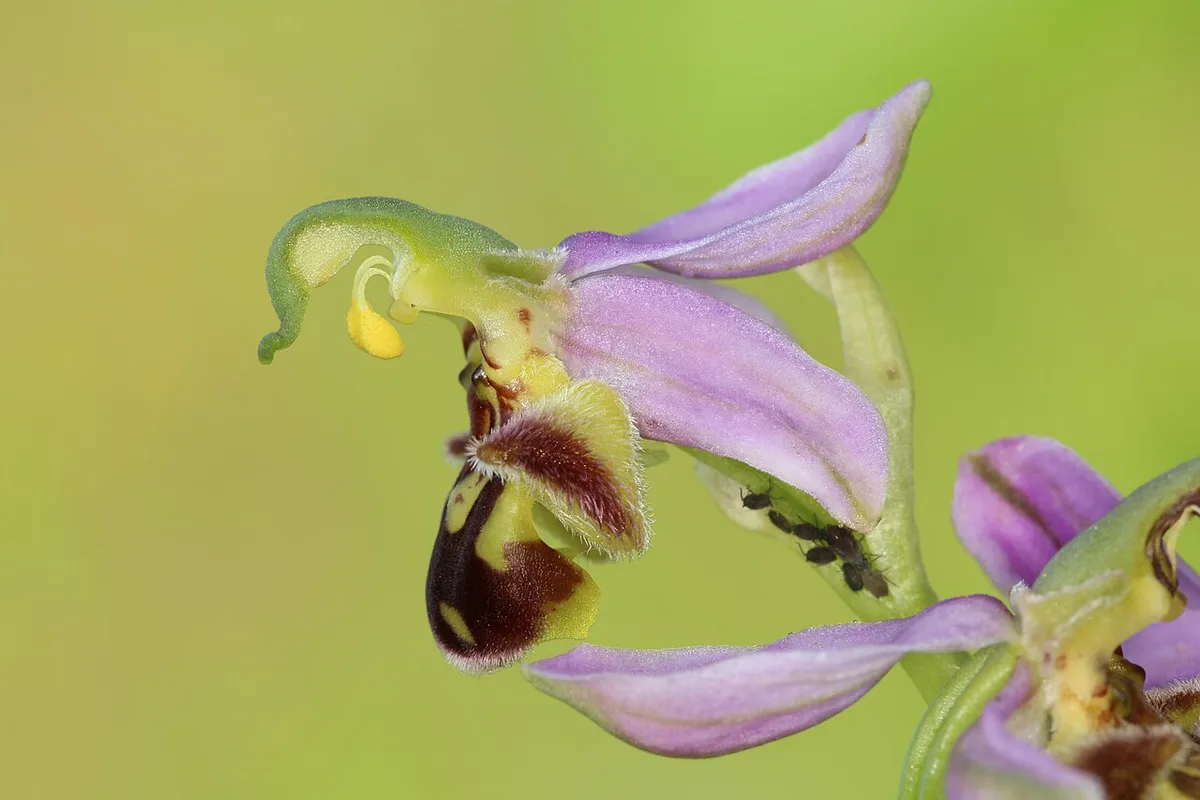
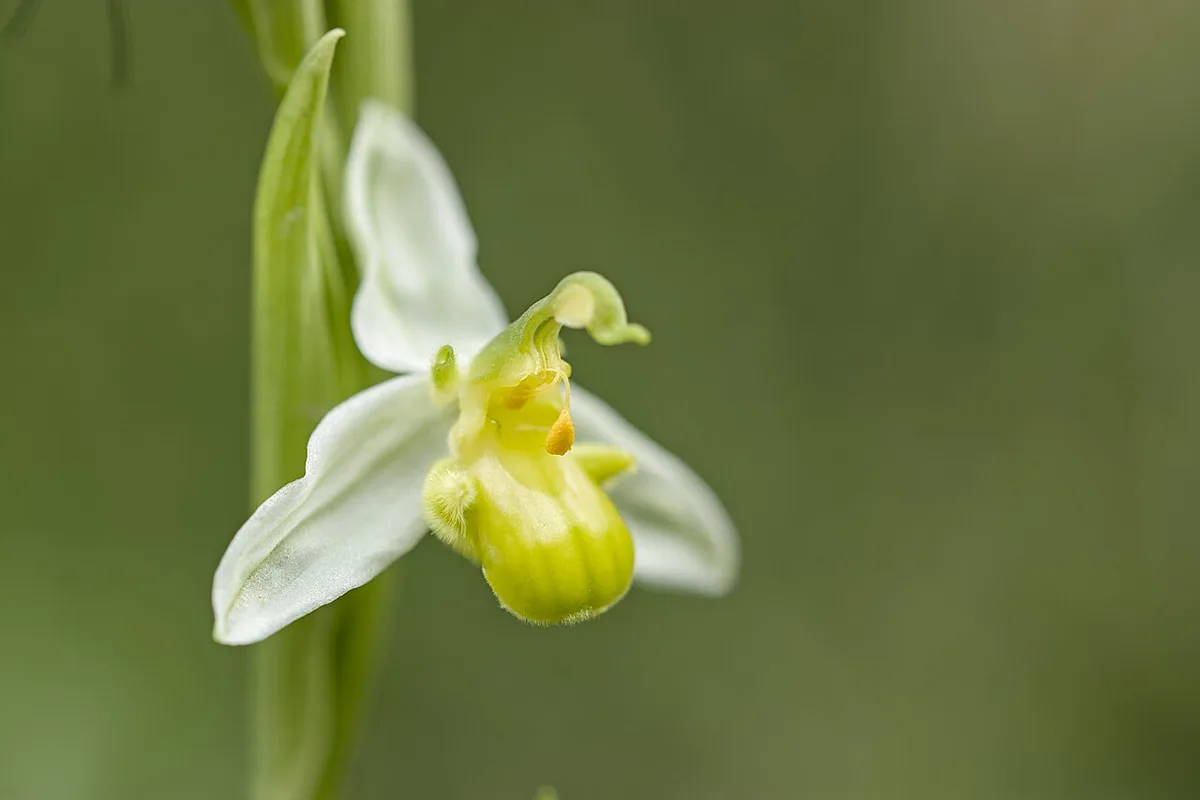
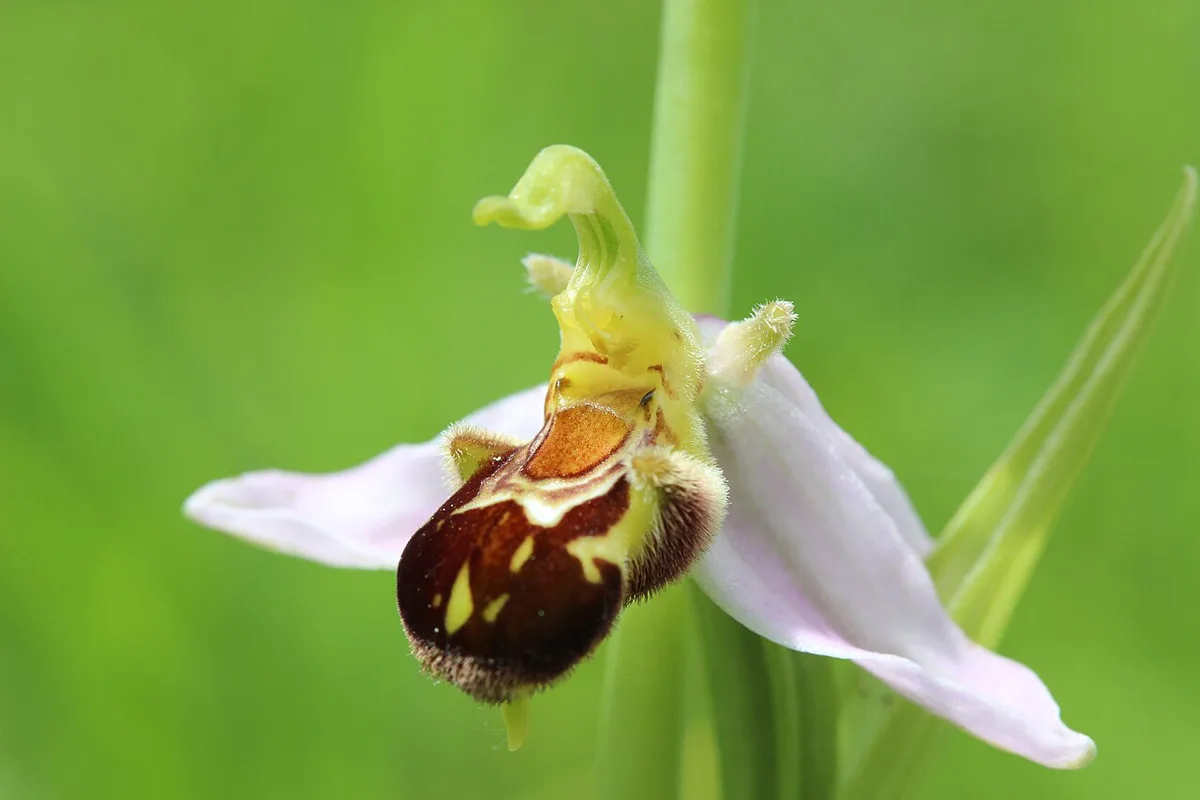
Dry chalk and limestone grassland is home to Ophrys and Orchis species, with their insect-like and helmet-shaped flowers. Damper meadows suit Dactylorhiza and Anacamptis species. Woodland shade holds the brown bird's-nest orchid, Neottia nidus-avis, which has no green colour and is easy to mistake for dead stalks.
- Grassland and scrub: look for Ophrys and Orchis, including Ophrys insectifera and Orchis militaris.
- Damp meadow: look for Dactylorhiza and Anacamptis morio.
- Woodland: look for bird's-nest orchid and common twayblade.
- Alpine meadow: pair your walk with alpine flower routes and Dolomites Wildflowers: When and Where to See Them.
- Coastal grassland: Machair Wildflowers: What It Is and Where to See It show how dune grassland flowers.
Timing and trip planning
Sequence the trip from south and low ground to north and high ground. A Mediterranean island such as Crete comes first, and Crete Wildflowers: When and Where to See Them covers that early window. Lowland chalk grassland follows, and mountain meadows come last. Weather can shift every stage by days or weeks. Early bulbs such as Crocus Fields in Europe: Where and When to See Them make a useful warm-up before the orchid weeks begin. Build in spare days and visit more than one site, so a short flowering gap does not ruin the trip.
Typical flowering windows for European orchids by month
Dates shift with altitude, latitude and each year's weather, so treat this as a planning frame and confirm with the reserve or park office before you travel. It follows the south-to-north, low-to-high order described above.
| Period | Where to look | Orchids you may meet |
|---|---|---|
| Late February to April | Crete, Mediterranean scrub and coastal garrigue | Early Ophrys species and other Mediterranean orchids |
| April to May | Lowland chalk and limestone grassland, open woodland edges | Early purple orchid, green-winged orchid (Anacamptis morio), early Ophrys |
| May to June | Chalk downs, damp meadows, deciduous woods | Fly orchid, military orchid (Orchis militaris), Dactylorhiza species, common twayblade |
| June to July | Alpine and Apennine meadows, upland grassland | Mountain meadow orchids, late Dactylorhiza, bird's-nest orchid in shaded woods |
Flowering is short. An individual species may be in bloom for only two to three weeks at one site. Plan two or three nearby locations at different altitudes, so you can move up or down the slope as the season advances.
Check recent sightings. A reserve's own news page or a local wildlife trust's recent reports are more reliable than last year's trip report. A cold spring can hold flowering back by a couple of weeks.
Access, costs and logistics
Most orchid sites are public land or nature reserves with no ticket and no opening hours. What varies is the rules. Protected areas may restrict paths, dogs or group sizes. The Burren and Cliffs of Moher Geopark site is the place to check for the Burren. The Monti Sibillini national park site covers the Apennine highlands.
- Self-guided or guided: a local guide helps you find small species and keeps visitors on paths.
- Car or public transport: rural trailheads often have limited service, so check before you commit.
- Base town: pick one near several habitats so you can chase the best weather.
Mistakes to avoid
Most failed orchid trips come from a short list of errors.
- Picking flowers or digging up plants.
- Trampling rosettes and small non-flowering plants near the flower.
- Going too early or too late for the habitat.
- Assuming one region suits every species.
- Trusting social-media pins for locations.
- Chasing unverified rare finds instead of known reserves.
See them responsibly: photography and ethics
Try three photographs: the habitat, the whole plant and a single flower. Move the camera rather than bending the flower. Leave surrounding vegetation in place. Stay on paths, because nearby plants may be small or not yet flowering. Many orchids are legally protected, and picking or trade rules differ by country, so read the local reserve rules before you go.
Why orchids are different
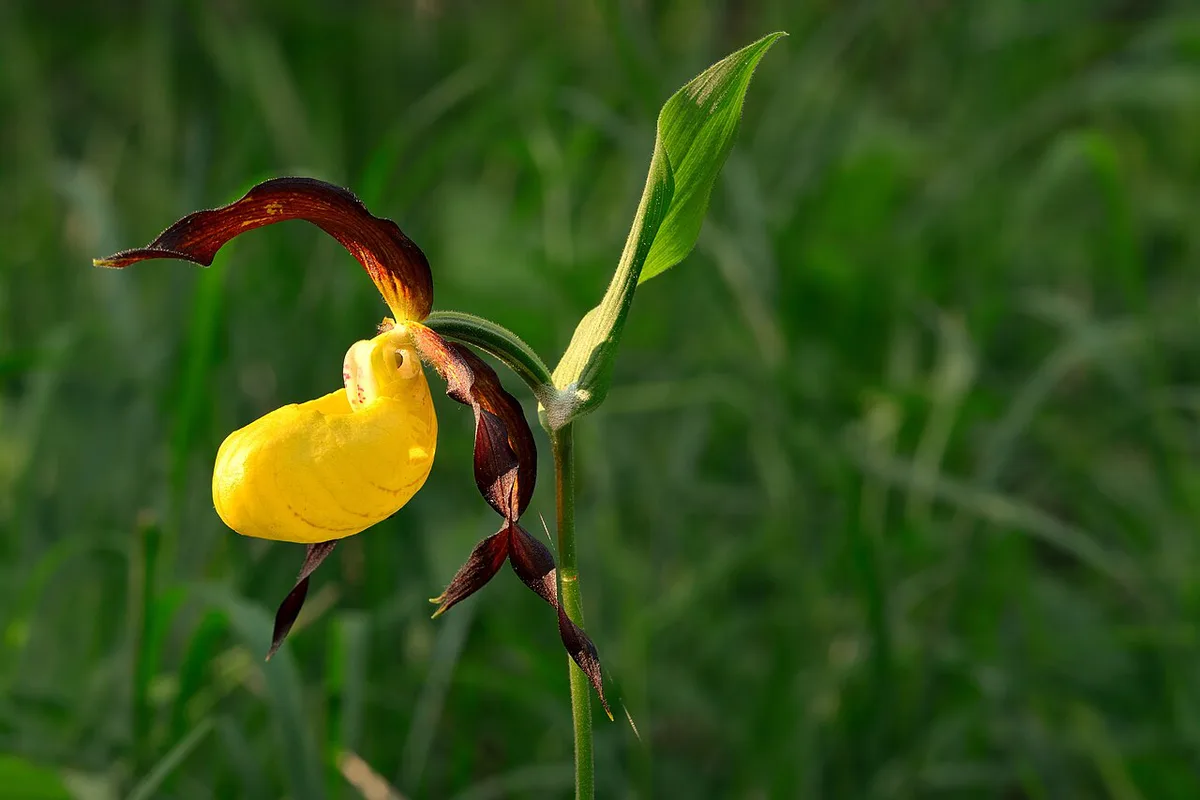
Some Ophrys flowers attract male insects with scent and shape that mimic a female, a strategy called sexual deception. Bird's-nest orchid feeds through fungi at its roots, which is called mycoheterotrophy. Even green orchids depend on a compatible fungus in the seed stage. That is one reason a single trampled patch matters.
Combine orchids with other flower trips
Orchids are subtle, so they pair well with showier trips. Southwest France works with Poppy Fields in France: Where and When to See Them for open-field colour. Italy pairs well with Castelluccio Flowering: When to Go and What You'll See and Poppy Fields in Italy: Where and When to See Them. Mountain trips fit with Picos de Europa Flowers: When and Where to See Wildflowers. Choose the trip style that suits you: casual walkers do well on reserve footpaths, photographers on a slow single site, and botanists on a guided regional circuit.
Orchids in autumn and winter: what to do off-season
Wild European orchids are dormant or underground from late summer through winter, so a November or January trip will not find flowers in the field. Some travellers still want an orchid-themed visit in the quiet months. Three options work.
- Visit a glasshouse collection. Many botanic gardens keep tropical orchid houses that flower through winter. Our guide to botanical gardens in Europe helps you choose a garden with heated houses worth the journey.
- Scout for next spring. Autumn and winter are good for walking a chalk or limestone site and noting its aspect, paths and parking. Some orchid species leave basal leaf rosettes over winter, but those are hard to identify and easy to trample, so stay on paths.
- Pair orchids with a winter garden trip. If you are travelling in the cold months anyway, gardens in Europe in winter covers what is still worth seeing.
Use the off-season to book accommodation near your chosen reserve for April to June. Rural base towns with few rooms tend to fill during the main wildflower weeks.
Frequently Asked Questions
Can orchids be found in the wild?
Yes. Many orchid species grow wild across Europe, in grassland, woodland, dunes and mountains. They are small and often protected, so look without picking or digging.
What do orchids look like?
European orchids are usually small. Many have a distinctive lip petal, called the labellum, and Ophrys flowers can resemble an insect. Bird's-nest orchid is brown and leafless.
Bloom-season notes
Optional updates when we add or revise garden guides.
Continue reading
Guides on the same trip