Bluebells in Europe: Where & When to See Them
Where to see bluebells in Europe, from the UK to Belgium, France and Germany. Timing, English vs Spanish ID, and woodland etiquette.
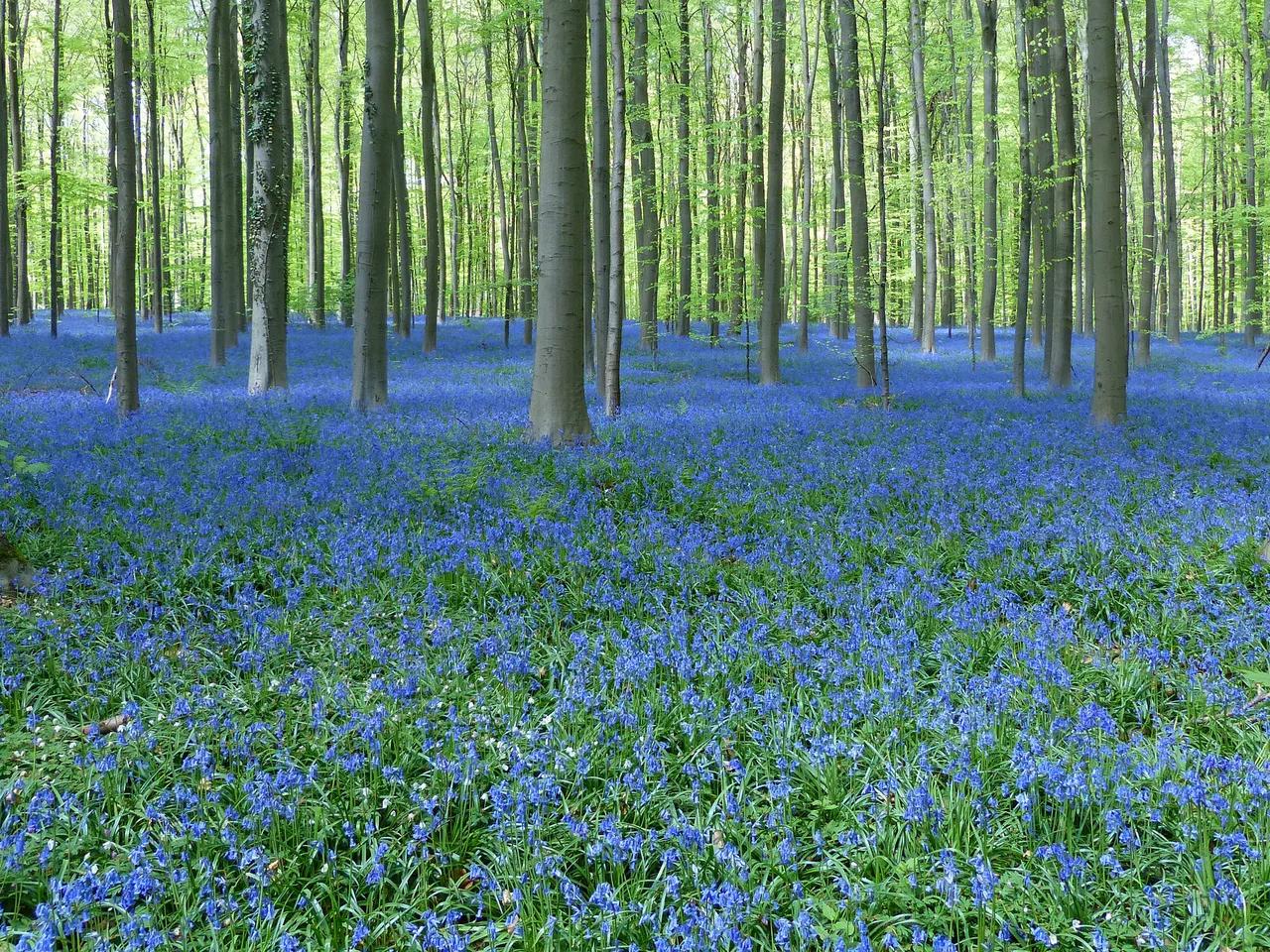
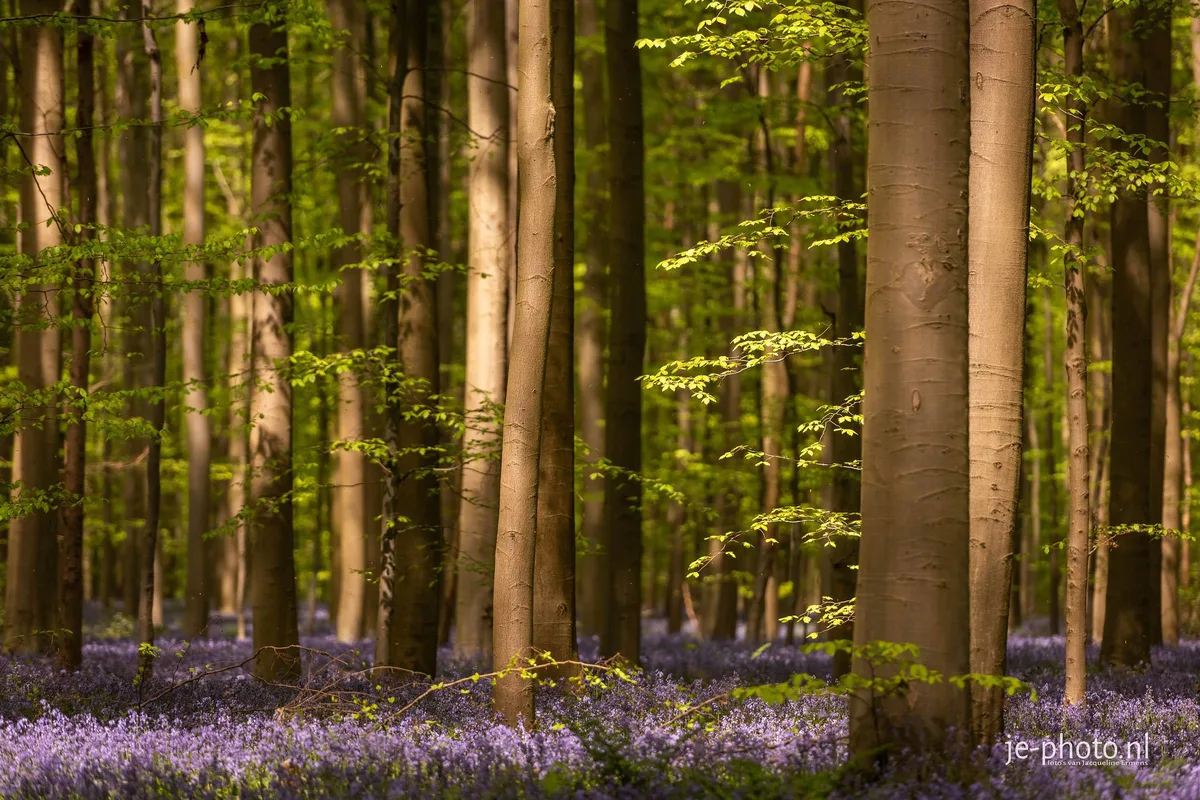
Last updated November 2026: bluebells in Europe are an Atlantic-west plant, and Britain and Ireland hold the densest woods. Peak flowering runs from mid-April to late May, and Belgium's Hallerbos is the best-known continental carpet. We compare each country below, with timing, access and the habits that keep the bulbs alive.
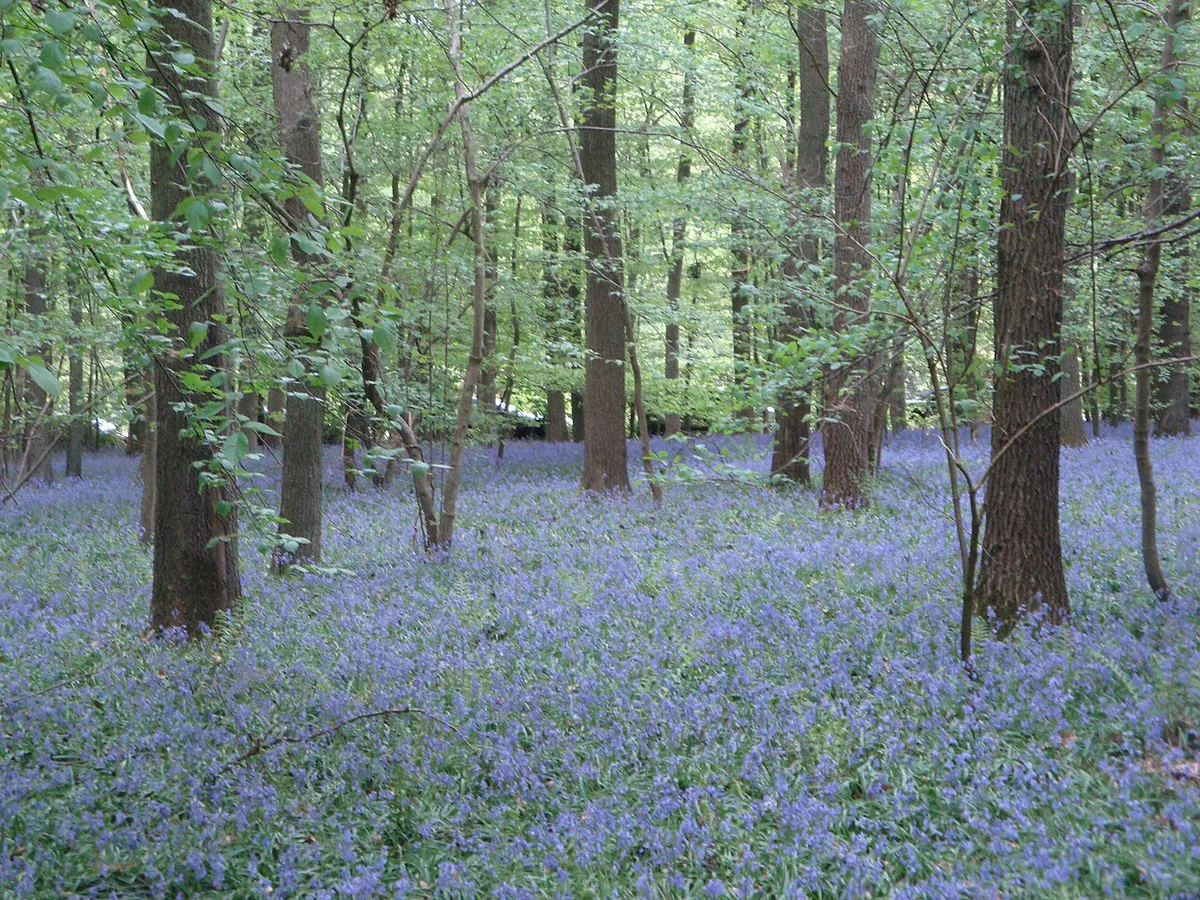
Featured image: Luc.T, Public Domain Mark 1.0, via Flickr.
Where Can You See Bluebells in Europe?
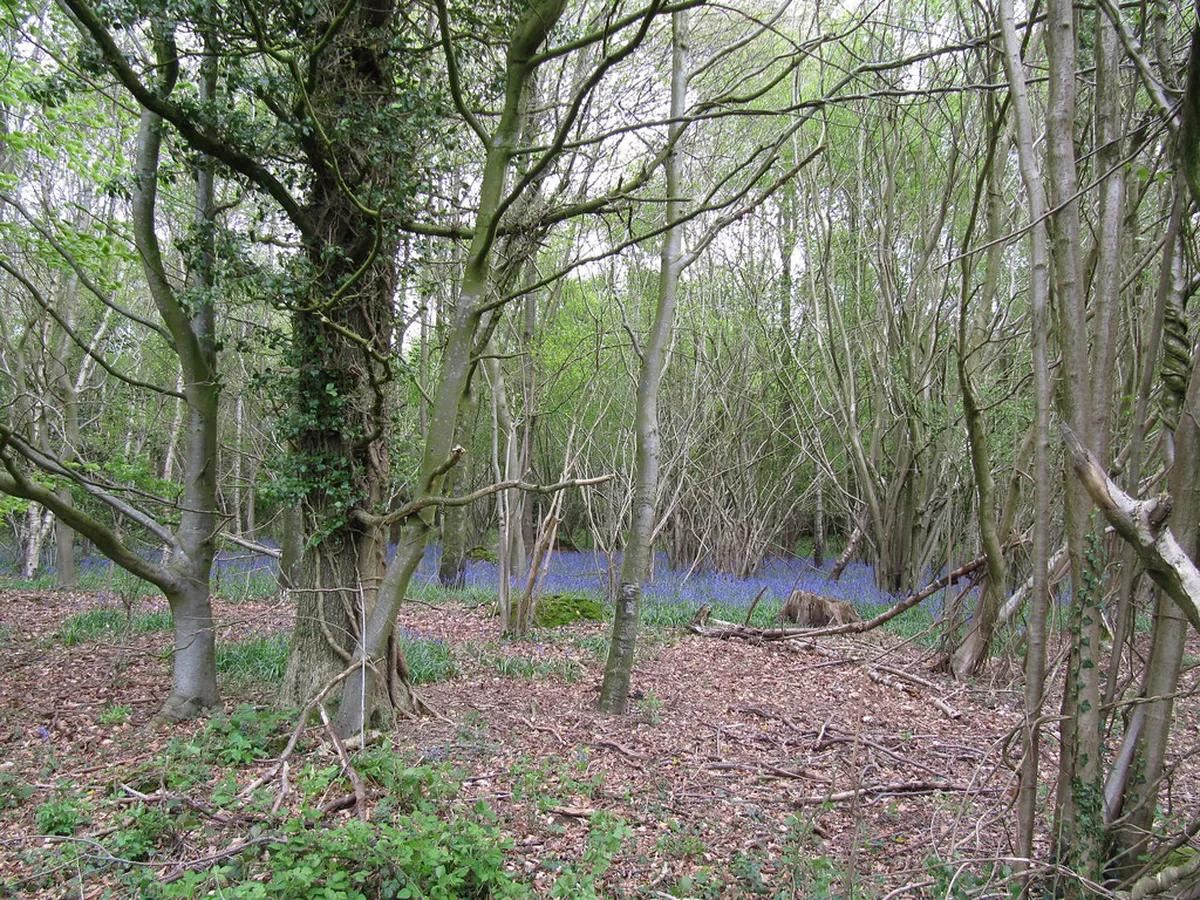
The common bluebell (Hyacinthoides non-scripta) is native to Atlantic Europe. Its range runs from north-western Spain and Portugal through France, Belgium and the Netherlands to Great Britain and Ireland. Britain and Ireland hold the densest woods, and the Woodland Trust describes the UK as a species stronghold. Continental carpets exist, but they are smaller and more scattered. Our quick picks follow, and each one is expanded in the sections below.
- Densest woods and most choice: England, Wales and Scotland, from mid-April to late May.
- Best-known continental forest: Hallerbos near Halle, Belgium.
- Earliest flowers: the south and west of the range, including Iberia and western France.
- Smallest stands, with the strictest etiquette: nature reserves in western Germany.
Country-by-Country Guide: Where Bluebells Grow
Peak weeks move every year, so treat the windows below as typical rather than fixed. Local conditions decide the real dates.
| Country or region | Typical peak window | Landscape | Access and protection | Best for |
|---|---|---|---|---|
| UK and Ireland | Mid-April to late May | Ancient broadleaf woods, hedgerows, coastal slopes | Protected in the UK; not protected in the Republic of Ireland or the Isle of Man | Density and choice |
| Belgium (Hallerbos) | Spring; check recent local reports | Large beech forest near Halle | Wallonia protects the species; check the forest's official page for visitor rules | A continental day trip |
| France and the Netherlands | Spring; earlier in the south and west | Woodland and hedgerows; France is mostly northern | Protected in some French départements, not nationally | Combining with a wider road trip |
| Iberia | Usually earlier than northern Europe | Atlantic north-west of Spain and Portugal | Wild populations at the south-west edge of the range | Early-season flowers |
| Germany | April and May | Small stands inside nature reserves | Reserve rules apply; stay on paths | Quiet photography with strict etiquette |
- UK and Ireland: estimates put 25–50% of all common bluebells in Britain and Ireland, and sources differ on the exact share. Our guide to bluebell woods covers the best-known sites. The species is protected in the UK but not in the Republic of Ireland.
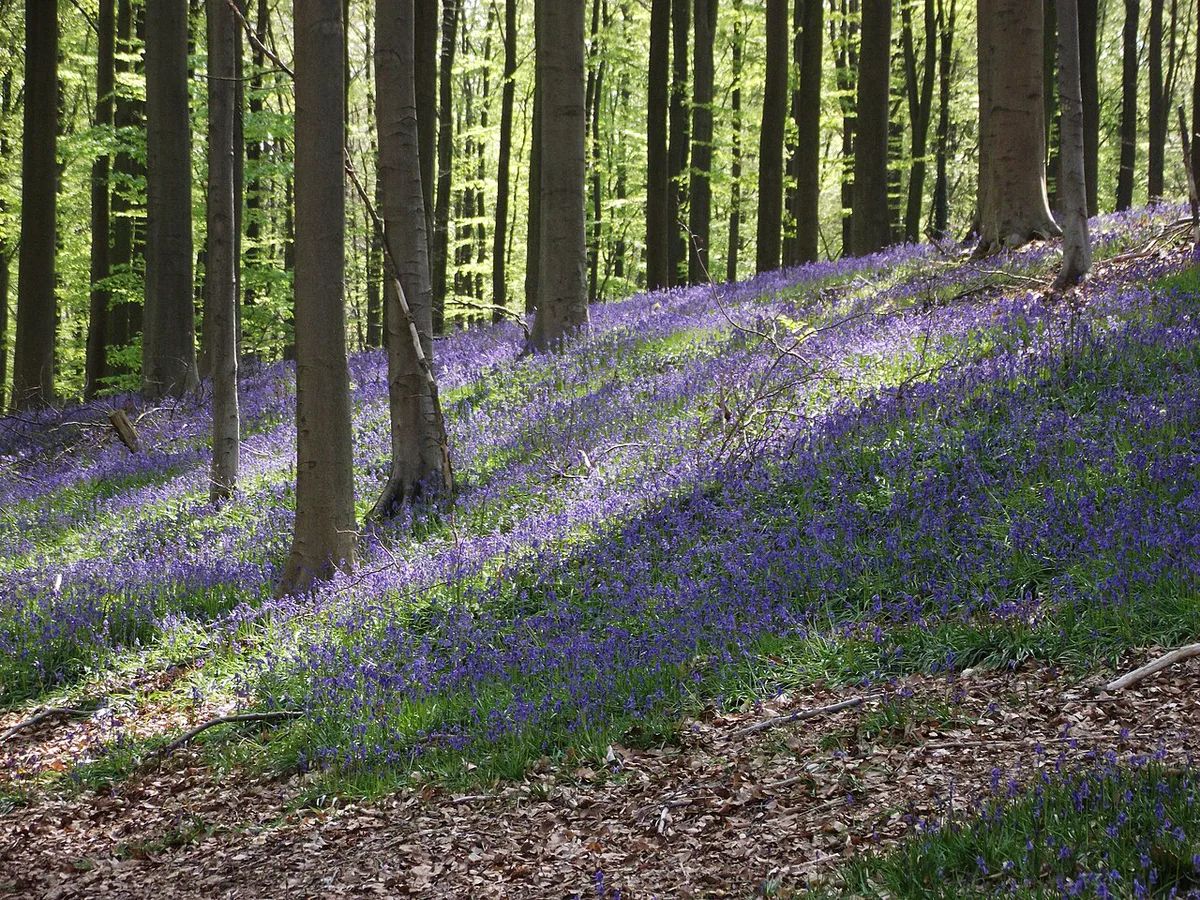
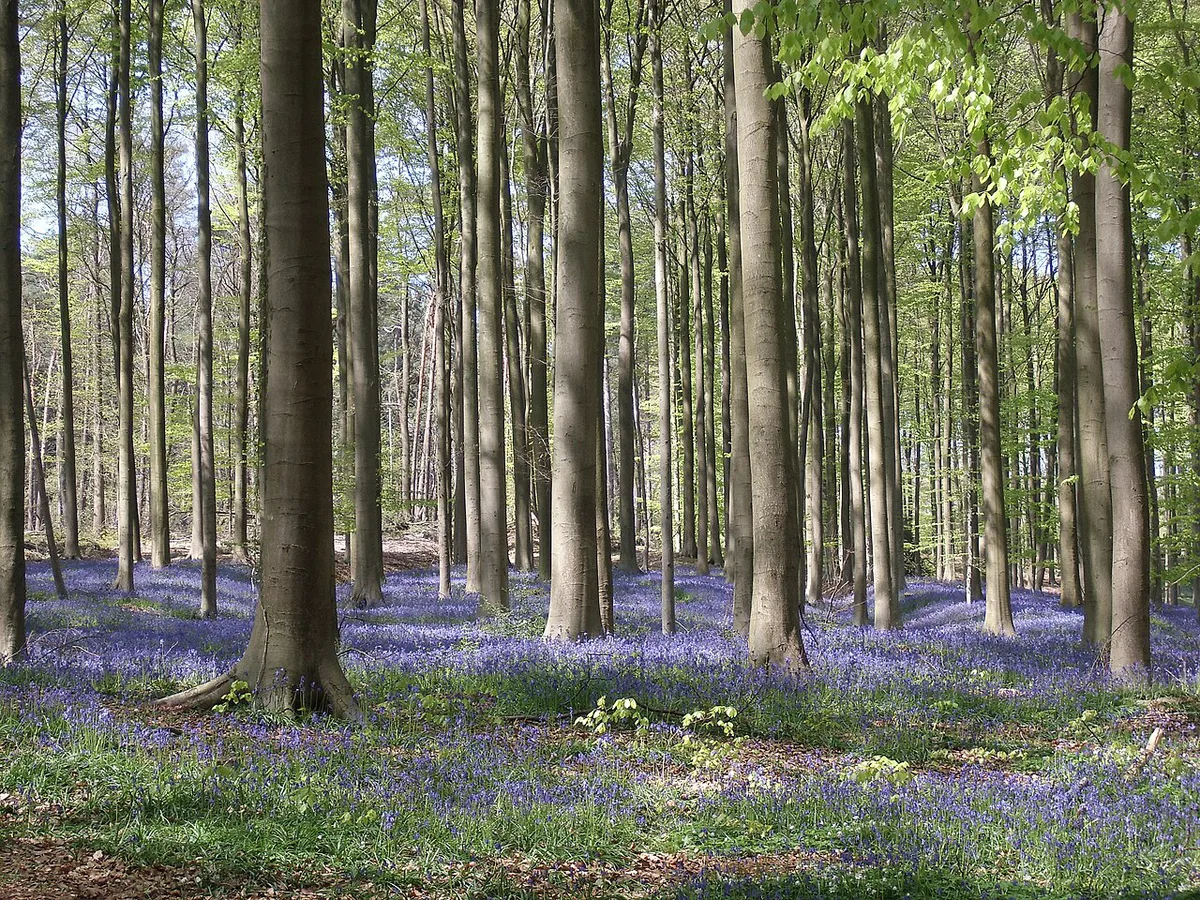
- Belgium: Hallerbos is the continental name most visitors know. Visit Flanders covers Hallerbos and the town of Halle. The species is protected in Wallonia.
- France and the Netherlands: the plant is native to both, though in France it is largely confined to the northern half. It has no national protection in France, but many départements near the edge of its range protect it.
- Iberia: the Atlantic north-west of Spain and Portugal marks the south-western edge of the native range. Within Iberia, the river Duero separates the native bluebell from its Spanish cousin.
- Germany: bluebells are naturalised there, and sources conflict on its status. Known occurrences sit in nature reserves, mainly in North Rhine-Westphalia and Lower Saxony. Stands are smaller than Hallerbos or the English woods.
When to Go: Timing by Latitude and Weather
The Woodland Trust gives the flowering season as mid-April to late May. That is a window of about six weeks. Bluebells flower before the tree canopy closes, which is why the display peaks in a narrow stretch of late spring. The south and west flower earlier. Northern and eastern sites run later. A cold or warm spring can shift the peak by weeks. Our full bluebell timing guide tracks the pattern year by year. Before booking travel, read recent local reports from the site you plan to visit. Weekday and early-morning visits also mean fewer crowds on narrow paths.
Best Bluebell Trips by Traveller Type
Most travellers fit one of five profiles. Pick the trip that matches your time, transport and tolerance for crowds.
| Traveller | Start with | Time needed | Cost level | Access trade-off |
|---|---|---|---|---|
| First-timer | An English ancient wood | Half a day | Low | Easy by car or train from many towns |
| Photographer | Early morning at a quiet reserve | Several short visits | Low to moderate | Strict path rules; low light at dawn |
| Short UK break | A regional cluster of woods | Two to three days | Moderate | Needs a car in many rural areas |
| Belgium day trip | Hallerbos near Halle | One long day | Moderate | Check the forest's official page for entry and parking |
| Family | A woodland with wide, flat paths | Half a day | Low | Stay on paths and keep children out of the flowers |
- First-timers: we'd start in England, where woods are plentiful and the season is long.
- Photographers: arrive early, use low angles from the path, and avoid the busiest weekends.
- Belgium day trip: Hallerbos works best when you check recent bloom reports first.
How to Tell English, Spanish and Hybrid Bluebells Apart
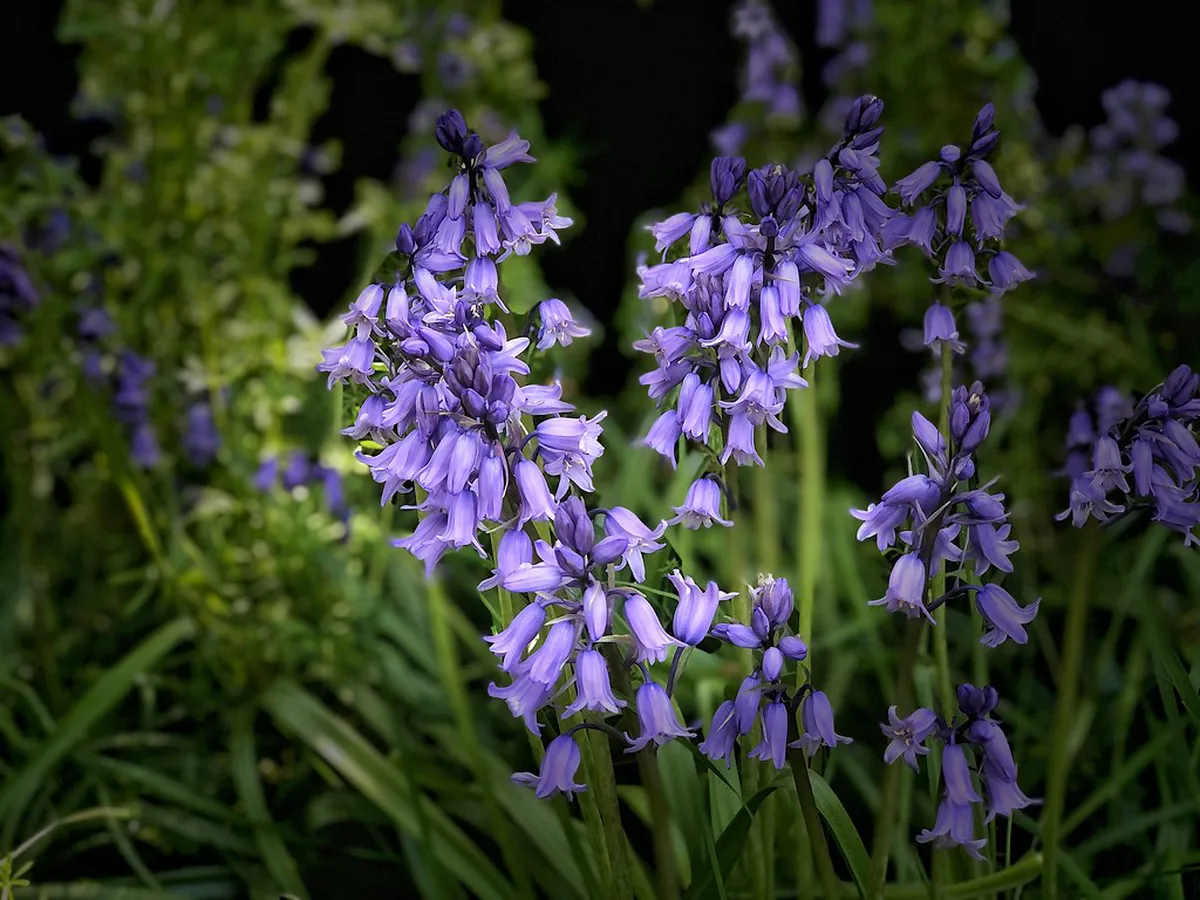
Spanish bluebells (Hyacinthoides hispanica) were introduced to Britain and Ireland as garden plants. They hybridise readily with the native species, and the offspring are called Hyacinthoides × massartiana. A native stem carries about 5–12 flowers on one side. The leaves are about 1.5 cm wide, against about 3 cm for Spanish leaves. Our English and Spanish bluebell comparison goes deeper. In Scotland, the word bluebell often means the harebell (Campanula rotundifolia), a different plant. That causes real confusion for travellers there.
| Feature | English bluebell | Spanish bluebell | Hybrid |
|---|---|---|---|
| Stem | Arching, flowers on one side | Upright, flowers all round | Often in between |
| Flower colour | Deep violet-blue | Paler blue; also pink and white | Often in between |
| Pollen | Cream | Blue or pale green | Mixed features |
| Leaf width | About 1.5 cm | About 3 cm | In between |
| Scent | Sweet | Little or none | Variable |
Bluebell Woods and Walks in Britain
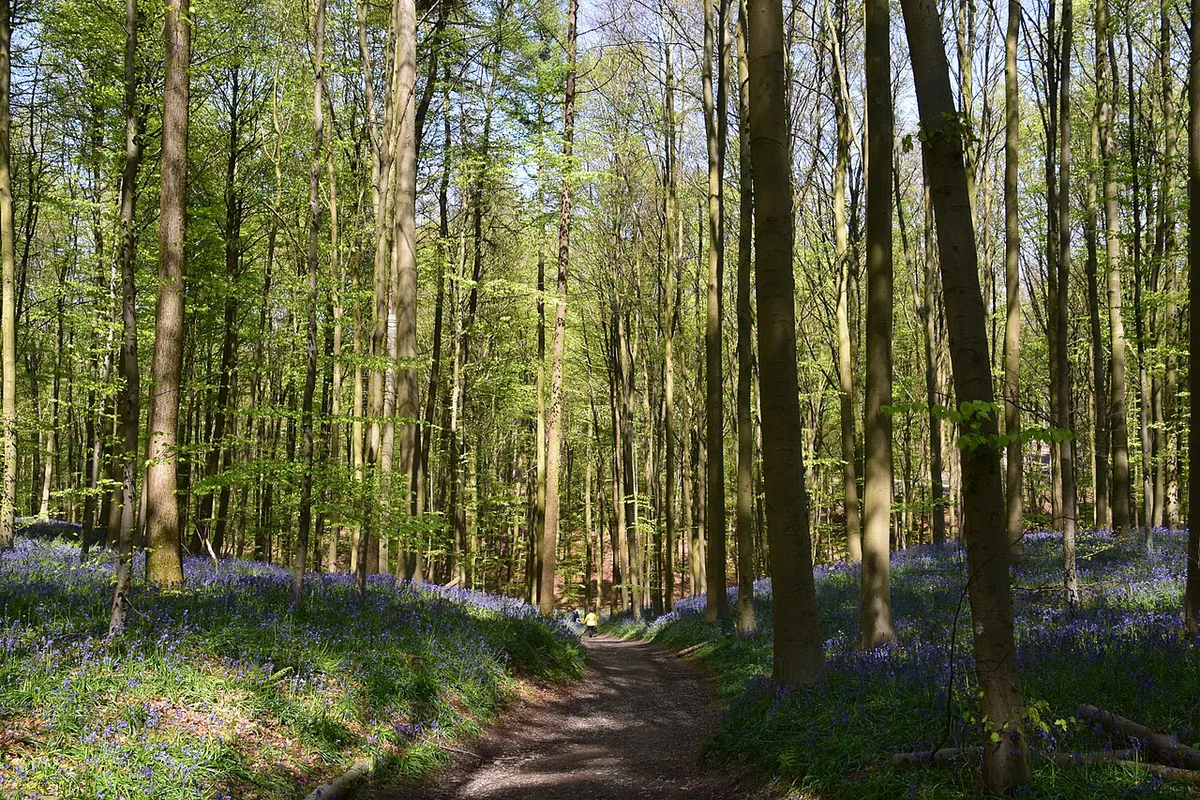
Britain is the easiest place to build a trip around bluebells. Our main bluebell woods hub collects the best-known sites. For a city break, start with the woods within reach of London. In the south-east, see our guides to Kent bluebell woods. Sussex has its own set of Bluebell Woods in Sussex: Best Places, Timing & Access. For rural walking, try the Cotswolds bluebell walks. In the north, our page on Bluebells in Scotland: Where, When & What to Look For explains the naming quirk and where native flowers grow. The National Trust lists places to see bluebells across its own sites.
Visiting Responsibly: Rules, Etiquette and Photography
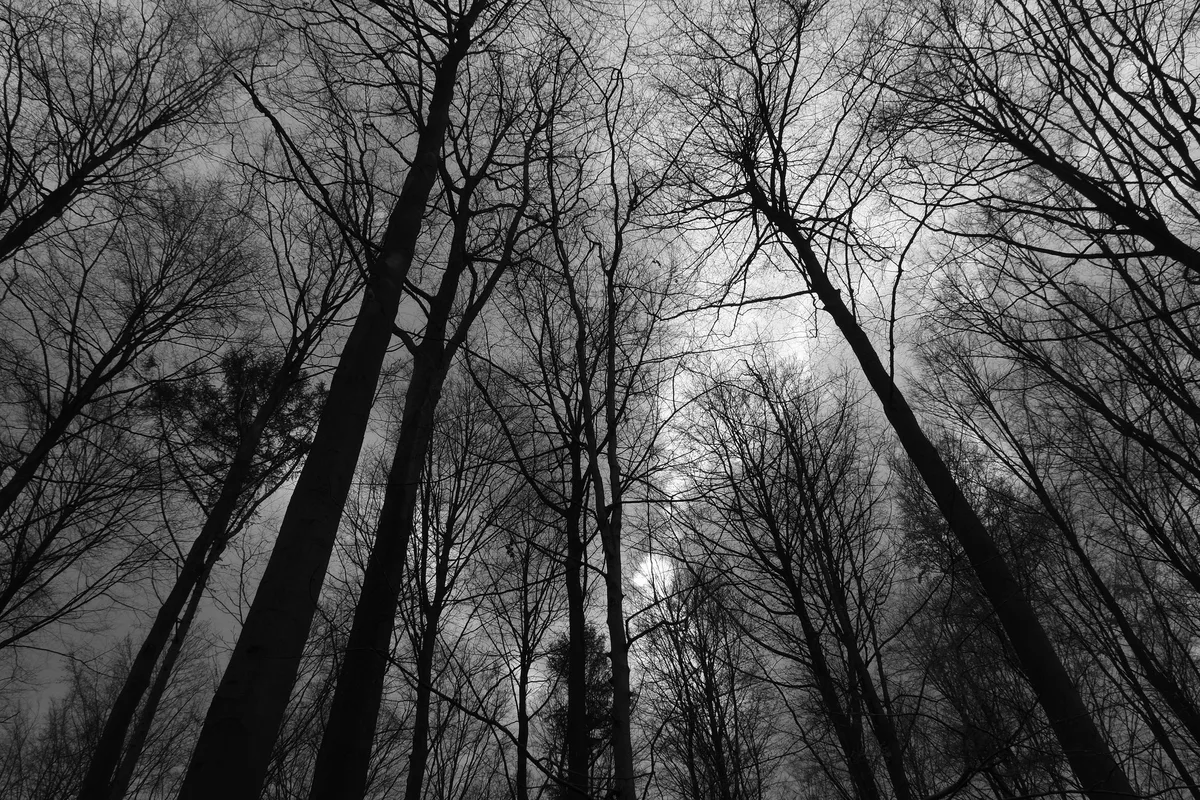
Bluebells spend most of their lives underground as bulbs. Footfall crushes the leaves, and crushed leaves can no longer photosynthesise. A seed takes at least five years to grow into a bulb, so damage can last for years. Stay on marked paths and keep tripods and children out of the flowers. In the UK, the bluebell is protected under the Wildlife and Countryside Act 1981. Digging up wild bulbs is prohibited. Since 1998, trading in wild bulbs and seeds has been an offence under Schedule 8 of the Act. The Woodland Trust sets out the protections in plain terms. We checked this guidance in November 2026, and rules differ by country. In Germany, all natural stands lie inside nature reserves, so reserve rules apply to every visitor. Picking is never a good idea, whatever the local law.
Why Bluebells Matter: Ancient Woodland, Wildlife and Folklore
Bluebells are an indicator of ancient woodland. Spotting a carpet can mean you are standing in a rare habitat. They flower early, so bees, hoverflies and woodland butterflies use them as an early nectar source. Folklore adds a darker note. Stories say that picking a bluebell leads you astray among the fairies. Victorian flower language linked the bluebell with humility and constancy.
Common Mistakes to Avoid
A few habits cause most of the trouble at popular woods. Avoid these six.
- Stepping off the path for a photo. Trampled bulbs can take years to recover.
- Booking travel on fixed dates. Weather can move the peak by weeks, so check recent reports first.
- Assuming Hallerbos rules match a British wood. Read the official page before you go.
- Picking flowers or digging bulbs. In the UK, the law covers both.
- Mixing up native and Spanish bluebells. Check the stem and pollen before you judge a wood.
- Expecting a Scottish bluebell to match an English one. In Scotland the name usually means the harebell.
More Spring Flowers
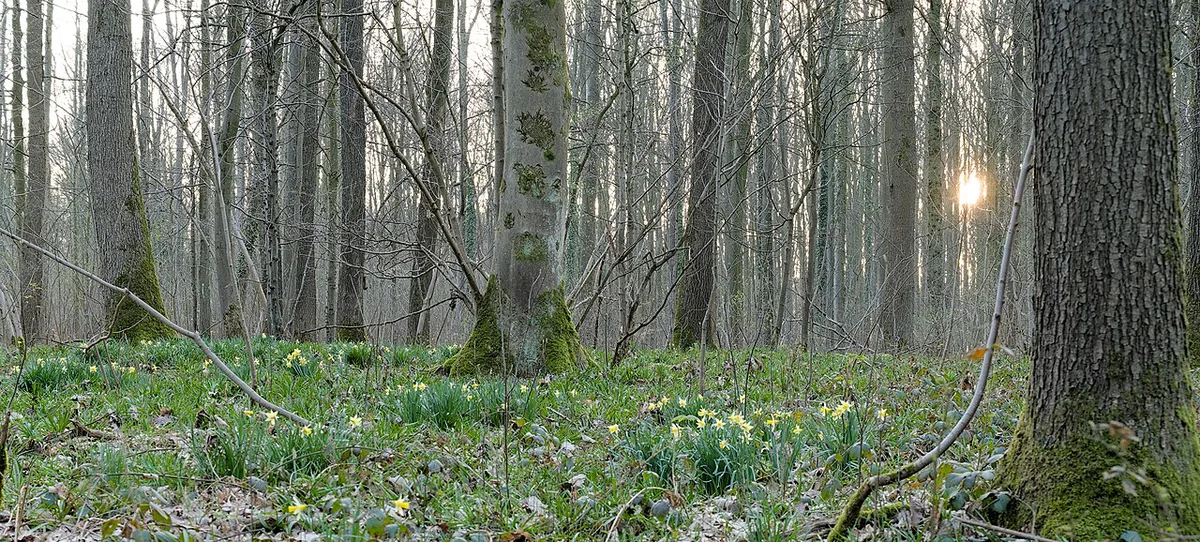
Bluebell season sits between earlier and later spring displays. Earlier in the year, see our list of Snowdrop Gardens UK: Where to Go, When & How to Plan. For yellow colour, read about Wild Daffodils UK: Where and When to See Them.
Frequently Asked Questions
What country are bluebells native to?
Common bluebells are native to Atlantic western Europe. Their range runs from north-western Spain and Portugal through France, Belgium and the Netherlands to Great Britain and Ireland. Britain and Ireland hold the densest woods.
Where is the best place to see bluebells?
For density and choice, we'd pick Britain, where ancient woods carry thousands of bulbs. For a continental trip, Hallerbos near Halle in Belgium is the best-known option. Check recent local reports before you travel.
Bloom-season notes
Optional updates when we add or revise garden guides.
Continue reading
Guides on the same trip