Tarot Garden (Giardino dei Tarocchi) Tuscany: Visit Guide
Plan a visit to Niki de Saint Phalle's Tarot Garden near Capalbio, Tuscany: what to see, how to get there, and what to confirm before you go.
Last updated November 2026: the tarot garden, or Giardino dei Tarocchi, is a sculpture park at Garavicchio near Capalbio in southern Tuscany. French-American artist Niki de Saint Phalle created it, and it opened to the public in 1998. This is an art site, not a tarot shop or a card-reading guide, so it suits art, architecture and photography fans more than classic garden lovers.
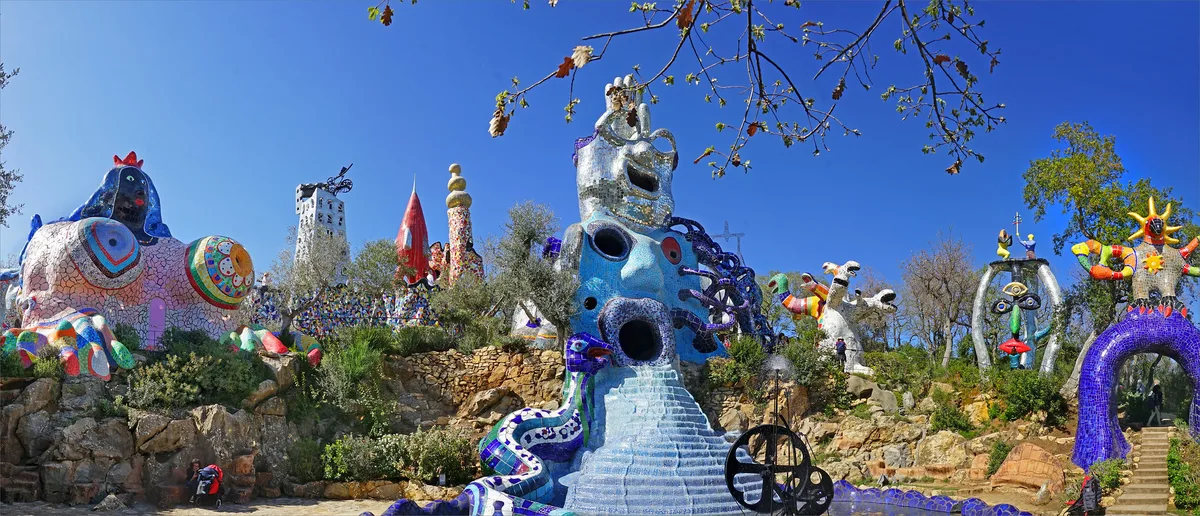
Featured image: mededeler, CC BY 2.0, via Flickr.
What the Tarot Garden is
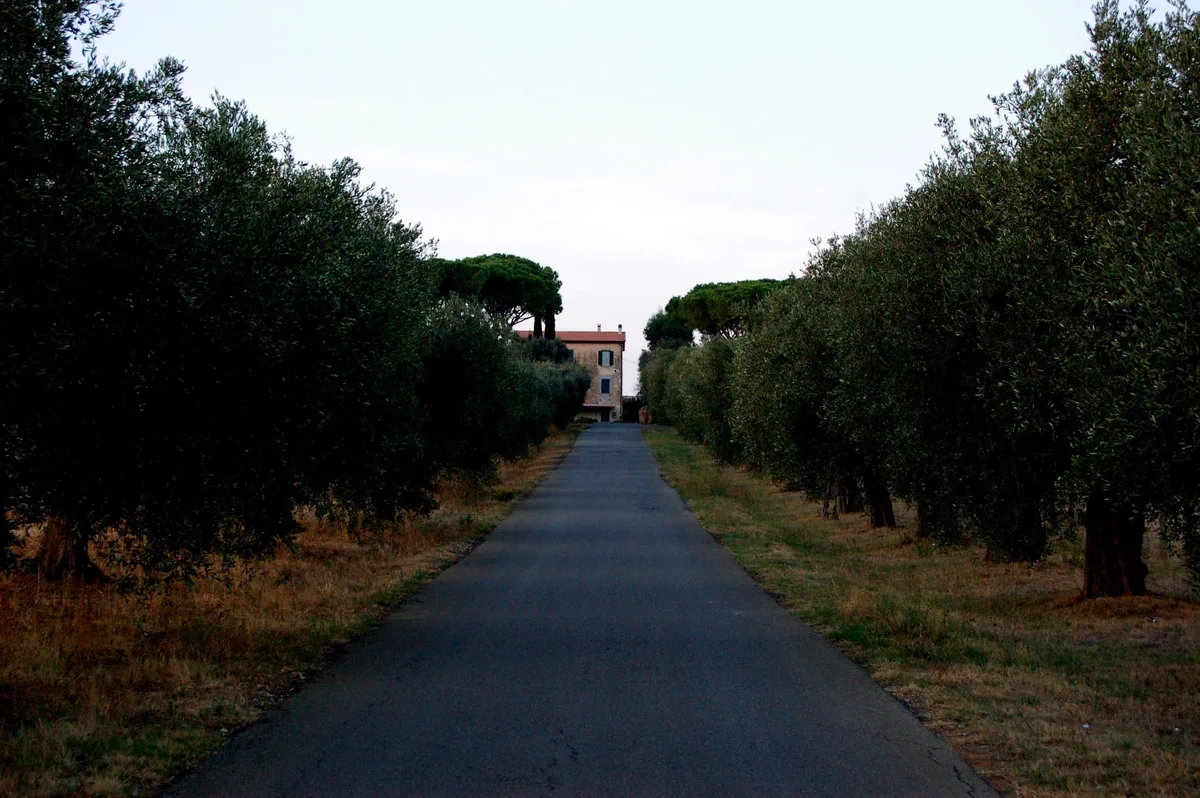
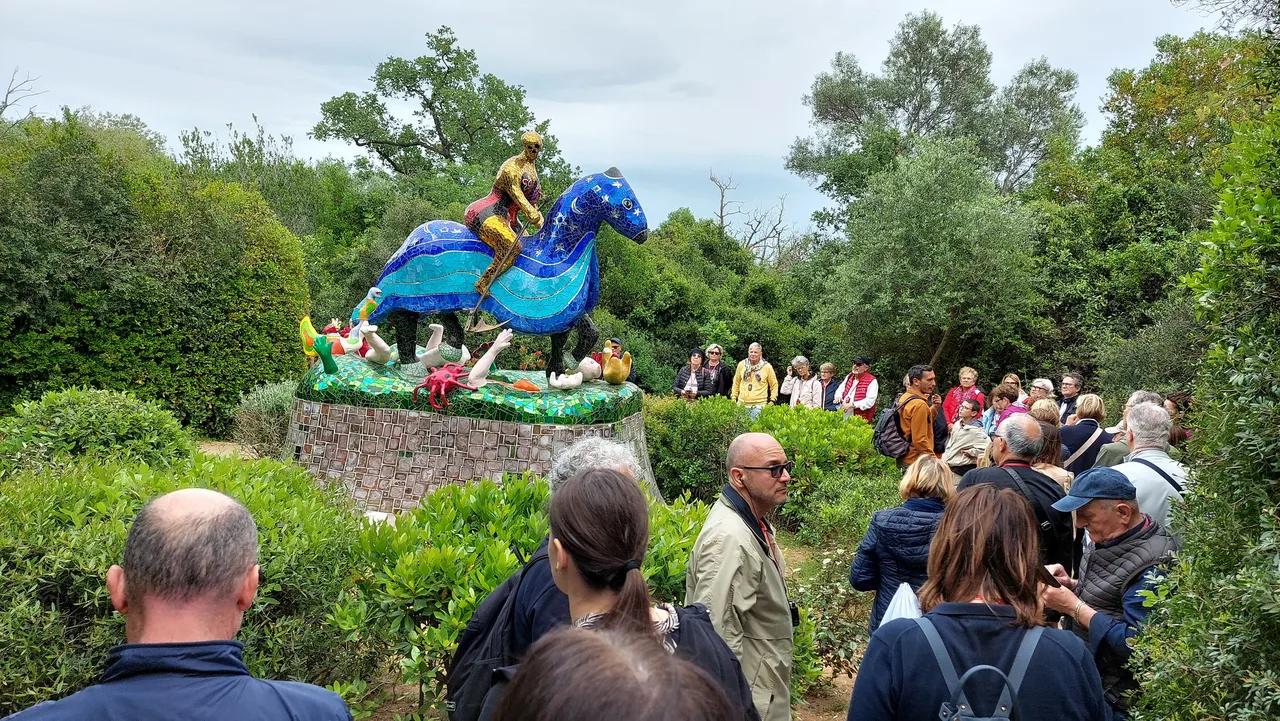
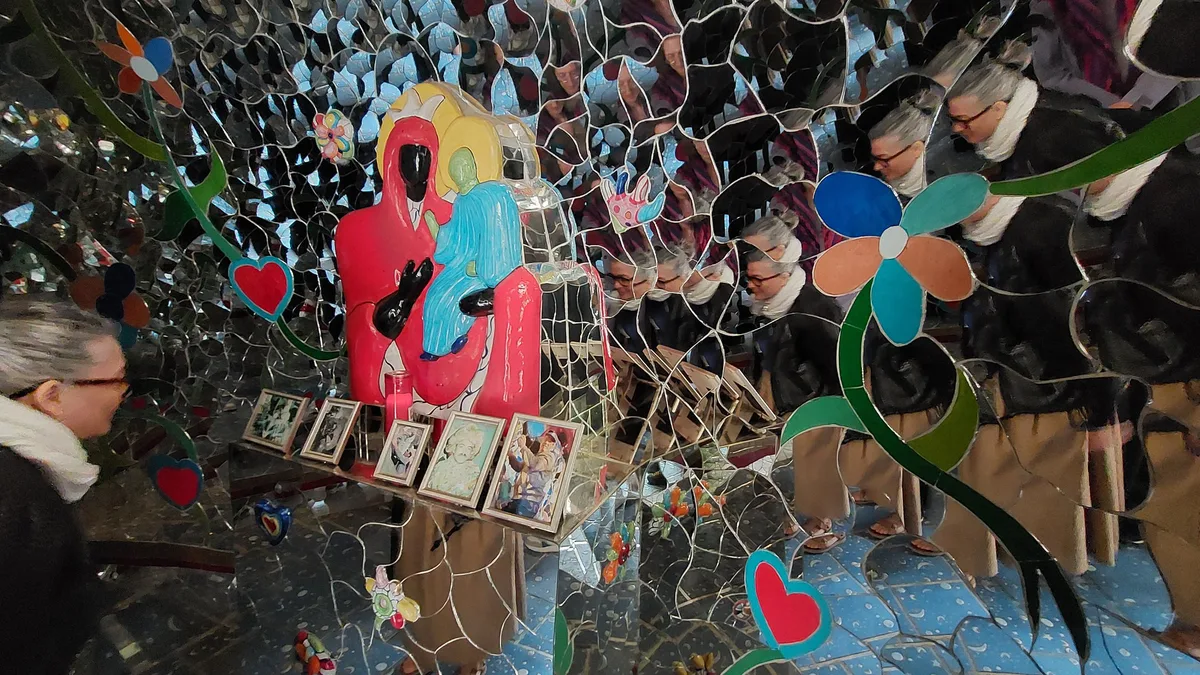
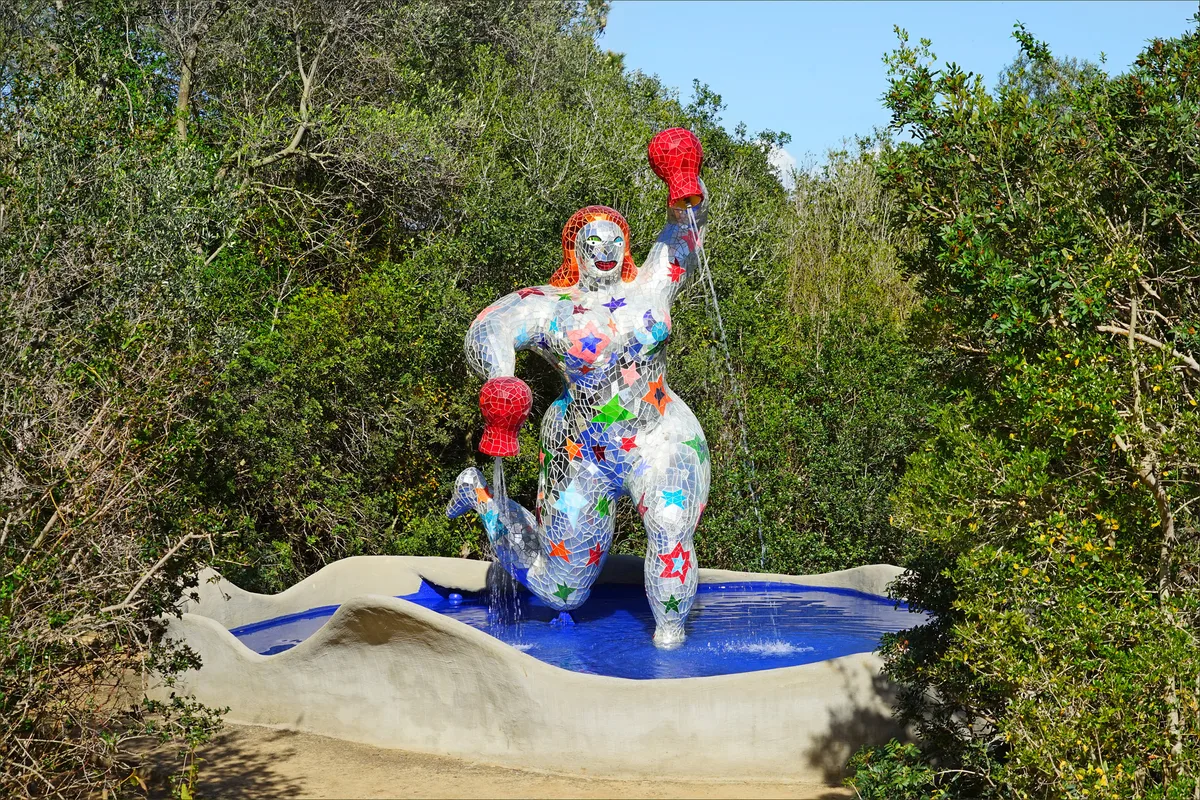
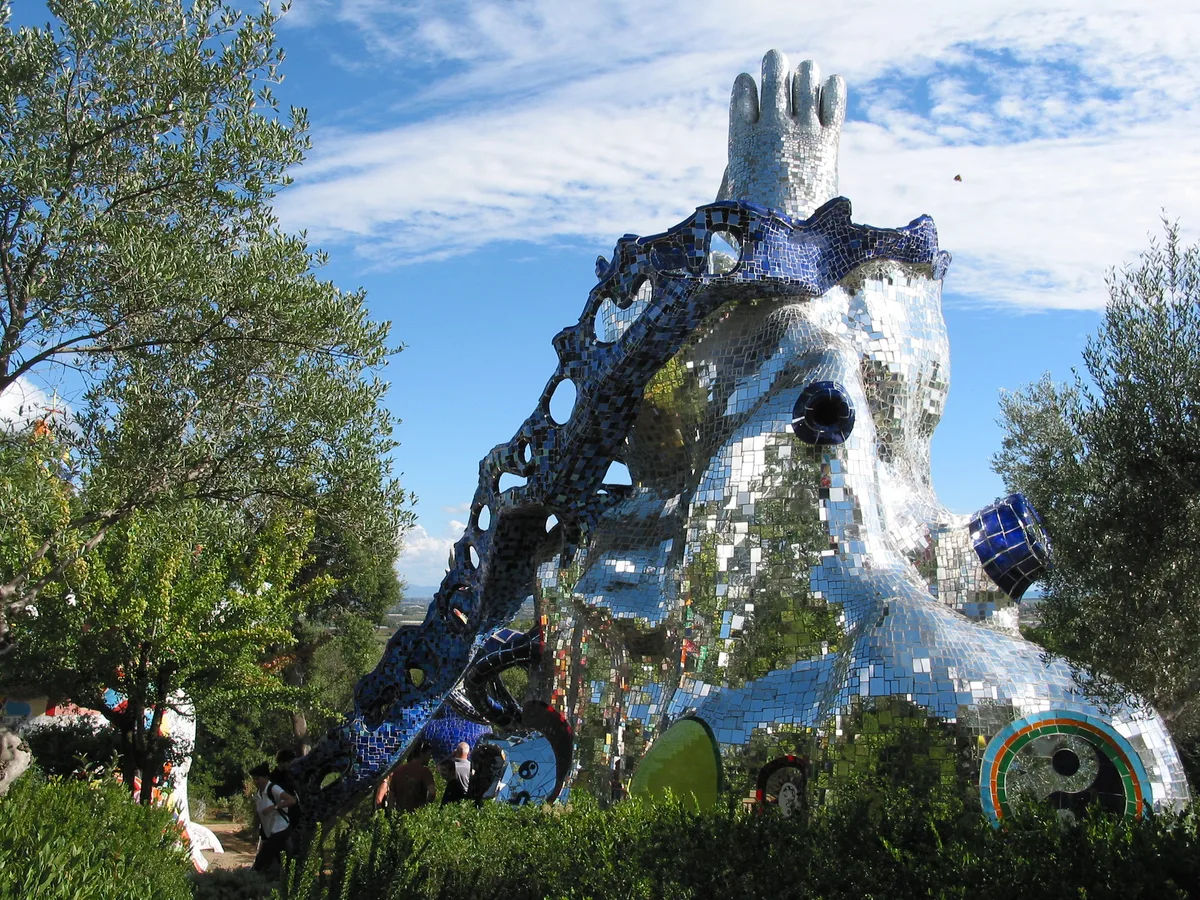
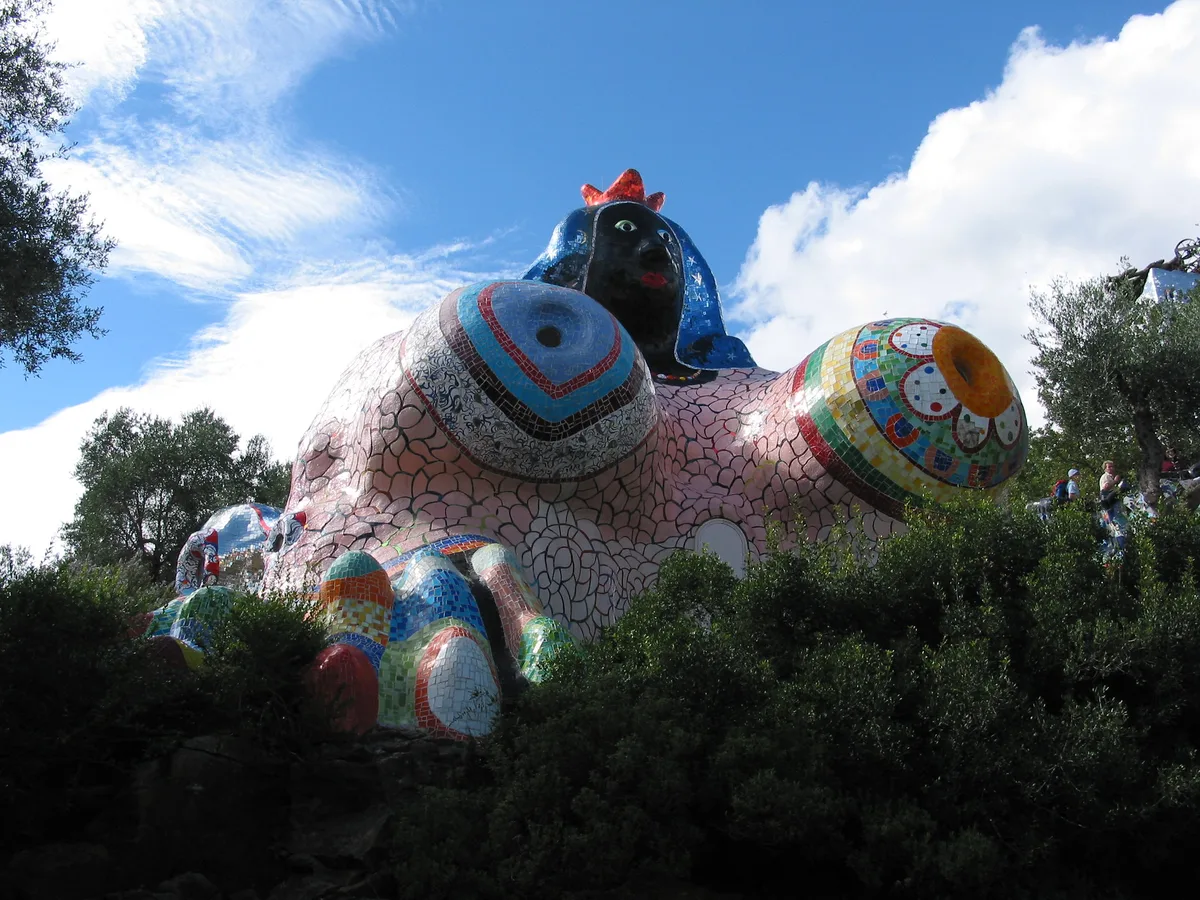
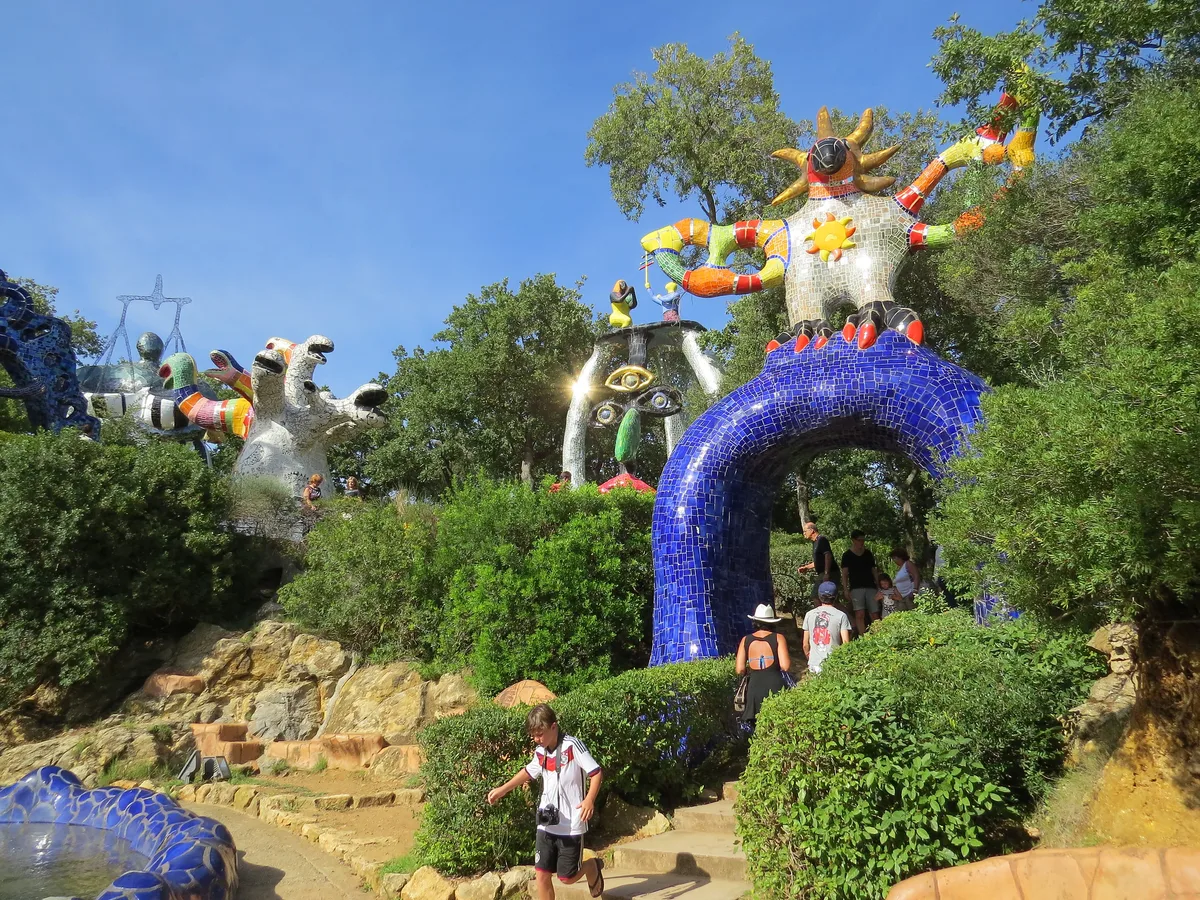
Garavicchio sits near Capalbio in the province of Grosseto, in the south of Tuscany. Niki de Saint Phalle built the park on land she acquired in 1979, above an Etruscan ruin. Her subject was the tarot's major arcana, the 22 trump cards that run from The Fool to The World. Each card became a large figure in reinforced concrete covered in mirrors and ceramic mosaic. Some figures are big enough to walk into. Visitors who expect clipped hedges and gravel parterres will find something else: a personal mythology set out as architecture in a landscape.
Is the Tarot Garden worth the trip? Go-if and skip-if
Garavicchio is rural, so this is a destination in its own right rather than a quick stop. Your own priorities decide whether the drive pays off.
- Go if you like sculpture, architecture or photography, because the mirror and mosaic surfaces change with the light.
- Go if you travel with children, since figures you can enter make the visit more like exploring than looking.
- Go if you have already seen Renaissance villa gardens and want a sharp contrast.
- Skip if you want clipped hedges, fountains and formal terraces.
- Skip if you have only a short window near Florence, because the park is far to the south.
What you'll see: the 22 major arcana figures
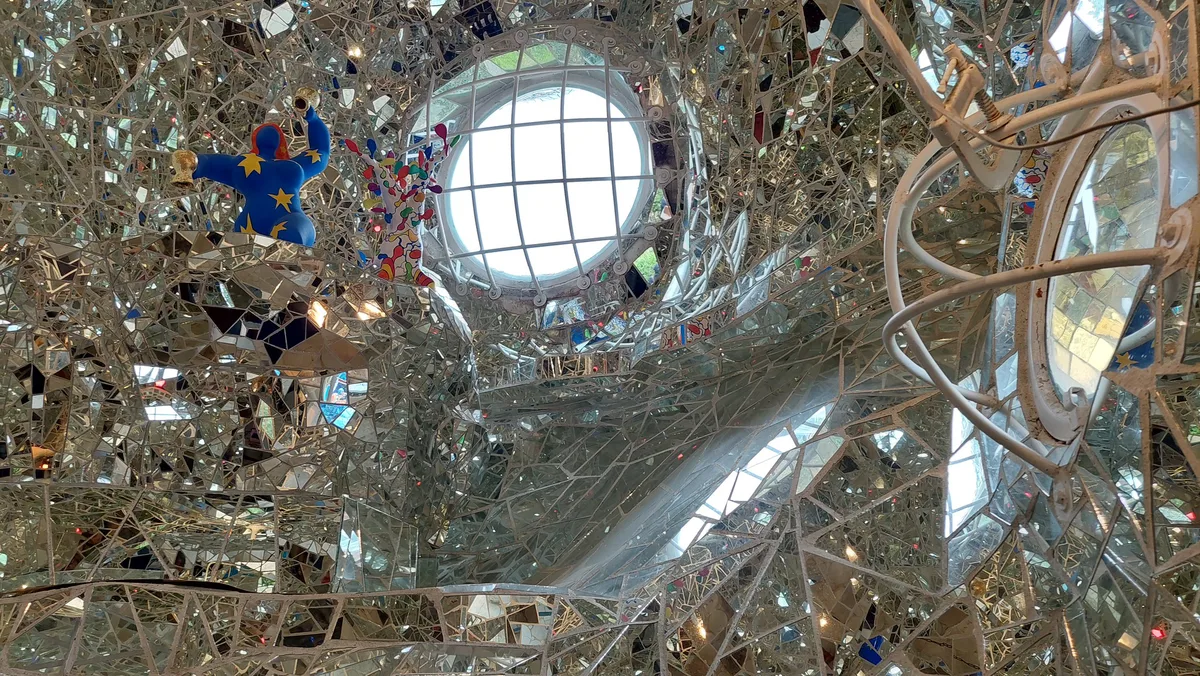
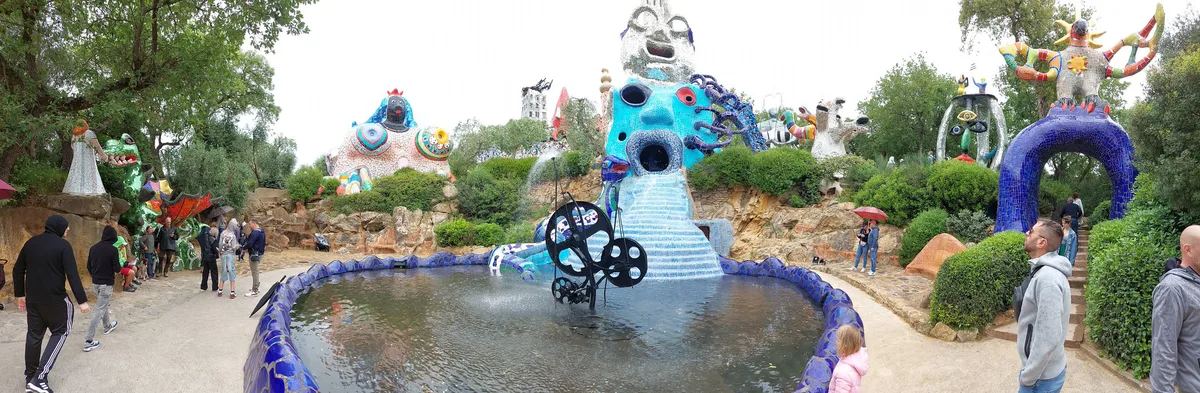
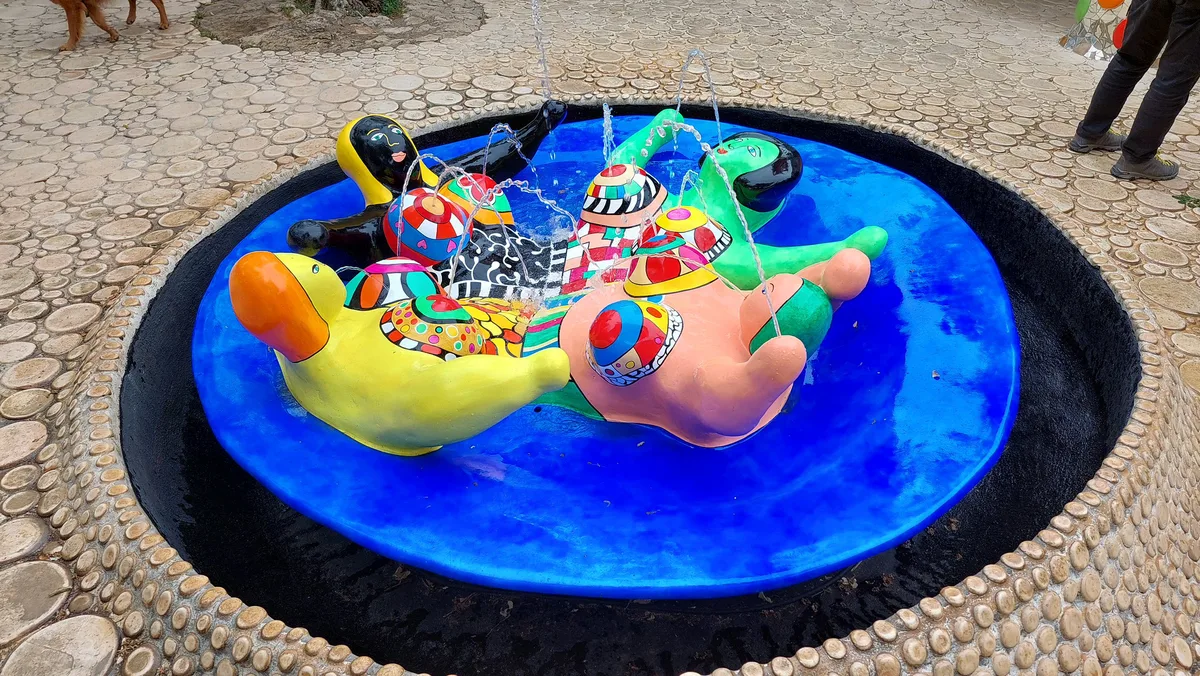
Expect 22 monumental figures, each interpreting one of the greater mysteries of the tarot. Their surfaces are broken mirror and ceramic tile, so they glitter in direct sun and look softer under cloud. Several are large enough to enter, which turns the visit into a walk through rooms as well as around objects. Interior access, closed figures and any rules about touching or climbing vary by season and condition, so ask at the entrance rather than assuming every figure is open. Pace yourself and look at each figure from a distance first, then up close, where the individual tiles show.
Opening season, tickets and booking
Ticket prices, opening days and hours are set by the garden itself, and seasonal closures are likely in a rural site like this. Prices and hours were not checked for this guide, so look at the garden's official website before you plan a driving day around it. Ask there whether tickets can be bought in advance, whether visits are guided or self-guided, and what the rules are for dogs, strollers and photography. This is the one page worth reading before you commit to the journey.
How to get there and getting around
Garavicchio is a rural spot in southern Tuscany, so a car is the practical way in. Check regional rail and bus options if you do not drive, because they are unlikely to be quick or frequent in this area. Starting point shapes the day.
| Starting point | What to expect |
|---|---|
| Florence | A long day trip, better as an overnight stop in the south of the region |
| Rome | Workable by car as a day out, but allow for rural roads at the end |
| Grosseto | The shortest approach, and the natural base for the Maremma coast |
- From Florence: a long day trip, better as an overnight stop in the south of the region.
- From Rome: workable by car as a day out, but allow for rural roads at the end.
- From Grosseto: the shortest approach, and the natural base for the Maremma coast.
- Parking and access inside the park: ask the garden before you travel, especially if anyone in your group has limited mobility.
How long to spend and how to time your visit
Plan a half day if you want to see the figures once and take photos. Stay longer if you plan to enter several sculptures, read the cards' meanings or photograph the mosaics in different light. Heat and shade drive the choice of season. Mirror surfaces throw harsh glare at midday in summer, and there is limited relief from the sun in an open sculpture park. Spring and autumn mornings and late afternoons give softer light for photography, but check the opening season first, since the garden may be closed in winter.
Combine it with nearby stops
The Maremma coast and the Etruscan sites around Capalbio give the trip more shape. Local listings point to Settefinestre, the François Tomb and Cosa as history stops, plus Castro in Lazio, Forte La Rocca Lighthouse and Rofalco. Check which of these are open to visitors and how far each is before you promise anyone a full itinerary. Skip the add-ons if your group has a short attention span: the Tarot Garden alone can fill a half day. For wider regional planning, the Visit Tuscany tourism site is a good starting reference.
Where it fits among Tuscany's gardens
Most Tuscan gardens are Renaissance or villa gardens built around terraces, water and clipped greenery. This one is a modern sculpture garden, and it works best as a contrast to them. For another contemporary art setting, see Daniel Spoerri's art garden. For a classic garden in southern Tuscany, try La Foce. If sculpture in a historic garden appeals, look at Villa Cetinale: Chigi Baroque Villa and Gardens near Siena. Short on time near Florence? Florence's gardens are a far easier day. For the full regional picture, browse our guide to Tuscany's best gardens.
Bloom-season notes
Optional updates when we add or revise garden guides.
Continue reading
Guides on the same trip