Parc Monceau, Paris: Follies, Hours, Access and How to Visit
Parc Monceau is a free Paris park with follies, a colonnade pond and a calm 8th-arrondissement setting. Plan hours, access and what to see nearby.
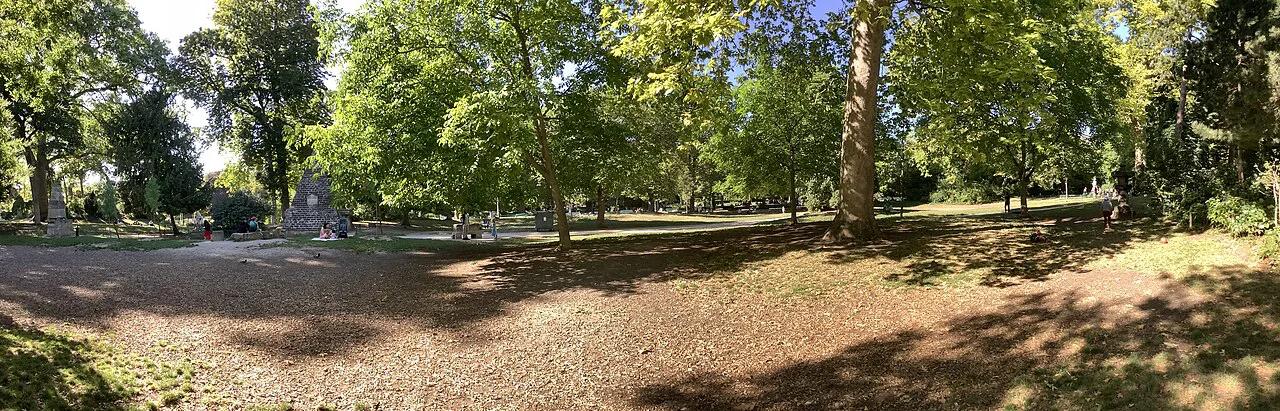
Last updated November 2026: Parc Monceau is a free, ornamental park at 58 boulevard de Courcelles in Paris's 8th arrondissement. Its follies include a pyramid and a small Corinthian colonnade around a pond, so it suits a short scenic stop better than a lawn-and-picnic afternoon. Plan 30 to 90 minutes, depending on whether you add the perimeter path or a nearby museum.
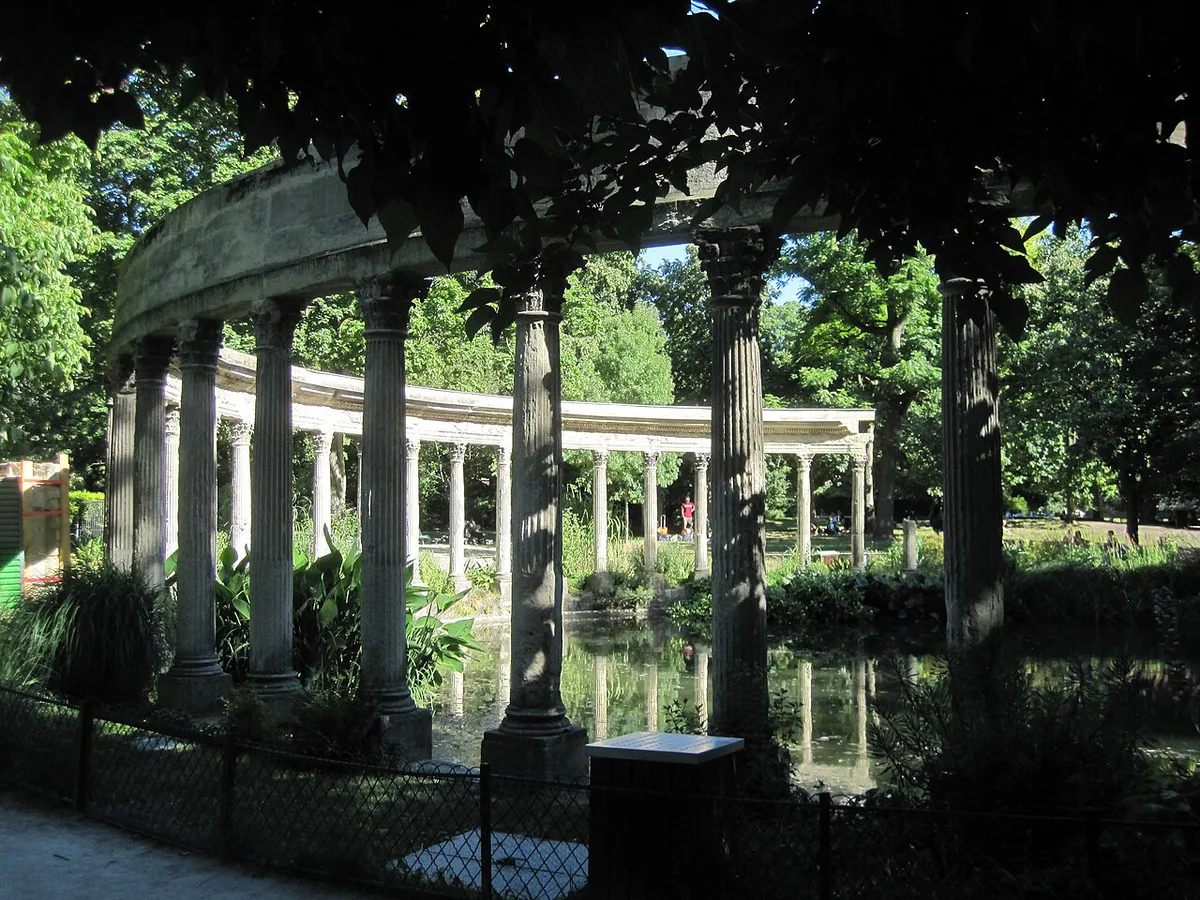
Featured image: DiscoA340, CC BY-SA 4.0, via Wikimedia Commons.
Parc Monceau at a glance
Monceau Park, as some English-language maps label it, is a landscaped garden with Second Empire-era entrance pavilions. Entry is free, and the park is open every day of the week.
- Cost: free entry.
- Address: 58 boulevard de Courcelles, 75008 Paris.
- Nearest metro: Monceau station.
- Best for: follies, architecture, a quiet walk and photography.
- Typical visit: 30 to 90 minutes.
What to see in Parc Monceau
Most visitors come for the follies, which are make-believe monuments built to give the garden visual interest. Treat the list below as a checklist, not a fixed route, because paths loop back on themselves.
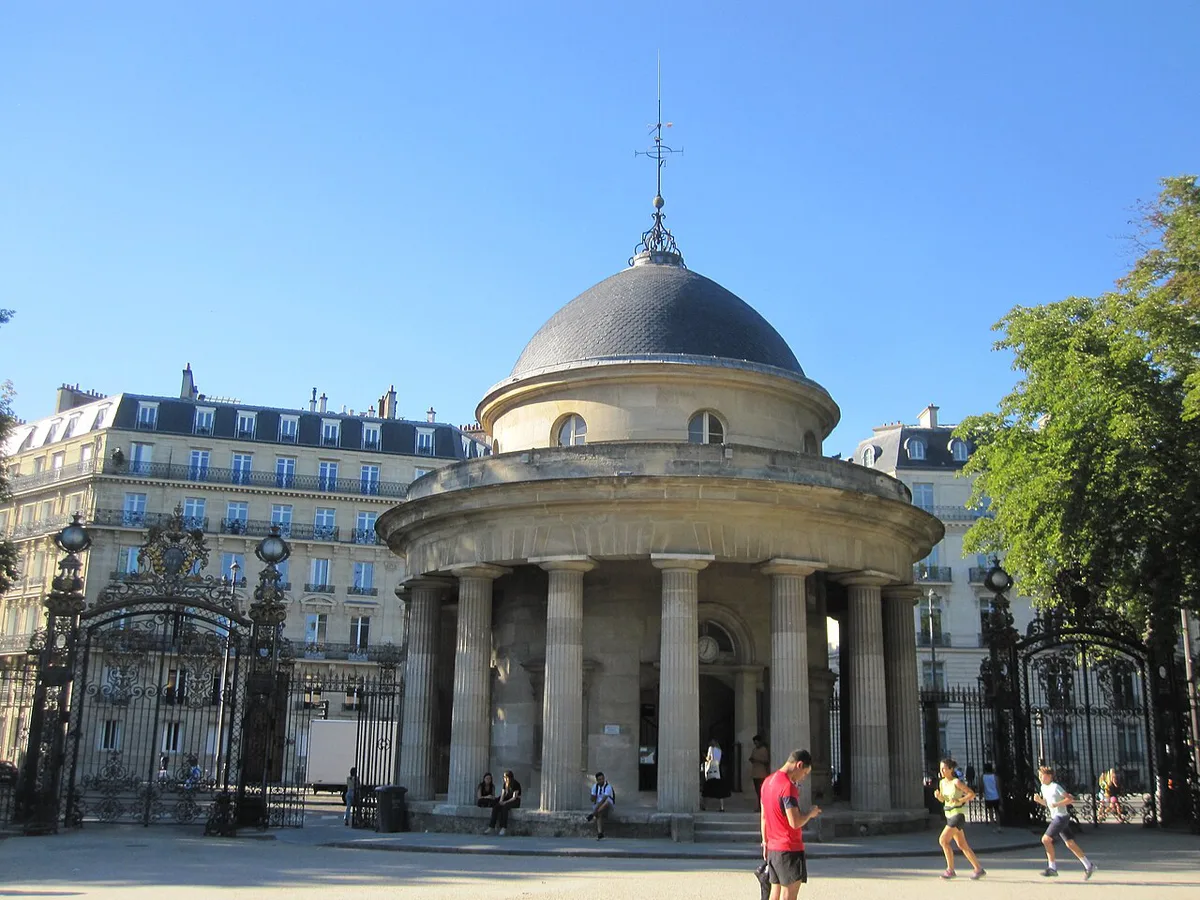
- Davioud's gilded wrought-iron gates on boulevard de Courcelles, the most recognizable way in.
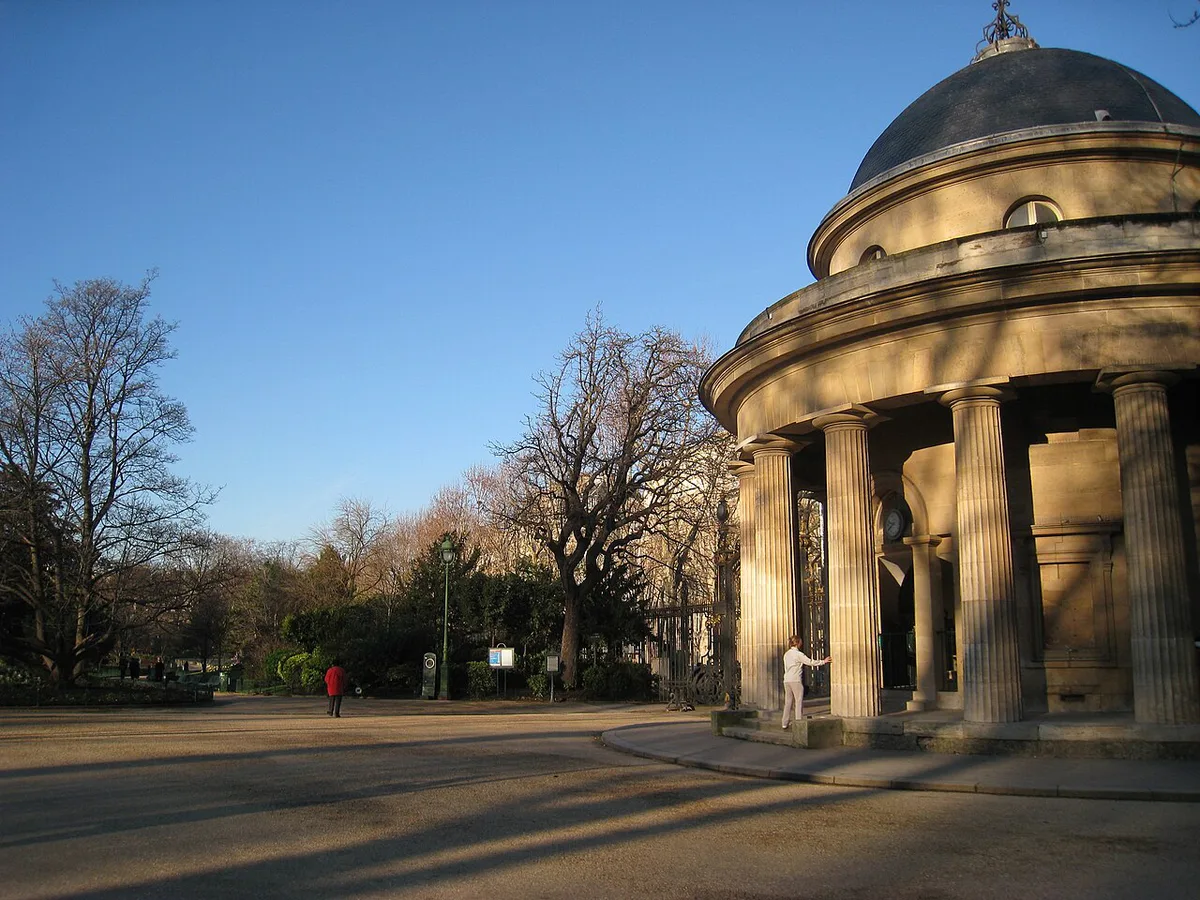
- The Pavillon de Chartres, a rotunda just inside the gates, with sculpture and decoration from the Second Empire.
- The Egyptian-style pyramid, one of the best-known follies.
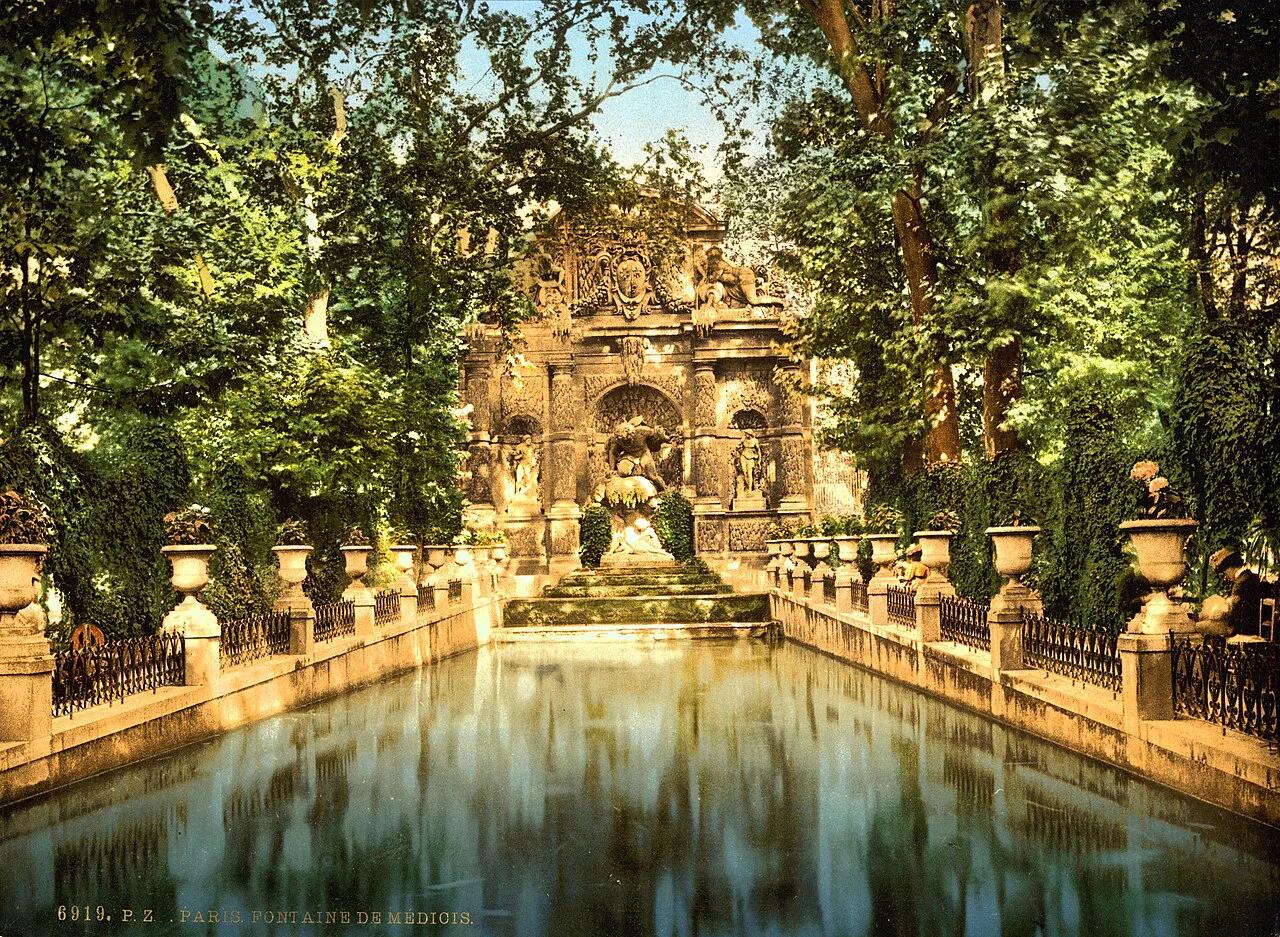
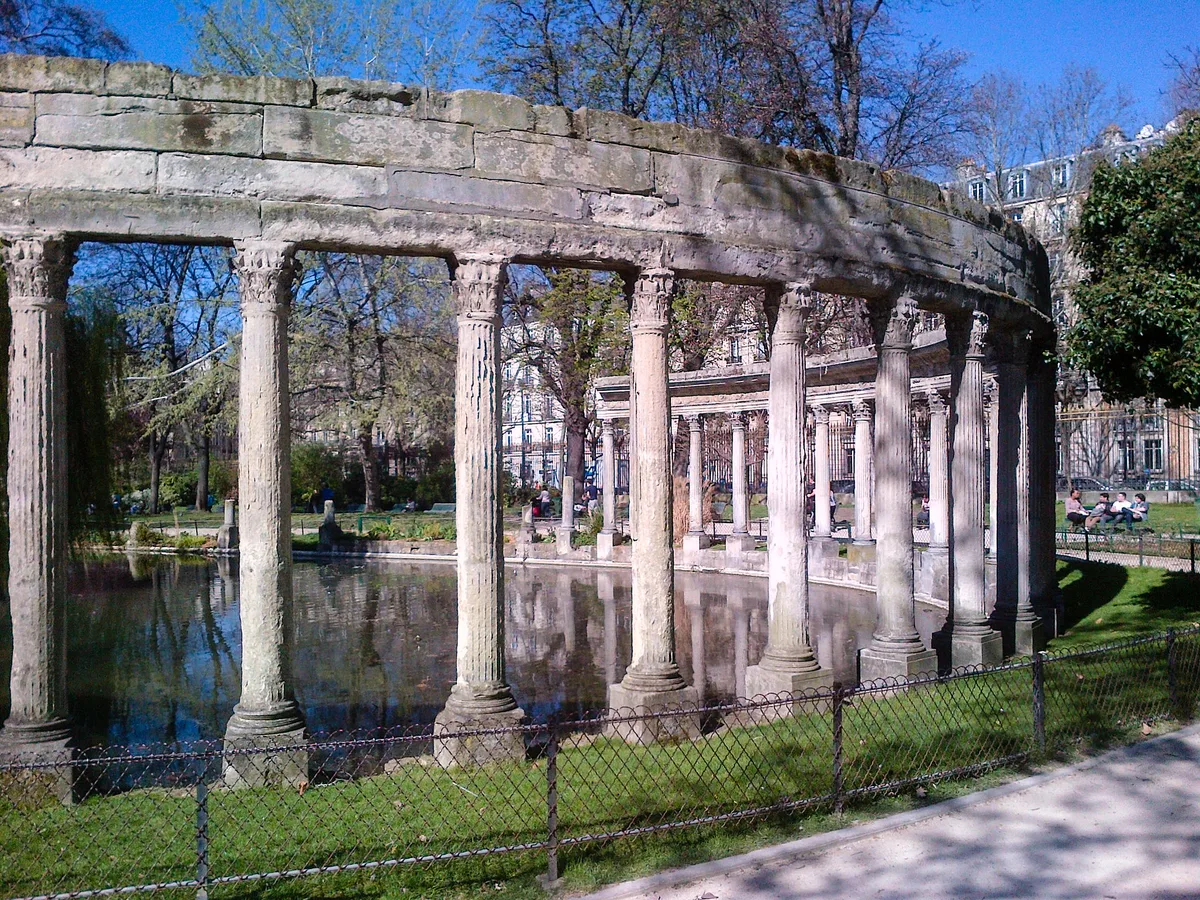
- The pond ringed by a small Corinthian colonnade, the park's classic photo spot.
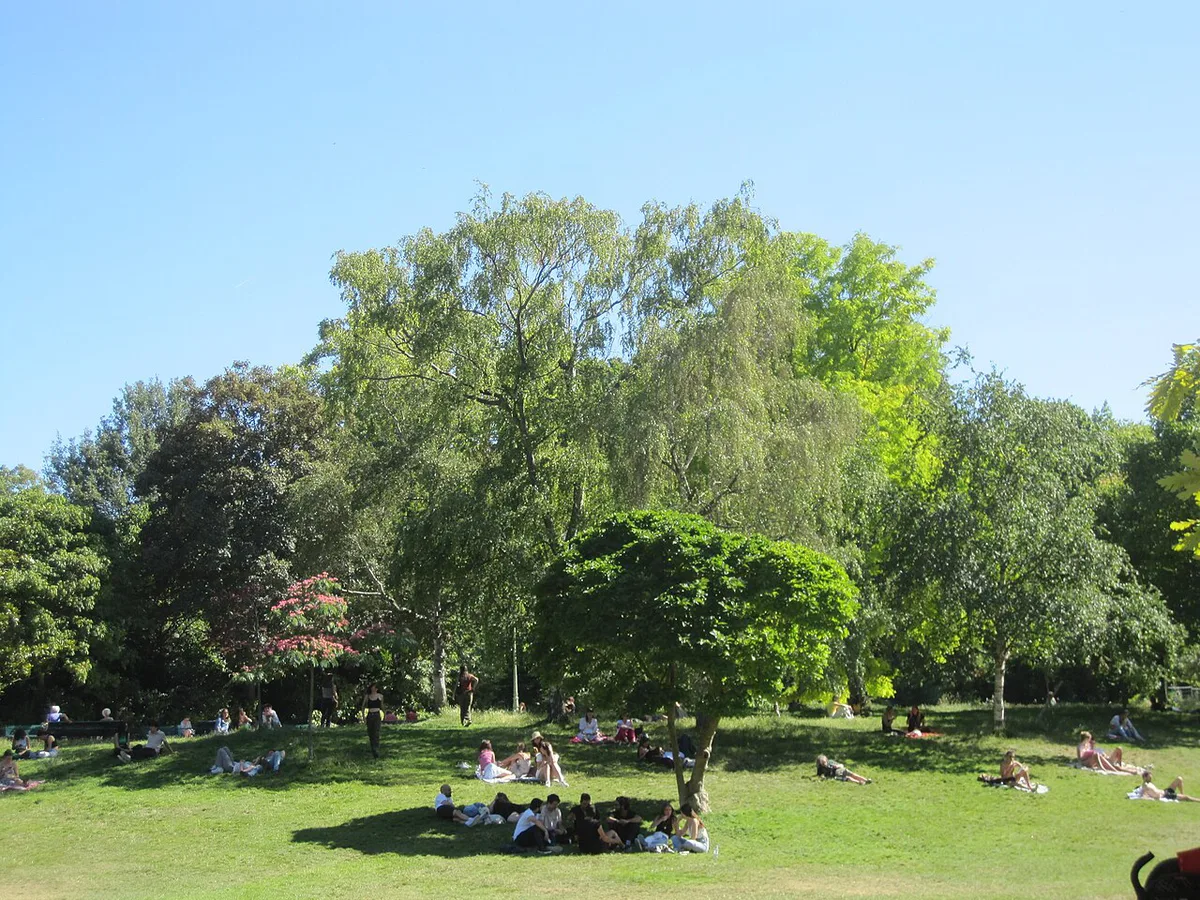
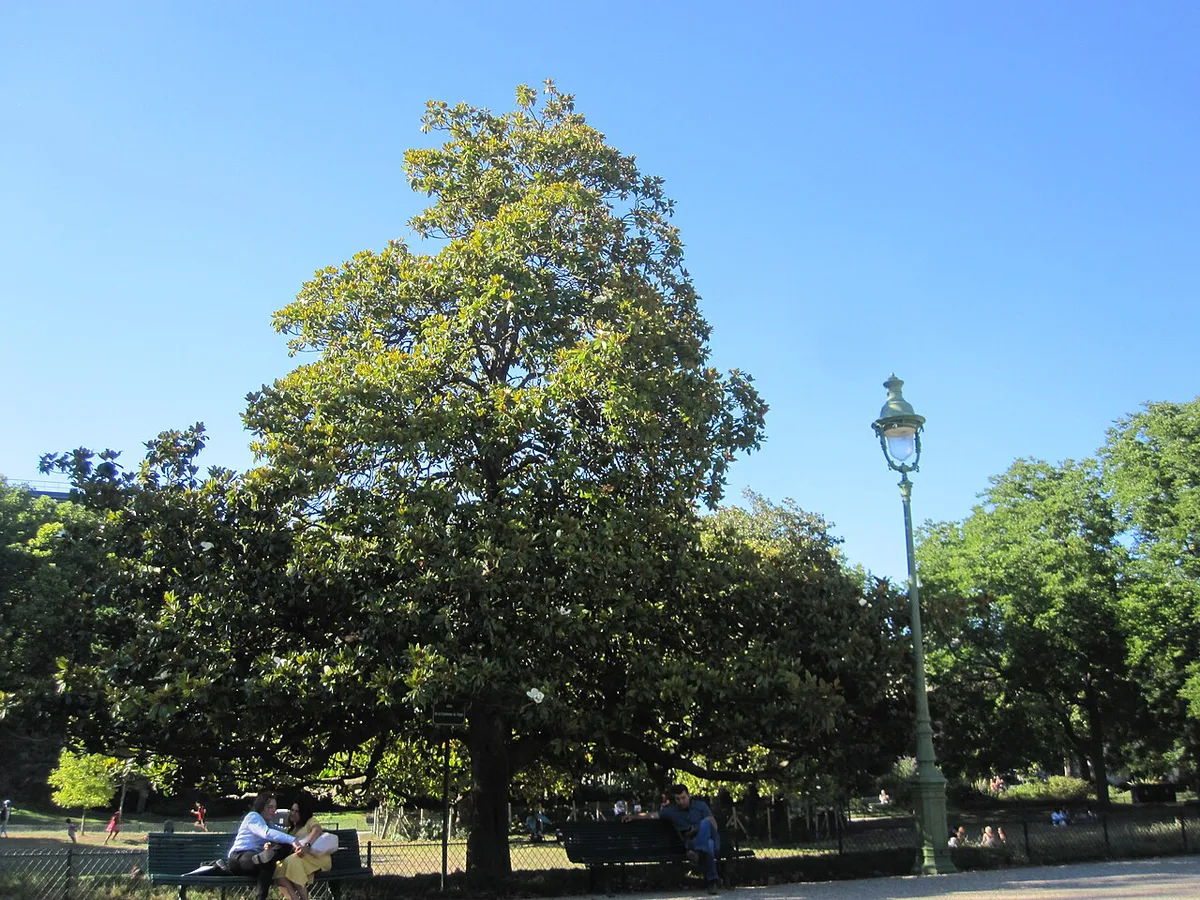
- Flower beds and old trees, including a Laricio pine and a Virginia tulip tree, which attract a varied bird population.
History of Parc Monceau and why it has so many follies
The follies make more sense once you know the park began as a private pleasure garden. In the 1770s Philippe d'Orléans, Duke of Chartres, had the writer and painter Louis Carrogis Carmontelle lay out a garden here. It was meant as a stage set of scenes from different countries and eras, so a pyramid, a colonnade and other make-believe structures stood side by side by design.
- Late 1700s: the original private garden, often called the Folie de Chartres, was built on the edge of Paris.
- 1860s: the land was bought by the city and opened to the public in 1861, in the Second Empire. The engineer Adolphe Alphand redesigned it as part of Haussmann's rebuilding of Paris, replacing the formal scenes with the winding paths, lawns and specimen trees you walk today, and the gilded gates date from this period.
- 1780s: the rotunda at the northern entrance, the Rotonde de Chartres, was built by Claude-Nicolas Ledoux as a toll house in the Wall of the Farmers-General, the customs wall that then ringed Paris. It is older than the public park around it.
- 1876: Claude Monet painted the park, which is one reason it appears in Impressionist collections.
Only a few of Carmontelle's original structures survive, chiefly the pyramid and the pond with its colonnade. That oval pond, the Naumachie, is the park's most photographed corner; its Corinthian columns are said to come from an unfinished royal mausoleum at Saint-Denis. This explains why the layout feels more like a collection of scenes than a single plan.
Monuments to look for
Along the paths you will also find memorials to writers and composers, including Guy de Maupassant, Frédéric Chopin and Charles Gounod. They are easy to miss on a 30-minute loop, so allow extra time if you want to read the plaques. Details of what is displayed can change, so check the City of Paris parks page on paris.fr before a special trip.
How long to spend and a simple route
These are suggested ranges, not measured times. A 30-minute pass takes in the gates, the rotunda, the pyramid and the colonnade pond. For 60 to 90 minutes, add the perimeter path, which runs just over 1 km (about 0.6 miles) around the park. Joggers use it too, so keep to one side when you stop to photograph.
Opening hours, entrances and access
Hours change with the season, and no closing time is stated here. Check the City of Paris parks page on paris.fr for the current schedule.
- Metro: Monceau station.
- Main entrance: Davioud's gilded gates on boulevard de Courcelles.
- Step-free access, dogs, bikes and picnics: rules vary by Paris park, so read the notices posted at the gate.
Parc Monceau with kids
Children are well served by a playground, a carousel and a roller rink, along with a snack bar. Facilities change from year to year, so check the City of Paris page before promising a ride. Younger kids will mostly enjoy the pyramid and the pond, which need no equipment.
Best time to visit
Mornings and weekdays are usually calmer, and low light flatters the colonnade and the gilded gates. Weekend afternoons draw more families and joggers. Spring and summer bring the flower beds into bloom, while winter shows the structure of the old trees. Skip the visit when the grounds are wet or closed, since the follies are the point of coming.
Parc Monceau vs other Paris gardens
Readers choosing among gardens can start with our guide to gardens in Paris. The table compares the closest central alternatives with Monceau in qualitative terms.
| Garden | Character | Best for | Skip if |
|---|---|---|---|
| Parc Monceau | Ornamental, with follies and a residential setting | Architecture, quiet walks, photography | You want big open lawns or sports |
| Luxembourg Gardens (Jardin du Luxembourg): Paris Guide | Formal, large and well used | Long walks, sitting by the basin | You want a quiet corner |
| Tuileries Garden Paris: Hours, Route & Tips | Formal axis between the Louvre and Concorde | Pairing with museums | You want shade and seclusion |
| Palais-Royal garden | Enclosed courtyard garden with arcades | A short, calm pause | You need playgrounds or lawns |
| Jardin des Plantes | Botanical, with greenhouses and collections | Plants and natural history | You only want a quick stroll |
What to combine nearby

Pair the park with the Musée Nissim de Camondo, which sits next to it in the 8th arrondissement. A 45-minute park stop also fits between a museum visit and a central sight such as the Tuileries. Because entry is free, the real cost is routing time, so plan the loop before you set out. For something more botanical, try the Bagatelle Rose Garden, Paris: Bloom Months and Hours. Larger grounds are on offer at Albert Kahn's gardens. Greenhouse fans can head to the Auteuil greenhouse garden.
Go if, skip if
Go for follies, Second Empire detail, a quiet walk and photography. Skip it if you expect a large picnic lawn, a lively scene or sports. Arriving without checking seasonal hours is the most common slip. If you want a bigger green space, choose the Jardin du Luxembourg instead.
Frequently Asked Questions
What are some unusual and interesting places to visit in Paris?
Parc Monceau is a good start, with its pyramid and colonnade pond in the 8th arrondissement. For more garden ideas, browse our guide to gardens in Paris.
Bloom-season notes
Optional updates when we add or revise garden guides.
Continue reading
Guides on the same trip