Palais Royal Garden, Paris: Entrances, Seasons & What to Expect
Plan a visit to the Palais Royal garden in Paris: how to enter, when to go, what to see, and how it compares with Tuileries and Luxembourg.
Last updated November 2026. The Palais Royal garden is a quiet enclosed garden in the 1st arrondissement, framed by arcades with boutiques and cafés. Lime tree alleys and fountains sit inside the courtyard, a short walk from the Louvre. Plan on a calm stop of 15 to 45 minutes, not a half-day attraction, and compare it with other options in our Paris garden guide.
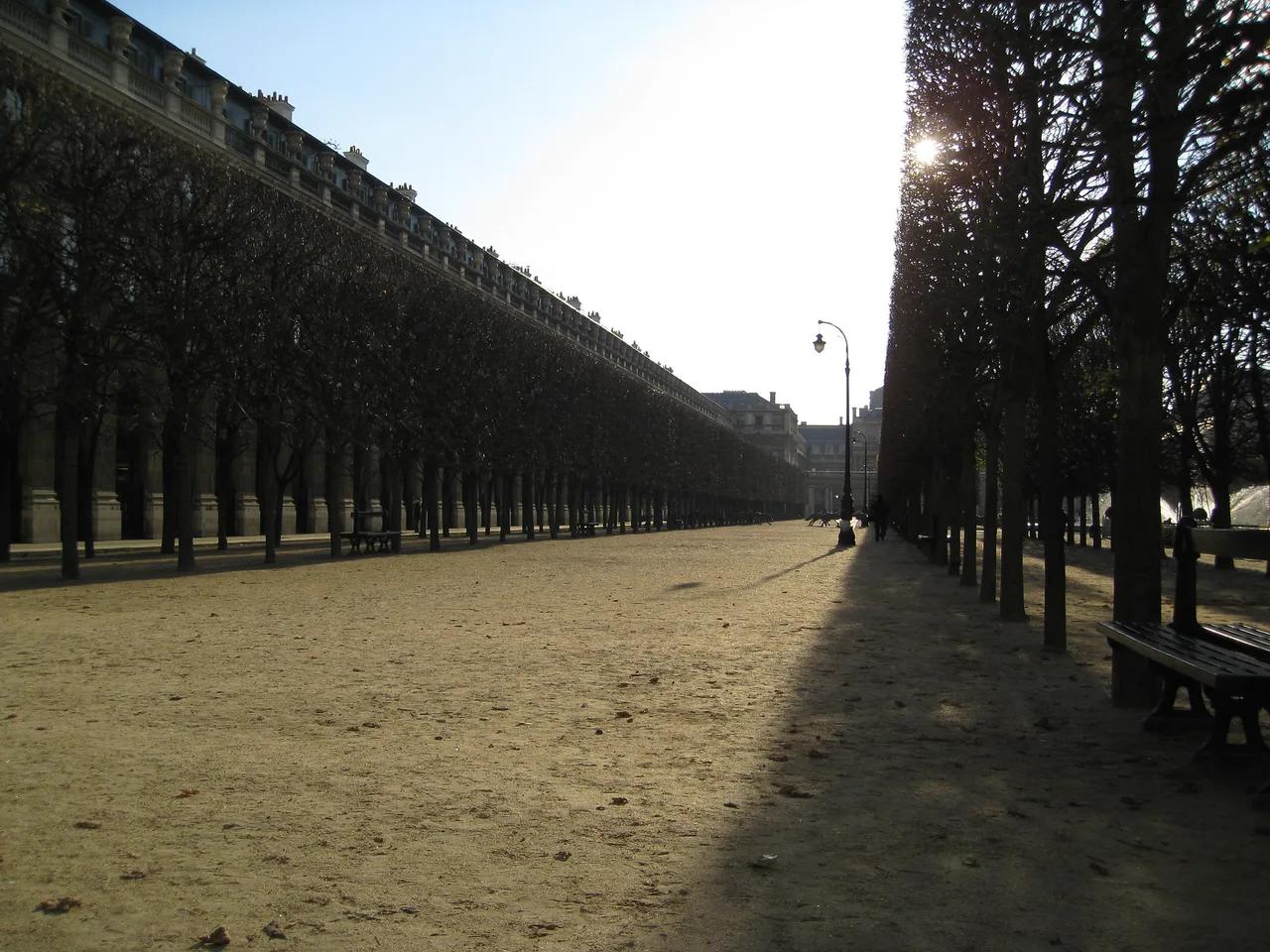
Featured image: ChrisYunker, CC BY 2.0, via Flickr.
Palais Royal Garden at a Glance
Palais Royal garden works best as a pause between bigger sights. Cardinal Richelieu had the palace built in the 17th century, and the garden still feels like a village within the city. Walls and arcades shut out most of the street noise.
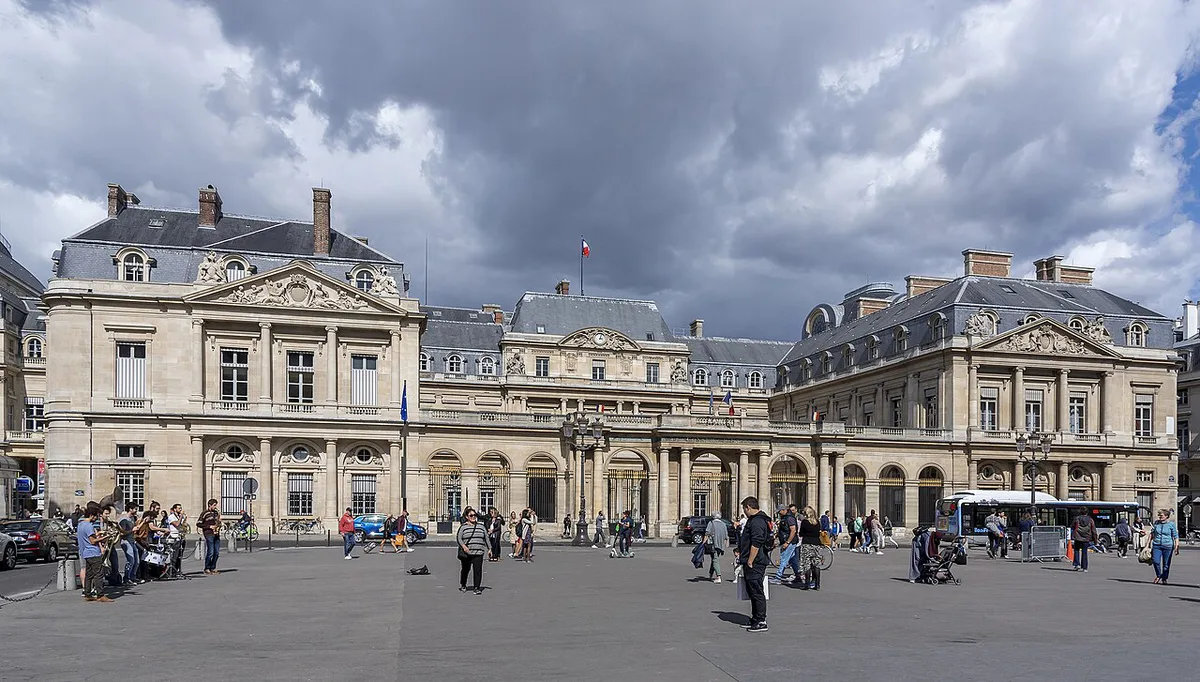
- Location: behind the Palais-Royal, 1st arrondissement, address 2 place Colette, 75001 Paris.
- Entry: from the place du Palais-Royal side or from rue Vivienne.
- Typical visit: 15 minutes to pass through, 45 minutes with an arcade walk.
- Go if: you want shade, benches and a rain-friendly route near the Louvre.
- Skip it if: you want lawns, playing fields or a long park walk.
How to Get In and Find Your Way
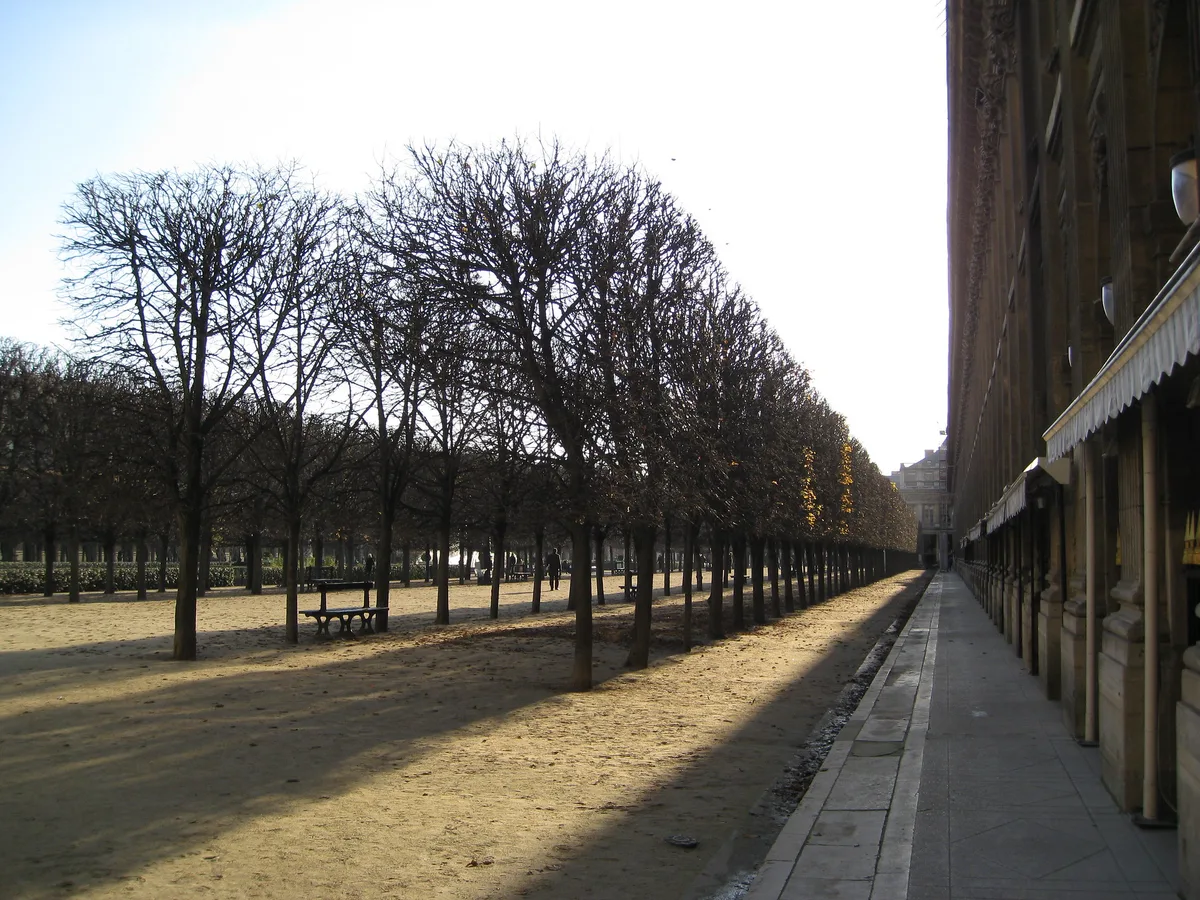
You can enter the courtyard from two sides. One opening is on place du Palais-Royal, facing the palace forecourt. The other is on rue Vivienne. Arcades run along the garden's edges, and Daniel Buren's striped columns stand in the courtyard beside the palace. Because the Louvre is close, many visitors cross here on the way to the Tuileries.
What to See in the Garden
Everything is within a few minutes' walk, so pace yourself and sit often.
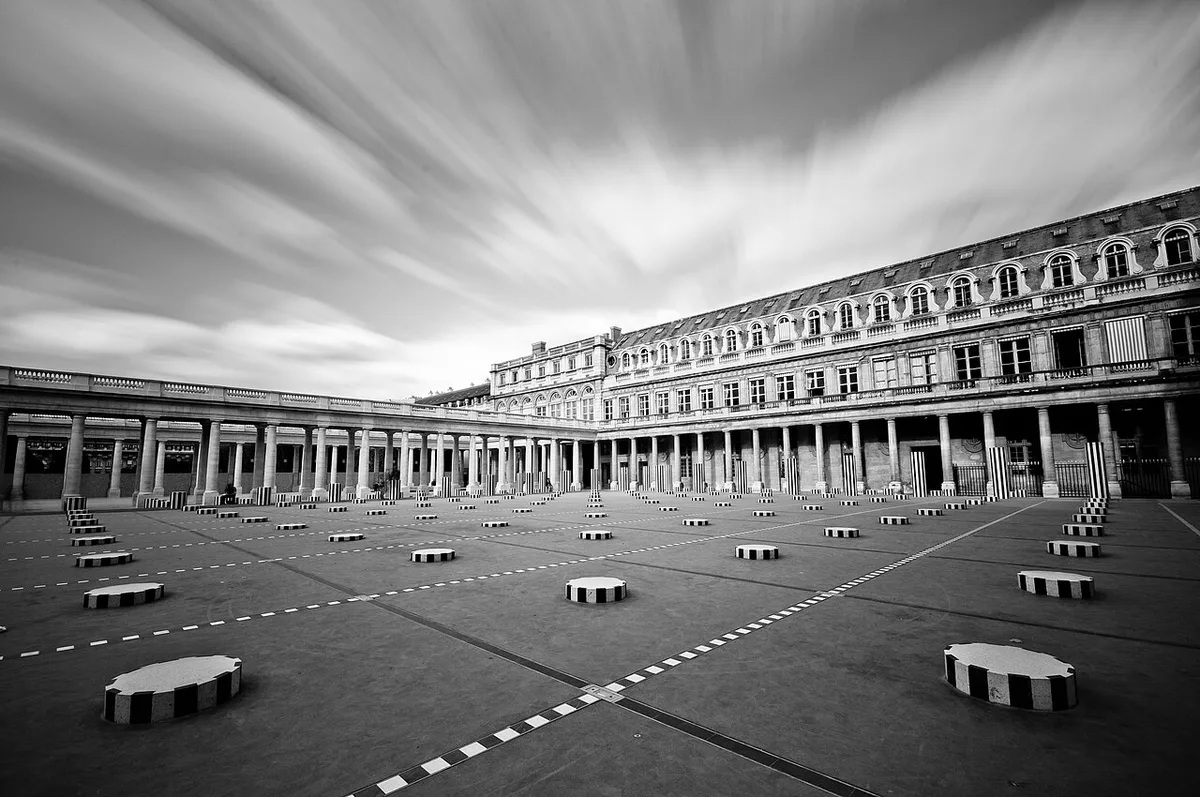
- Buren columns: Daniel Buren's Les Deux Plateaux (1986), some 260 striped stone columns of different heights in the Cour d'honneur, controversial when they arrived and still in their original place. They make a strong photo foreground.
- Arcades: galleries lined with boutiques and cafés. They give you a dry route when it rains.
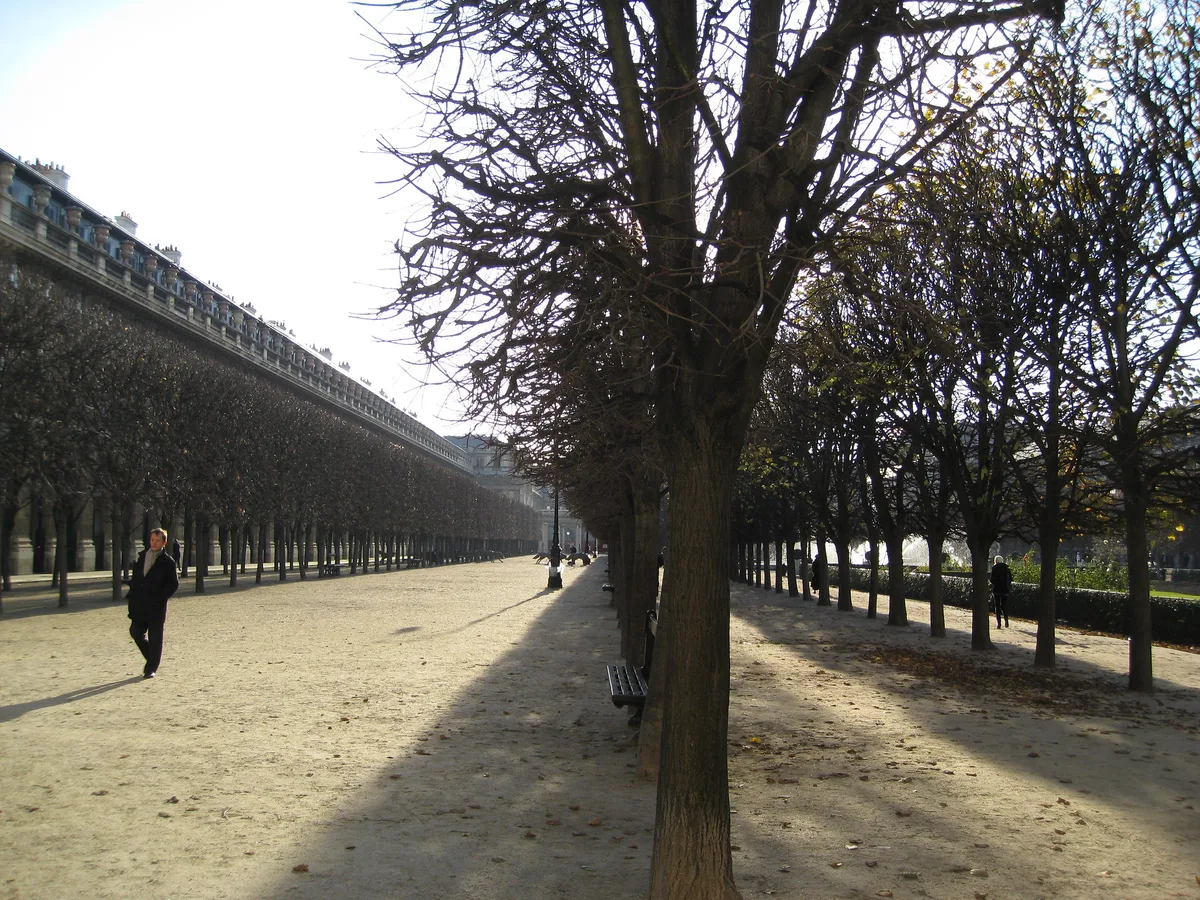
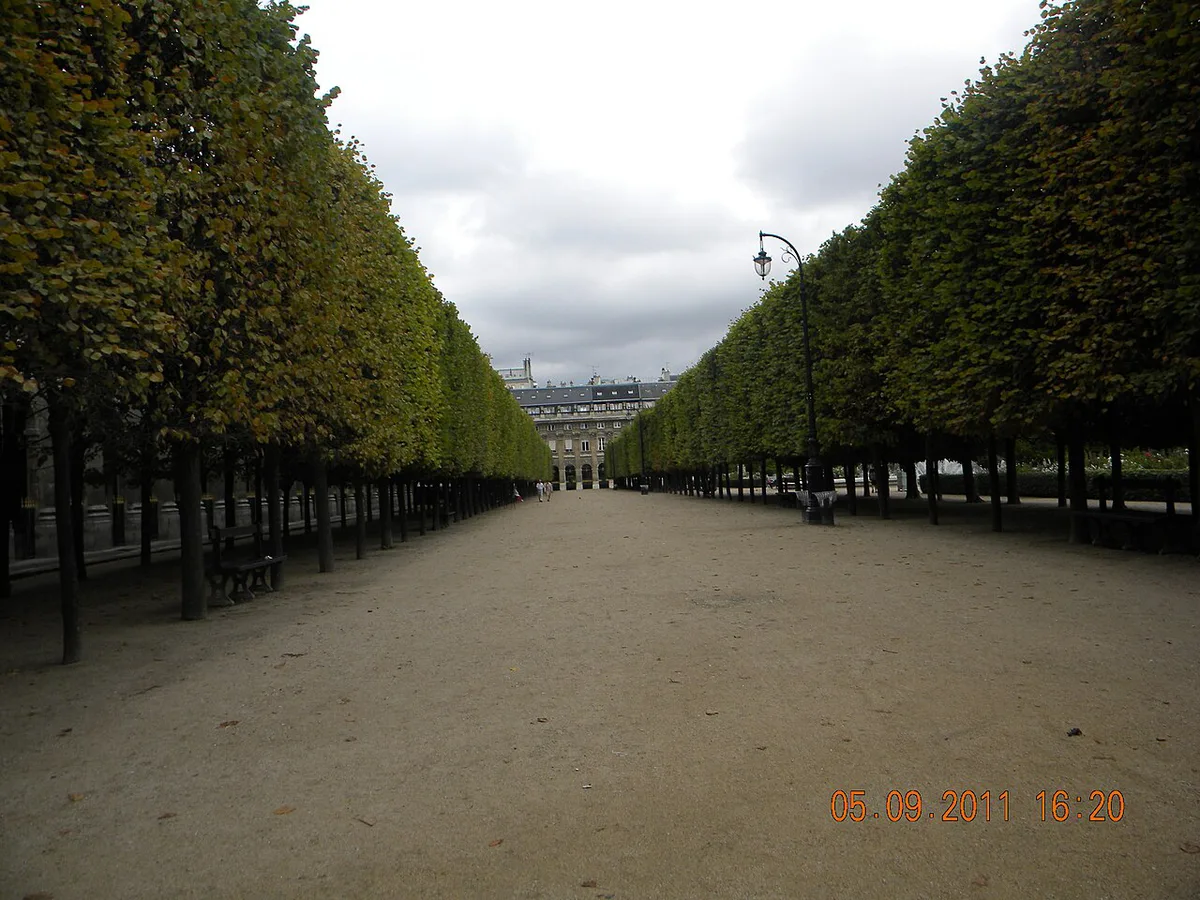
- Lime tree alleys and fountains: the shaded centre of the garden, with benches for a quiet rest. Double rows of clipped limes frame the central basin, which is why the garden keeps its sharp geometry even in high summer.
- Magnolias: they bloom in spring and draw walkers and photographers.
- Small cannon: used as a clock between 1786 and 1911, it is an easy detail to miss. A magnifying lens focused the midday sun on its fuse, so on a clear day it fired at noon.
A short history of the garden: from Richelieu to Colette
The garden is older than the arcades that frame it. Cardinal Richelieu planted the first garden of his palace in 1629, on a design by Jacques Boyceau, and around 1674 the Duke of Orléans had André Le Nôtre redesign it. Claude Desgots reworked it again in the early eighteenth century (Wikipedia).
The enclosed rectangle you walk through today dates from 1781, when Louis-Philippe d'Orléans had the architect Victor Louis build new ranges on three sides of the garden, with ground floors let to shopkeepers. The galleries carry the names of the duke's sons: Valois, Montpensier and Beaujolais (Centre des monuments nationaux).
- Revolution: on 12 July 1789 Camille Desmoulins climbed onto a table in the garden and urged the crowd to take up arms, two days before the fall of the Bastille.
- Shops and gambling: the arcades held more than 400 shops, along with theatres, restaurants and gaming houses, until the gaming rooms closed in 1836.
- Writers: Colette moved into number 9 in 1926 and came back for good in 1938, and Jean Cocteau lived at 36 rue de Montpensier from 1940 to 1947. The garden's two main alleys are named after them.
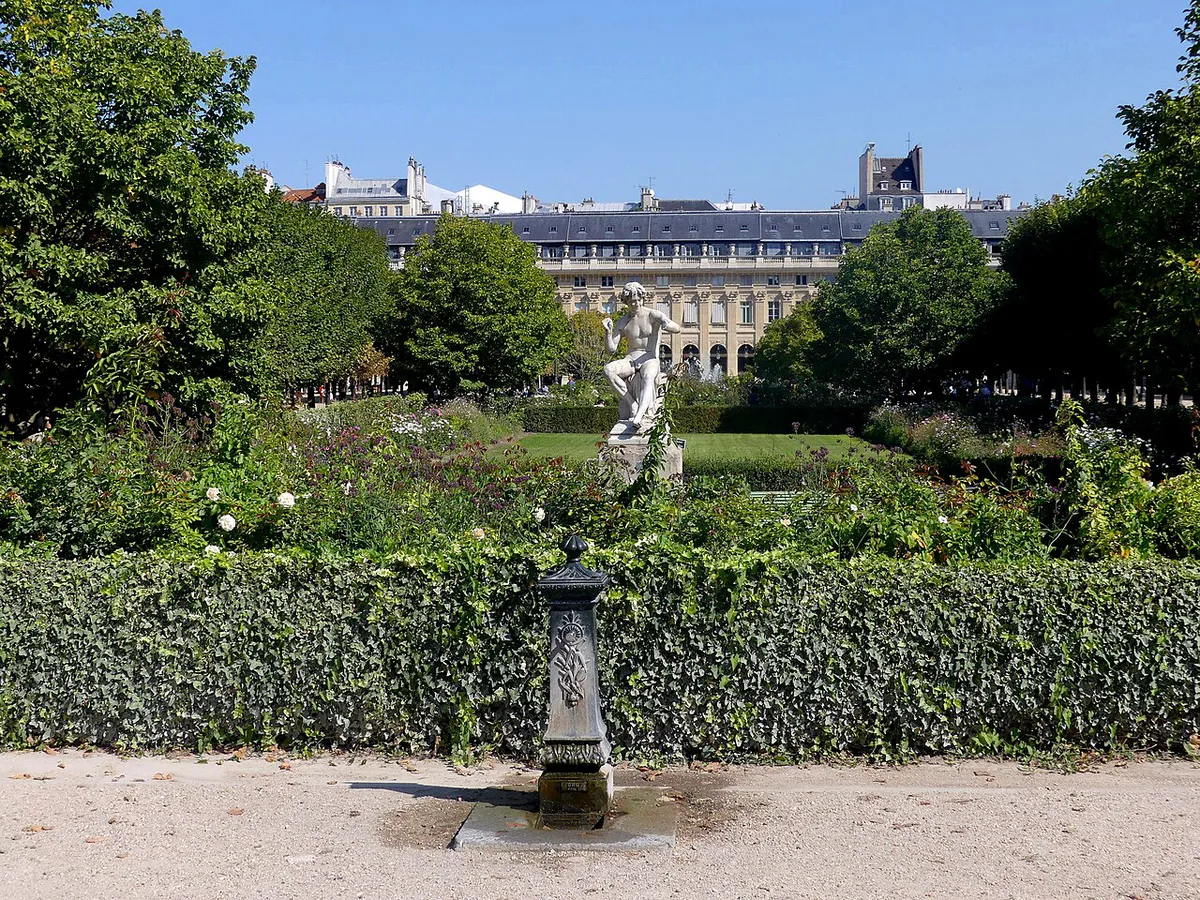
- Today's planting: in 1992 the landscape gardener Mark Rudkin laid out the present lawns and flower beds. The two kinetic fountains are by Pol Bury, and Michel Goulet's chairs, Les Confidents, are set around the garden.
Knowing this changes the walk: the long, regular lime alleys are the eighteenth-century frame, the shopfronts under the arcades are the descendants of Victor Louis's rented ground floors, and the art is a late-twentieth-century layer added to an old garden.
Hours, Costs and Rules
Entry to the garden is free, and opening hours change with the season. Check the official Palais-Royal site for current hours and rules.
Best Time to Visit by Season and Time of Day
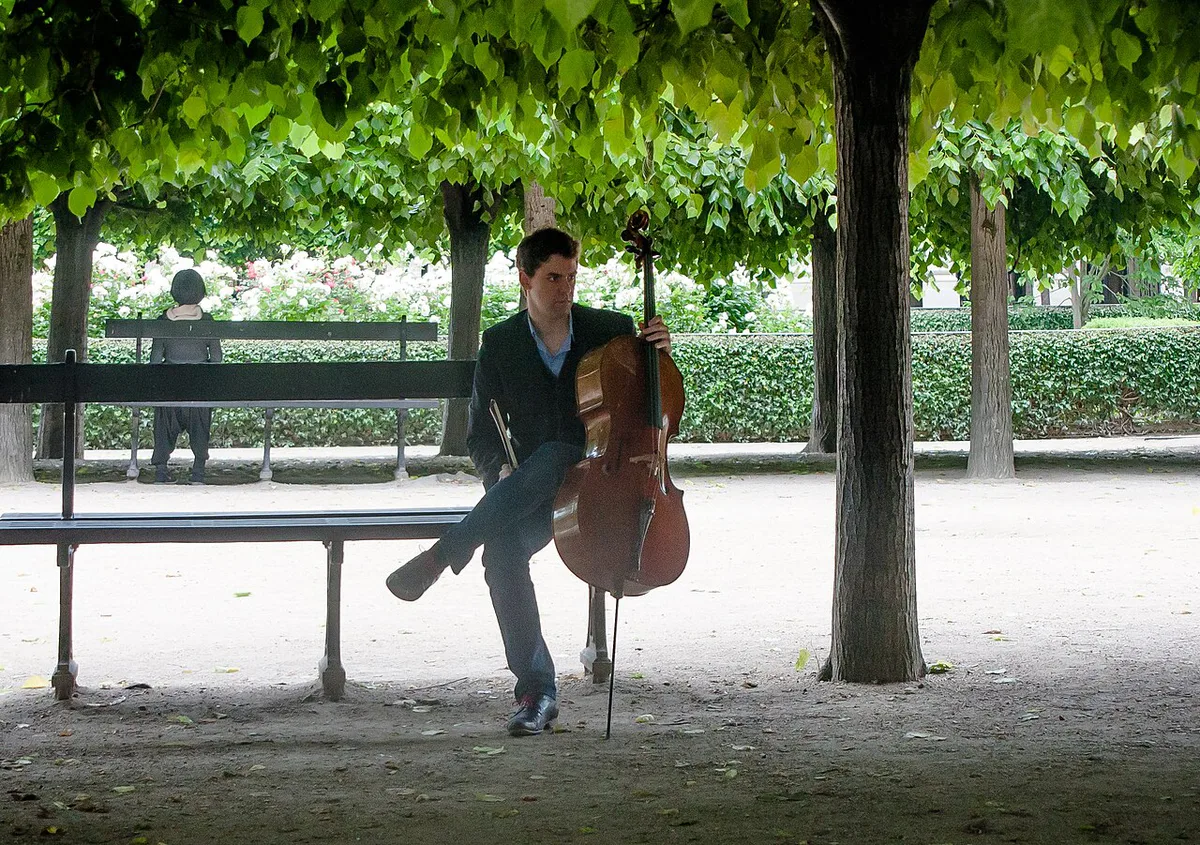
Spring is the standout season because the magnolias bloom in the garden. In summer, the lime trees give shade, and children play calmly in the sand. Autumn and winter suit a bare-branch walk along the arcades, and the galleries keep you dry in rain. Early morning and weekdays are usually the quietest. Arrive well before closing, since hours shift through the year.
How Long to Spend: Three Sample Plans
Match the plan to your day. Each one fits easily around a Louvre visit.
- 15 minutes: enter from place du Palais-Royal, cross the courtyard past the Buren columns, and leave by rue Vivienne.
- 45 minutes: add a slow lap of the arcades, a bench under the lime trees, and a look for the small cannon.
- 90 minutes or more: add a meal or coffee under the arcades, then walk on to the Jardin des Tuileries. Check which cafés are open first.
Palais Royal vs Tuileries vs Luxembourg
Each garden suits a different mood. Palais Royal is the smallest and most enclosed. For a larger, more traditional park day, head to the Luxembourg Garden. For another quiet central option, try the park at Monceau.
| Garden | Size and feel | Best fit |
|---|---|---|
| Palais Royal | Small, enclosed, arcaded | Short quiet stop near the Louvre |
| Tuileries | Large, open, formal | Walking and sightseeing between museums |
| Luxembourg | Large, traditional, shaded | A long park visit and lingering |
Events and Installations
The garden hosts temporary art and heritage events. Past examples include a free Easter egg hunt for children aged 3 to 12 on April 5, 2023. Wu Bin's sundial installation, Pavilion of Time, ran to September 20, 2026. The Palais-Royal also joined Heritage Days on September 19 and 20, 2026. Those dates are past, so look at the official calendar for what is on now.
Common Mistakes to Avoid
Expecting a large park is the biggest one, since this is a courtyard garden. Rushing past the Buren columns and the small cannon is another. Arriving near closing time leaves little to enjoy. Finally, do not assume every arcade café is open, because opening varies.
Keep the 15 minutes to pass through as your floor, not your target: adding the arcade walk stretches it to 45 minutes.
Frequently Asked Questions
Can you go inside the Palais Royal Paris?
The garden and courtyard are open to visitors. The palace itself houses the Ministry of Culture. It opened for a tour during Heritage Days on September 19 and 20, 2026.
Bloom-season notes
Optional updates when we add or revise garden guides.
Continue reading
Guides on the same trip