Schynige Platte Alpine Garden & Panorama Guide
Plan Schynige Platte: the Alpengarten, the cog railway from Wilderswil, a ridge loop or the long hike to First, with season and cost trade-offs.
Last updated November 2026: Schynige Platte, a ridge above Wilderswil near Interlaken in the Bernese Oberland, has an Alpine Garden with plants from the Alps and other mountain regions, reached by cog railway. Our Swiss and Austrian garden hub treats it as the high-altitude counterpart to the lowland collections. Our pick is a half day of garden plus ridge loop, with the 16 km hike to First kept for fit walkers who have a full day.
Featured image: vasile23, CC BY 2.0, via Flickr.
Schynige Platte at a glance
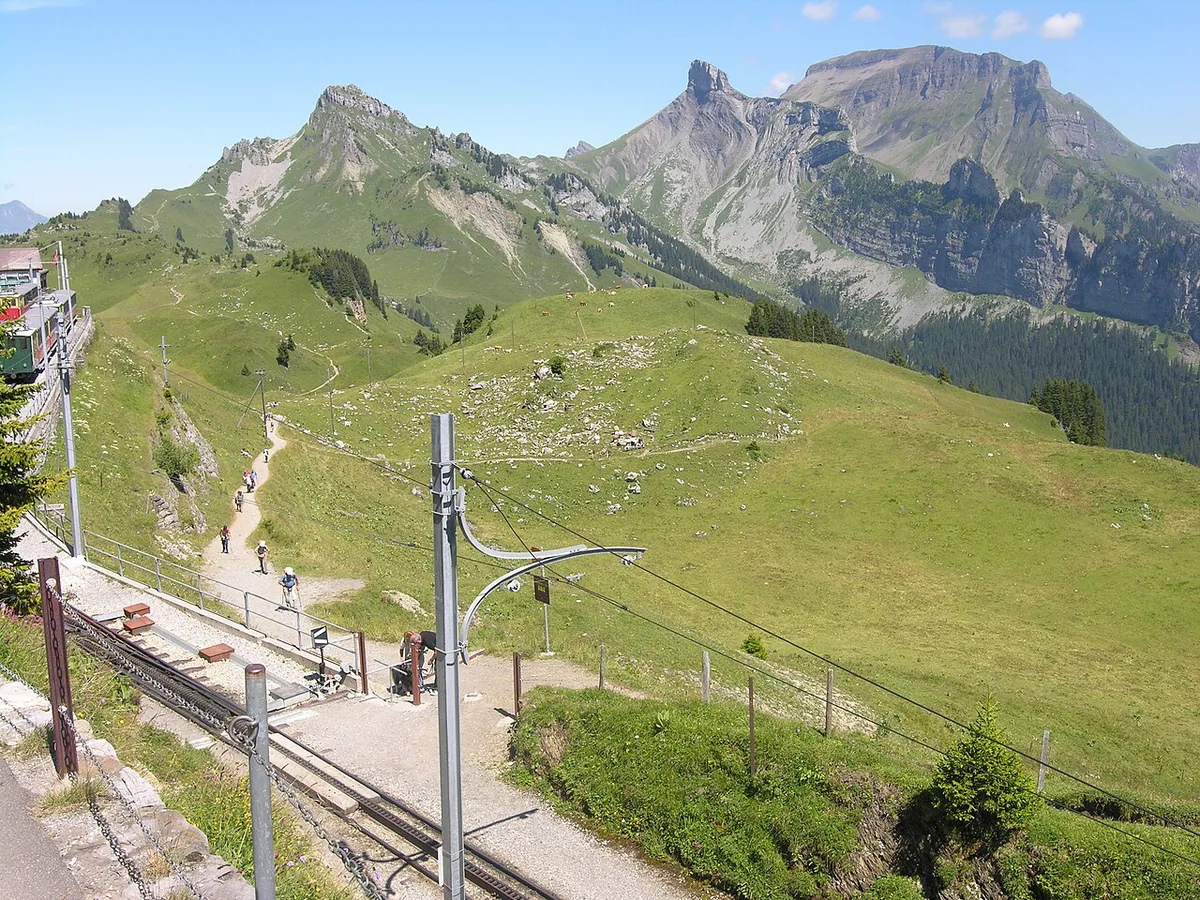
Schynige Platte is a small ridge. The station sits at about 1,967 m, and the highest point reaches 2,099 m. Three giants, the Eiger, Mönch and Jungfrau, line up across the valley, with Lake Brienz far below to the north. Most visitors choose one of three formats, compared below. For garden-minded travelers we'd pick the middle option, which pairs the Alpengarten with a ridge loop.
| Option | Time on top | Effort | Cost drivers | Best for |
|---|---|---|---|---|
| Garden only | Short loop beside the station | Easy | Rail return | Families and slower walkers |
| Garden plus ridge loop | Round walks from 1 km upward, including Panoramaweg Oberberghorn | Easy to moderate, with some exposed edge | Rail return, food at the summit | Garden lovers who want the views |
| Full hike to First | 16 km, 6 to 7 hours of walking | Moderate to demanding: about 700 m up, 1,000 m down | Rail one way, First gondola down | Fit walkers with a full day |
Getting there: the cog railway from Wilderswil
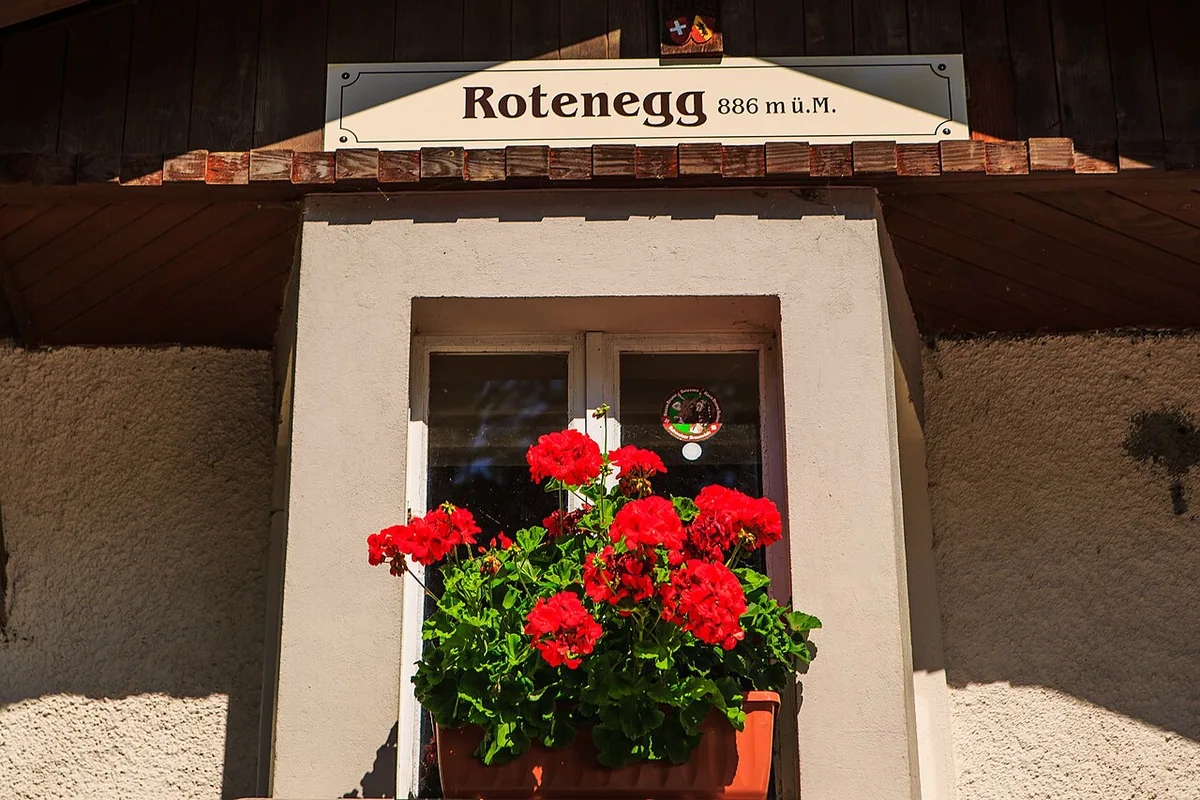
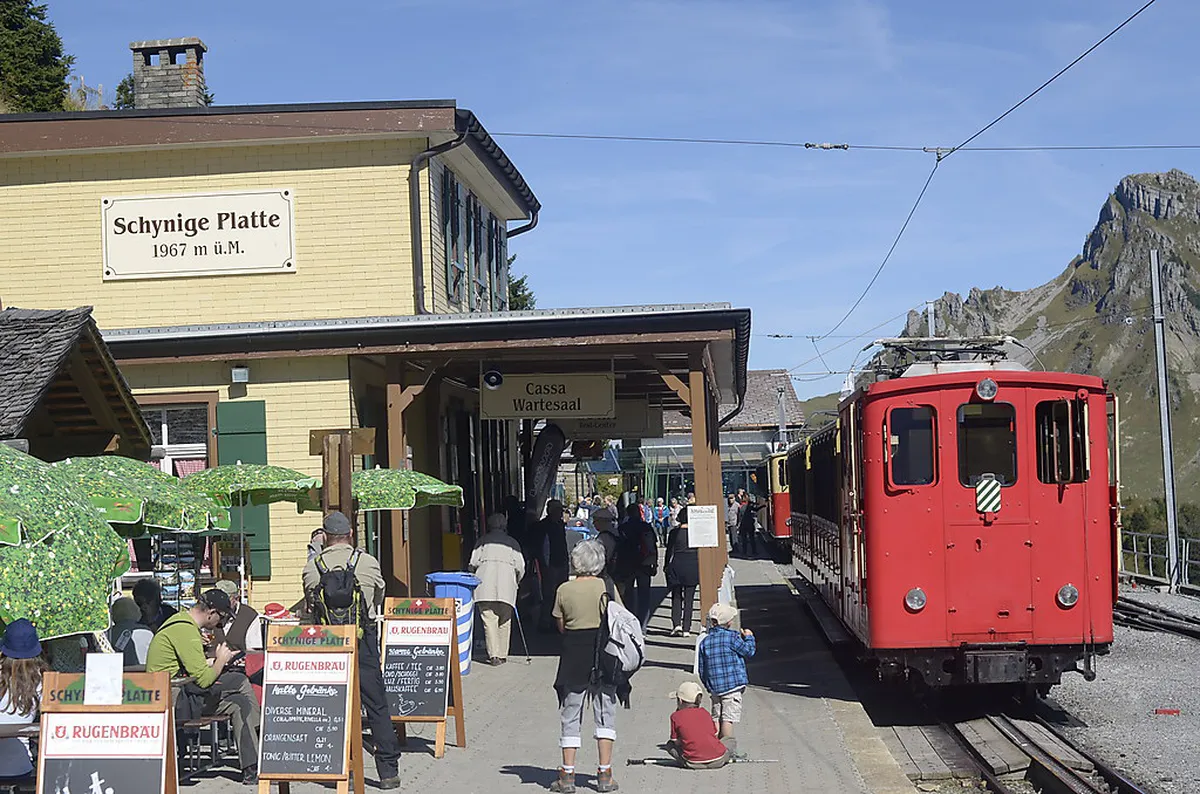
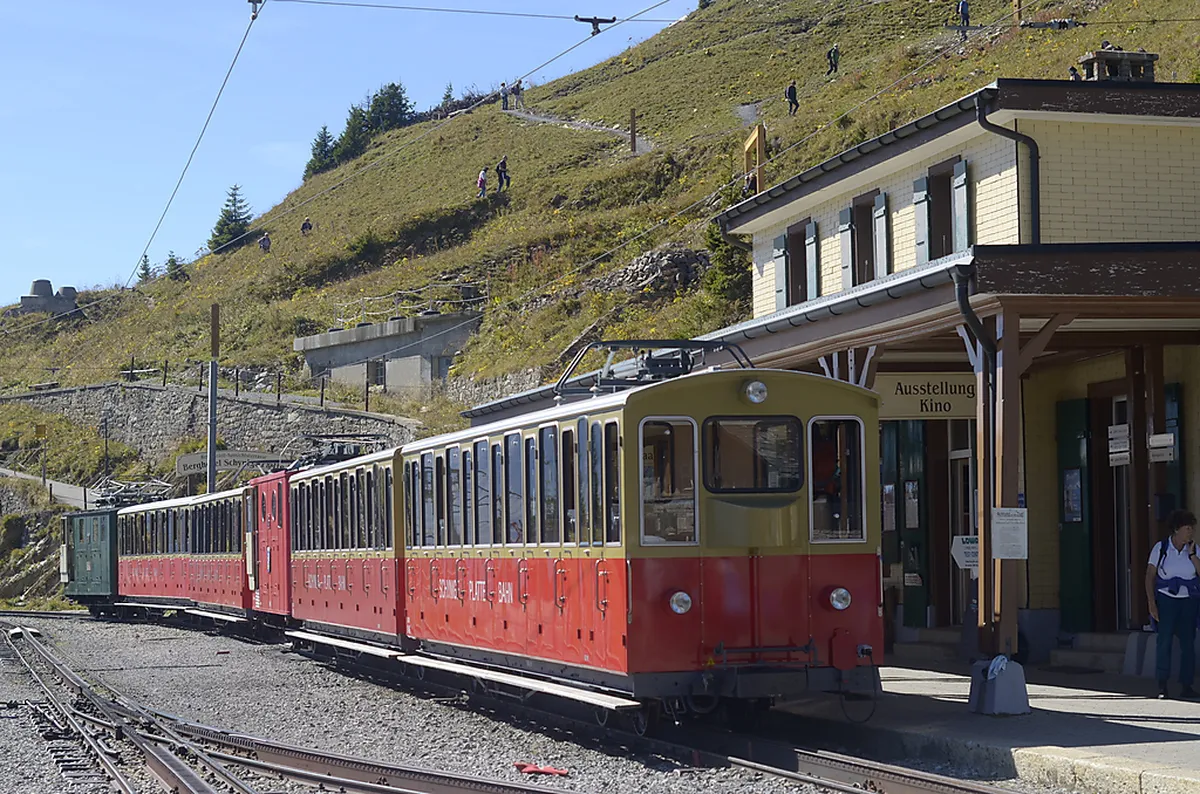
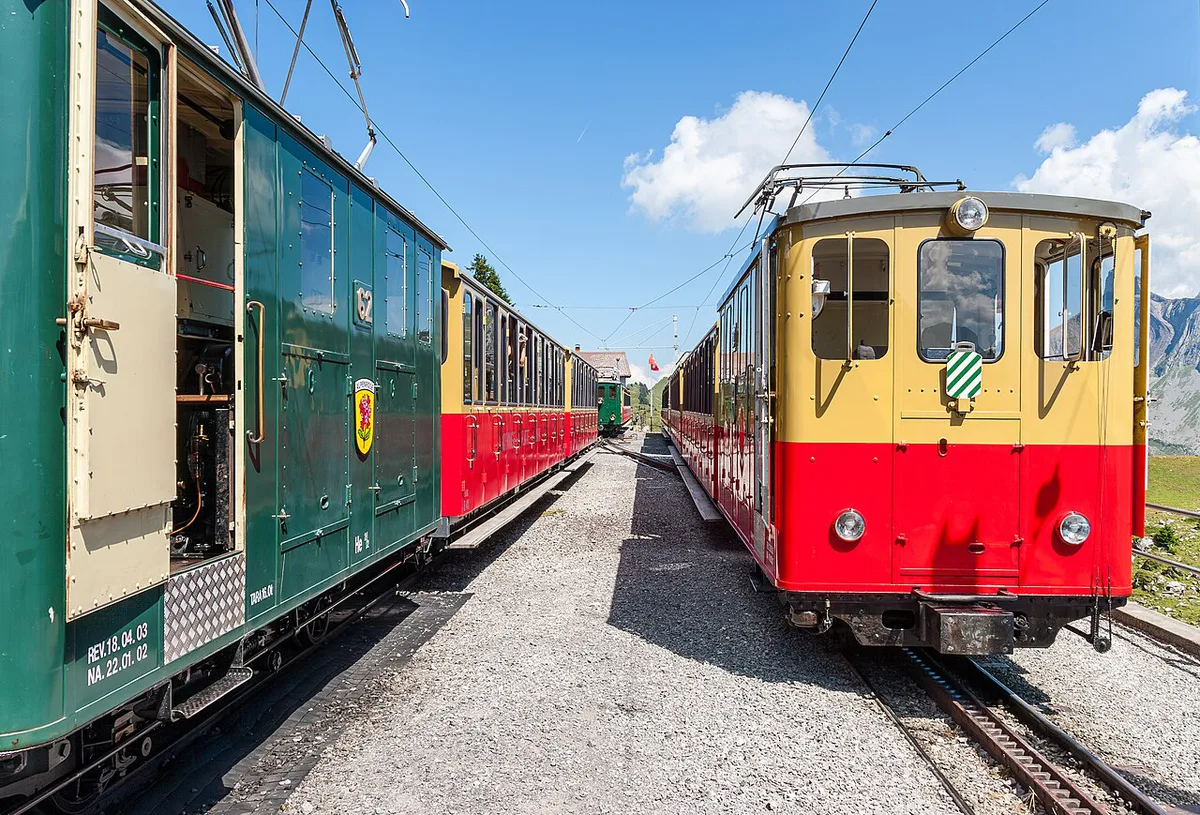
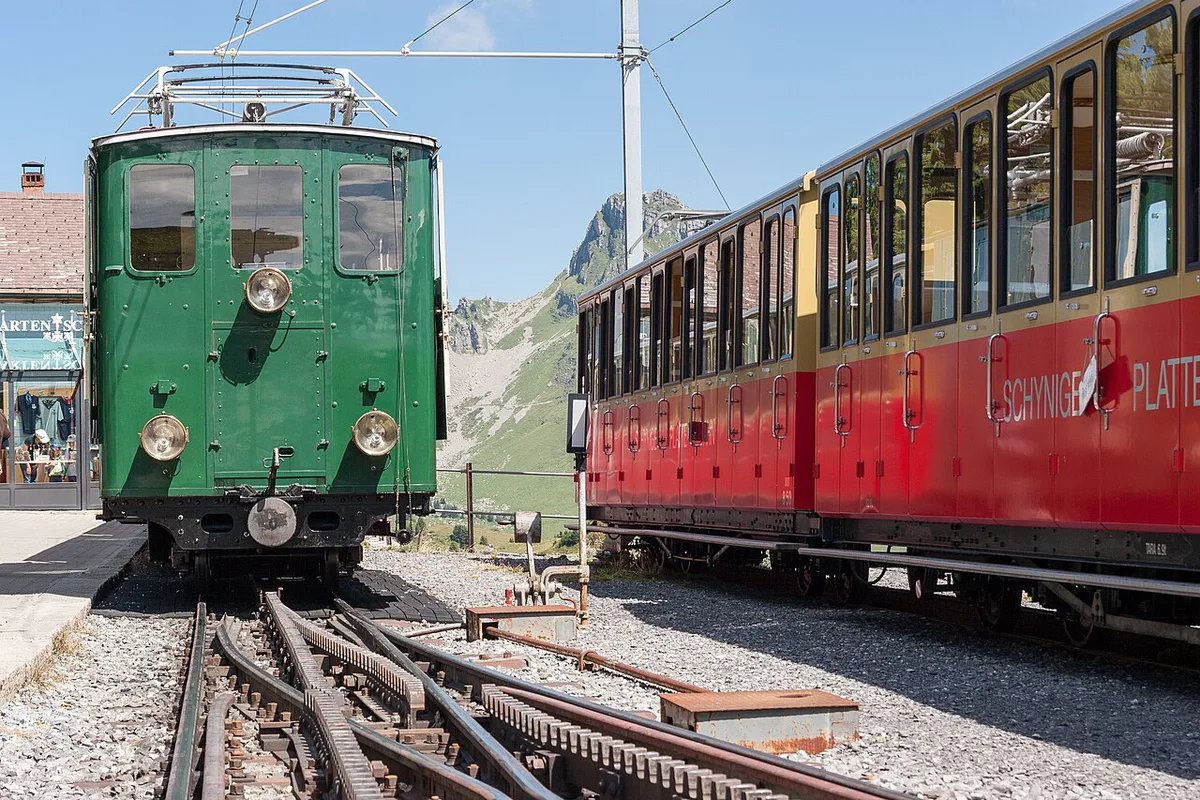
Trains run from Interlaken Ost to Wilderswil, where the cog railway begins. From Wilderswil, the climb to the summit station takes about 52 minutes. Operating since 1893, the line usually runs from late May or early June until October. Winter closes it. Current fares, timetables and the last descent are posted on the Jungfrau Region site. Swiss Travel Pass and Half Fare holders should ask the operator whether a discount applies. A car only gets you as far as Wilderswil. Public transport also suits the one-way hike to First, because you finish in Grindelwald rather than back at the start.
Plan around the rail clock: the climb from Wilderswil takes about 52 minutes, so an early train leaves time for the garden before afternoon storms build.
The Alpine Garden (Alpengarten)
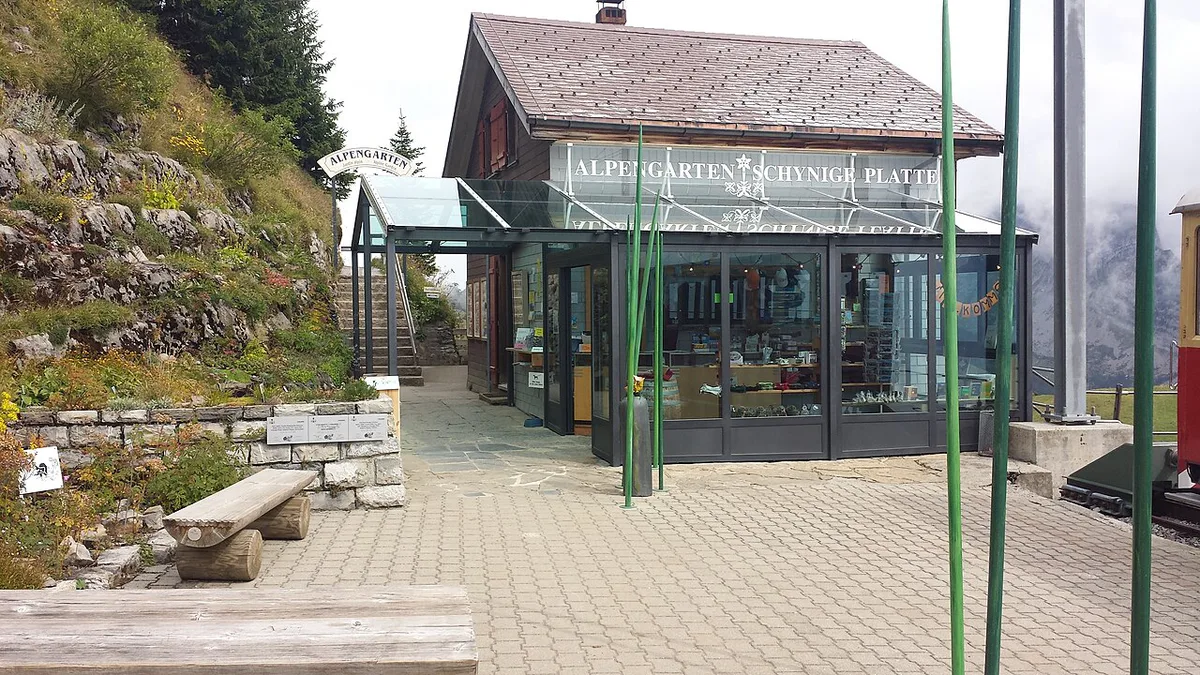
Beside the upper station, a short loop runs through the Alpengarten, where name plates label hundreds of plants. Collections cover species from the Alps and other mountain regions. A stroll here teaches you what to look for on the slopes later in the day. Flowering starts around the late May to June opening, when patches of snow still sit on the ridge. Peak bloom shifts with snowmelt, so look for current garden notes rather than trusting a fixed month. Entry terms and opening hours come from the operator, so check them before planning around the garden. We'd walk the garden first on arrival, since summer afternoons bring thunderstorms along the exposed ridge.

Short walks on the Platte
Round walks on the Platte range from 1 km up to 16 km. Panoramaweg Oberberghorn is the classic choice from the Alpengarten. It follows a natural ridge across the meadows toward the Eiger, Mönch and Jungfrau. At the Oberberghorn, the path crosses the rocky base of the horn and reaches the northern ridge, where Lake Brienz comes into view for the first time. Halfway along that ridge, a small metal step ladder adds a little scramble. Despite being easy to follow, the path runs close to the edge, so stop only where it widens. Free-roaming cows graze these meadows, and you hear their bells long before you see them. Loop back toward the station and Berghotel for a cheese and meat platter, a cold beer or an ice cream. We'd pick this loop over the long hike for a first visit.
The full hike to First: is it for you?
Walking from Schynige Platte to First covers about 16 km in 6 to 7 hours. Expect roughly 700 m of ascent and 1,000 m of descent. The path crosses the western slope of the Loucherhorn, passes over the Egg, then climbs the Faulhorn at 2,681 m. After the Faulhorn, it passes Bachalpsee and ends at the First aerial cableway. Several narrow, exposed stretches have cable protection, so no climbing skill is needed but a head for heights helps. Because First sits above Grindelwald, you finish in a different town from the one where you started. Ride the gondola down, then take public transport back to your base. Confirm the trail status and the last gondola descent on the Jungfrau Region site before you commit.
- Go if you can walk 6 to 7 hours with about 1,000 m of downhill on your knees.
- Go if the forecast is clear and you can catch the first or second train up.
- Go if you know the last First gondola descent and your pace fits inside it.
- Go if you carry a windproof layer, sun protection and at least 1.5 liters of water.
- Skip if you dislike heights or narrow, exposed footing.
- Skip if afternoon thunderstorms are forecast.
- Skip if you only have half a day, and take the ridge loop instead.
Costs, tickets and opening season
No CHF figure appears here because fares change by season. The operator's page on the Jungfrau Region site lists current prices for the railway. A return ticket costs more than a one-way ticket. The First hike swaps the return leg for a one-way rail fare plus a gondola ride down. The hike itself needs no guide or permit, so transport is the only fixed cost. Season runs from late May or early June to October, and snow can shift those dates.
- Rail return from Wilderswil: the baseline for the garden and ridge loop.
- Rail one way plus First gondola: the cost pattern for the hike to First.
- Alpengarten entry: ask the operator whether it is included.
- Food at altitude: the summit restaurant and Berghotel terrace sell platters, drinks and ice cream.
- Overnight at the Berghotel: optional, and priced by the hotel.
When to go
Late June to mid-September is the safest window. Highs at the station sit around 12 to 20°C. The full panorama trail is usually clear of snow from about late June. The Eiger, Mönch and Jungfrau are most often clear in the morning. Late May to June brings 5 to 12°C and lingering snow patches, and the garden is just starting to flower. October runs 3 to 10°C with golden larch and grass, but the last train down leaves early. Winter closes the railway and buries the ridge in snow. Weekdays in July, August and early September are quieter than weekends and school holidays. Aim for the first or second train up for clearer views.
- Low cloud: do the garden loop, keep the ridge walk short and warm up in the Panorama restaurant.
- Thunderstorm risk: skip the First hike and head down early.
- Snow or a closed railway: switch to a lowland garden instead.
Where to stay and eat
Berghotel Schynige Platte has hosted walkers and day visitors for over 100 years. Rooms are themed and nostalgic, and the Panorama restaurant serves traditional Swiss food. Its terrace faces the Eiger, Mönch and Jungfrau, which makes sunrise and sunset the draw of an overnight. Staying there also puts you at the trailhead for an early start to First, though opening dates and booking terms come from the hotel itself. Wilderswil and Interlaken work as valley bases, with the cog railway leaving from Wilderswil.
Mistakes to avoid and safety
Temperatures near 2,000 m can swing 10°C or more within hours. Fill your bottle at the station, since the first stretch has no refill point. Thunderstorms build fast on summer afternoons, so start early and descend if clouds darken.
- Packing only for the valley: bring a windproof layer, sun protection and a hat.
- Carrying too little water: take at least 1.5 liters for the long hike.
- Wearing trail runners: shoes with real grip handle the loose, steep sections better, and poles ease the final descent.
- Missing the last train or gondola: check both times before you start.
- Crowding cows: give mothers with calves a wide berth and keep dogs leashed.
Lowland gardens to pair with the Alps
Schynige Platte opens only as snow leaves the ridge, so early-season trips need a lowland plan. Start in Zurich with the university garden in Zurich, a lowland contrast to the alpine collection. The Botanischer Garten der Universität Zürich publishes its own visitor details. Geneva's botanical collection suits a Lake Geneva leg of the trip. Flower fans can add tulips at Morges when the ridge is still snowy. Our garden hub for both countries maps the full set.
Bloom-season notes
Optional updates when we add or revise garden guides.
Continue reading
Guides on the same trip