Monet's House in Giverny: Rooms, Tickets & Visit Tips
What you see inside Monet's house in Giverny, how it fits with the gardens, and how to plan your visit from Paris.
Last updated November 2026: a visit to Monet's house Giverny means stepping into the pink-and-green-shuttered home where Claude Monet lived for 43 years, from 1883 to 1926. You see it together with the gardens and the water lily pond as part of the Fondation Claude Monet site. Below you will find the rooms, the route, who should go inside and how to plan the day.
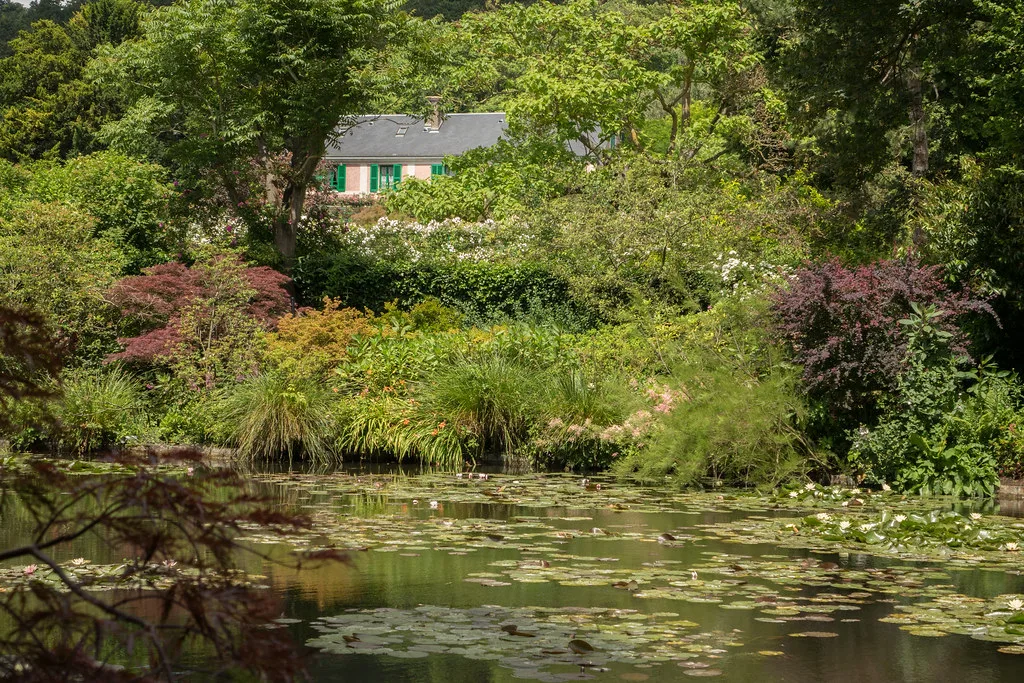
Featured image: Alain Homsi, CC BY 2.0, via Flickr.
What Monet's House in Giverny Is
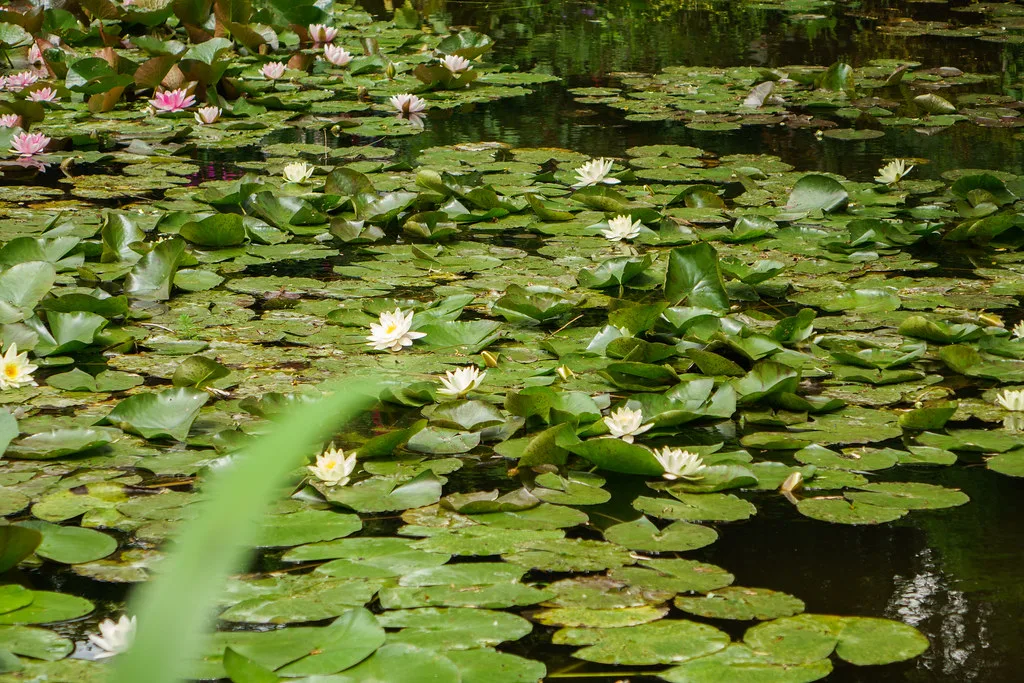
Monet's house stands at 84 Rue Claude Monet, 27620 Giverny. Fondation Claude Monet runs the house and gardens as one site, so you do not visit the house on its own. Three names often get mixed up. Monet lived and worked in the house. In front of it lies the Clos Normand flower garden, covered in our guide to Monet's garden at Giverny. Beyond an underpass sits the water garden with the Japanese bridge, which has its own page on the water lily pond.
Monet at Giverny: How the House Became a Museum
Knowing the house's history makes the rooms easier to read. Monet first saw Giverny from a train window in 1883 and moved in that spring with Alice Hoschedé and the children of both families. He rented the property at first and bought it in 1890. Here is how the story runs from there.
| Year | What happened |
|---|---|
| 1883 | Monet moves into the house, the start of 43 years at Giverny. |
| 1890 | He buys the house and begins reshaping the flower garden in front of it. |
| 1893 | He acquires the land across the road, where the water garden is later built. |
| 1926 | Monet dies at Giverny. |
| 1966 | His son Michel Monet leaves the property to the Académie des Beaux-Arts. |
| 1970s to 1980 | The house and gardens are restored and opened to visitors, with the site run by the Fondation Claude Monet. |
That restoration explains why the rooms look so complete. Furnishings, colours and tilework were rebuilt to match the period of Monet's life, which is also why many walls carry copies rather than originals. Monet was an avid collector of Japanese woodblock prints, so those copies are a faithful echo of what he actually hung. The same taste shaped the Japanese bridge in the water garden.
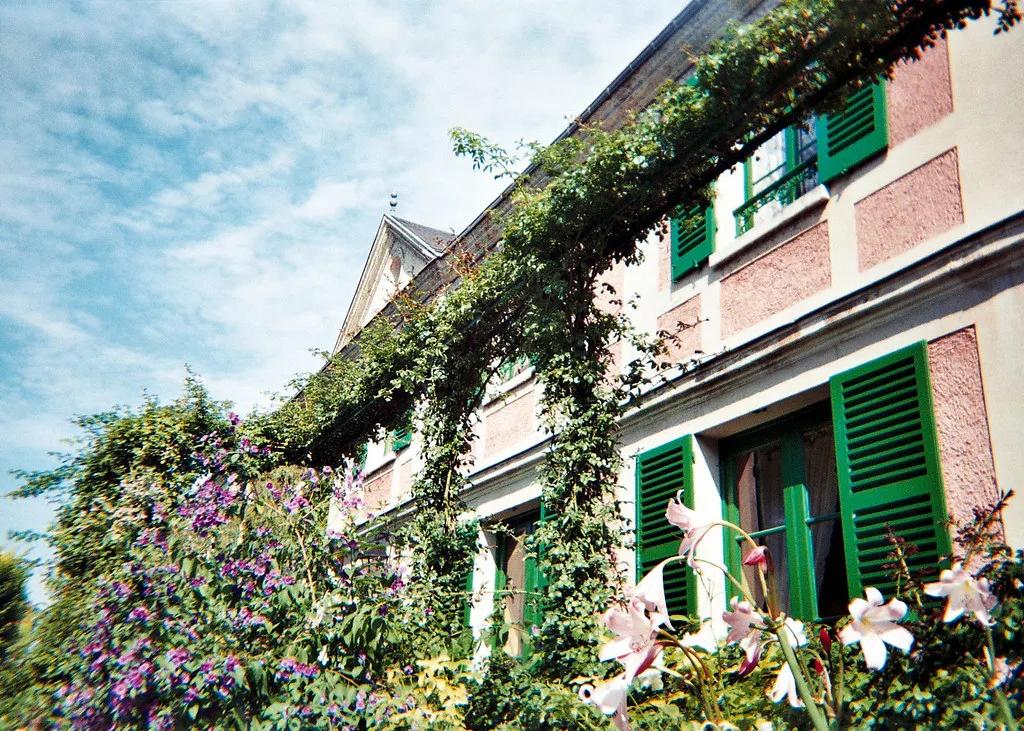
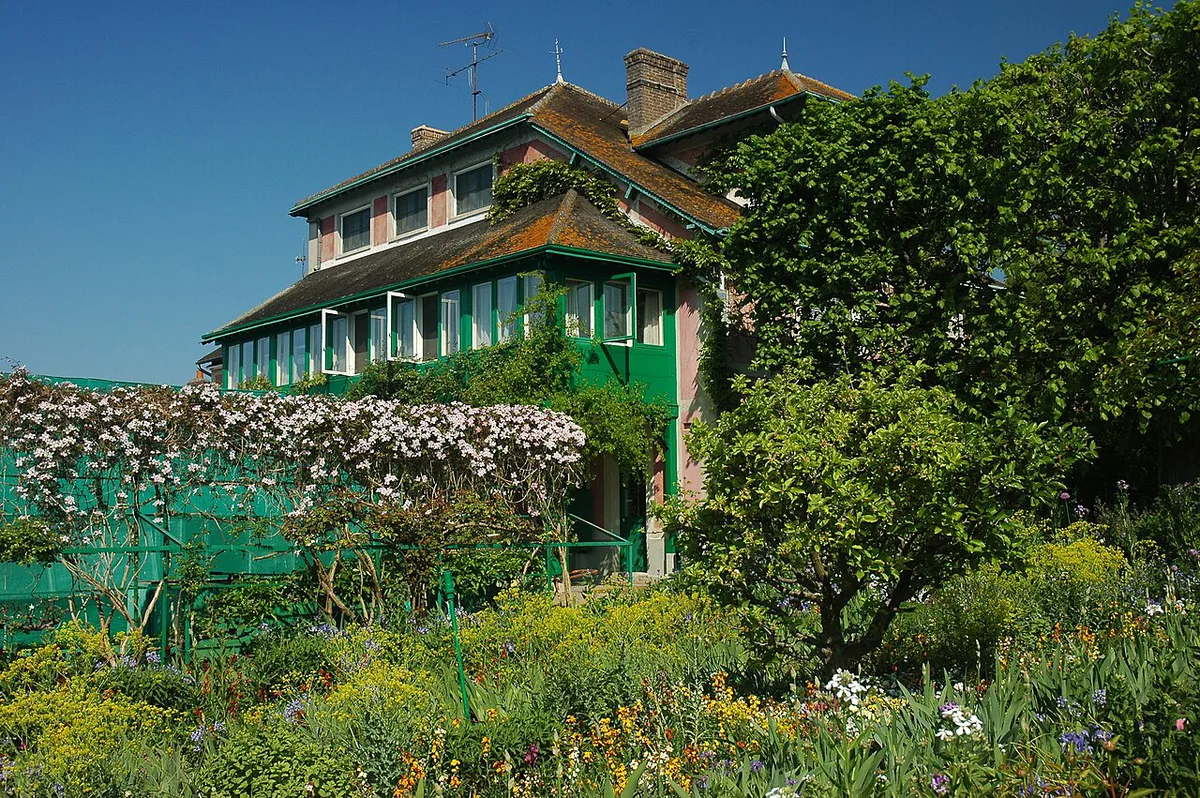
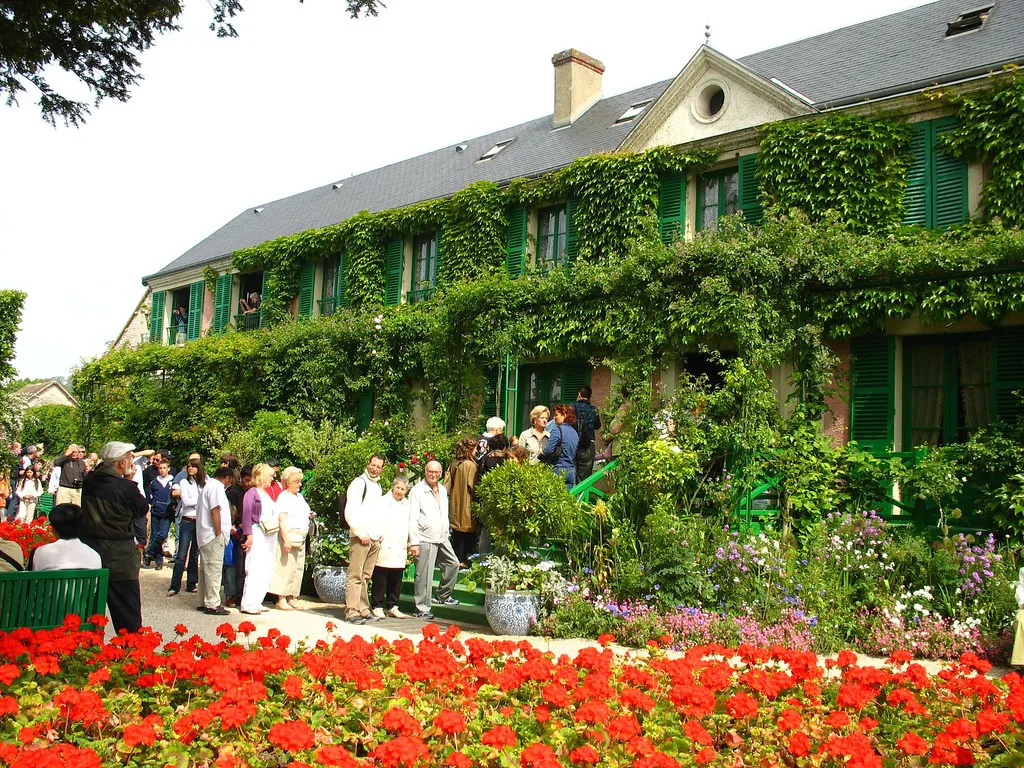
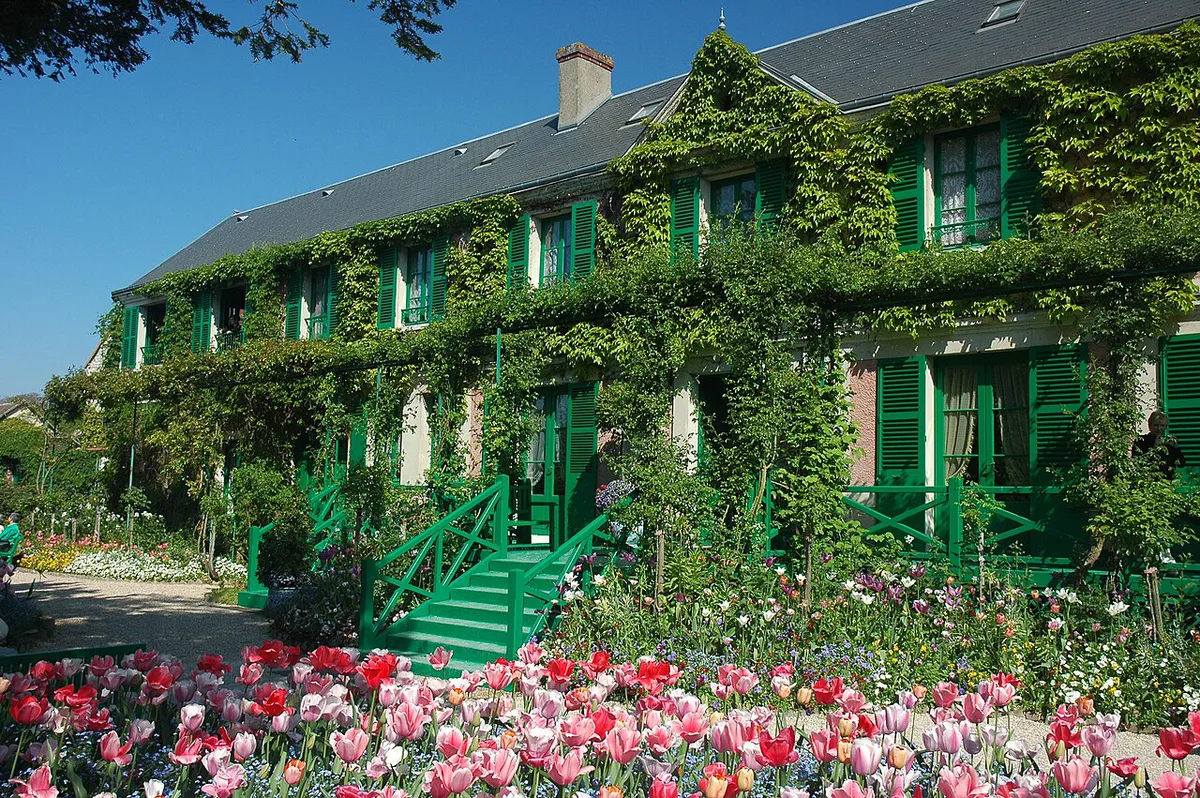
The pink-and-green exterior is part of that restoration too. When you stand in the Clos Normand and look back at the facade, you are seeing the house much as the painter and his family knew it.
What You See Inside the House
Rooms are furnished in late-19th-century style. Your route covers Monet's office and studio, the bedrooms, the bathroom, the kitchen and the pantry. Many pictures on the walls are copies of Japanese prints and of paintings by Monet and his friends. Originals went to museums after his death. Next to the house stands a building from 1914, made for the large Water Lilies canvases. It is now the shop.
- Yellow dining room: the sunny room most often singled out in travel writing, paired with the blue dining room.
- Kitchen: light blue tiles and Normandy tilework make this the most photographed corner indoors.
- Office and studio: the room where Monet worked at the house.
- Blanche's bedroom: one of several bedrooms on the route.
- Walls: look for the Japanese print copies and the copies of paintings by Monet and his circle.
How the House Fits Into Your Visit
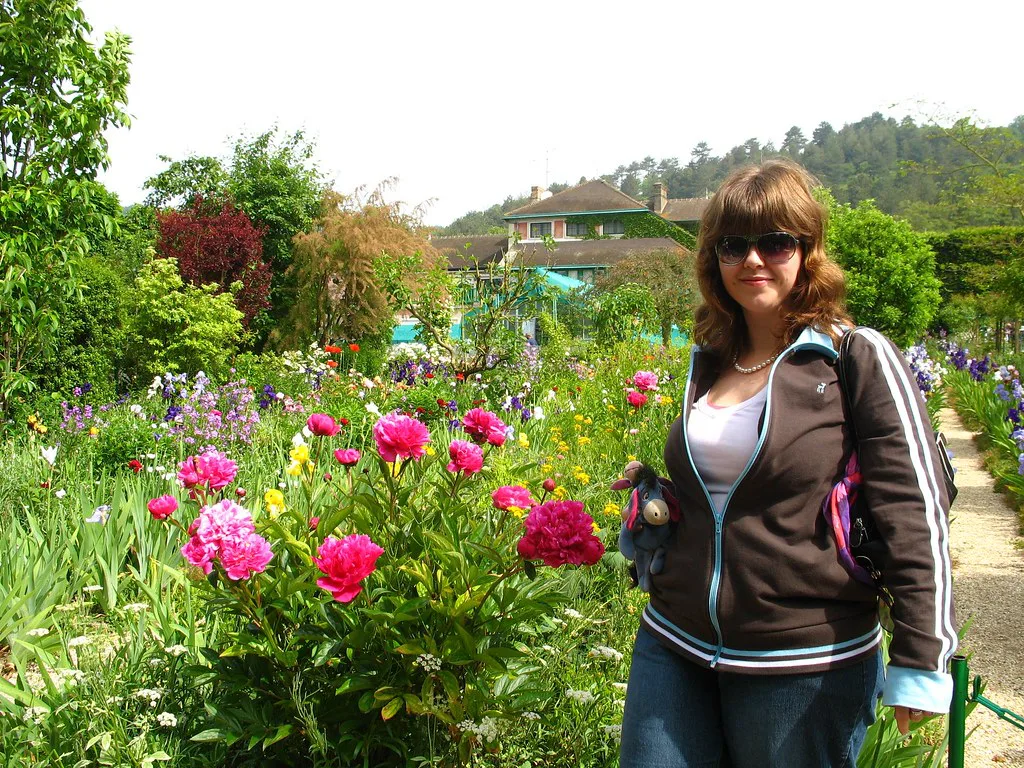
The usual route runs from the house and shop through the Clos Normand, under the road, and into the water garden. Entry flow is set by the Fondation, so follow the on-site signs rather than planning your own order. Rooms are small, so the interior is where crowds are felt first. Arriving at opening time or later in the afternoon spreads the load. Use these editorial estimates to budget your day.
- House interior: about 30 to 45 minutes.
- Shop and Clos Normand: about 30 minutes.
- Water garden and Japanese bridge: about 45 to 60 minutes.
- Whole site: roughly 2 to 3 hours.
- These are editorial estimates, not official figures.
Is It Worth Going Inside? Who It Suits
Going inside adds the human side of the story. You see where Monet ate, worked and slept before you walk into the landscape he painted. Use this table to decide how much time to give it.
A whole-site visit runs roughly 2 to 3 hours, and the house takes about 30 to 45 minutes of that. On a tight day the garden route fills the rest.
| Visitor | Worth going inside? | How to plan it |
|---|---|---|
| First-timer | Yes | Spend about 30 minutes on the dining rooms, kitchen and studio. |
| Art-history fan | Yes | Note which walls hold copies, then see originals at the nearby museum. |
| Family with children | Short stop | Keep the interior brief and save energy for the garden paths. |
| Photographer | Partly | Check photography rules at the entrance; the shuttered facade works from the garden. |
| Limited mobility | Check access first | The house is historic, so ask the Fondation what the interior route allows. |
| Short on time | Optional | Prioritize the Clos Normand and water garden; the house adds 30 to 45 minutes. |
- Mistake: treating the house and the pond as one and the same, when the pond lies past the underpass.
- Mistake: expecting original Monet paintings on the walls.
- Mistake: arriving without checking the season, which runs only part of the year.
- Mistake: skipping the nearby museum, where originals appear from time to time.
Tickets, Opening Season and Timing
Listings have long placed the season from late March to November 1, with April to October the most spectacular months and peak bloom from May to July. Check the Fondation's official site for current dates and ticket prices, since no fare is quoted here. Ticket types and booking are explained in our Giverny tickets guide. Season dates by year sit on our opening dates page. For month-by-month planning, read when to visit Giverny. Tulips and wisteria suit Giverny in April: Tulips, Opening & Visit Tips. Dahlias and hollyhocks suit Giverny in October: Is It Worth It? Dates & Tips.
Getting to Monet's House From Paris
Trains run from Paris Saint-Lazare to Vernon, then a shuttle bus covers the last stretch to Giverny. Current timetables and fares are on the SNCF site.
- Train plus shuttle: the flexible choice, since you set your own hours. Details are in our Giverny train guide.
- Guided tour: fixed departure and return, with transport handled for you. Compare options in our Giverny Tour from Paris: Which to Book and What It Costs roundup.
- Both routes end at the entrance on Rue Claude Monet.
Pair It With the Musée des Impressionnismes
Musée des impressionnismes Giverny sits just down the street from the house. Some original Monets are shown there from time to time, so it fills the gap left by the copies on the house walls. Current exhibitions are listed on its official site. Our museum guide covers the visit in detail. If you are choosing between Impressionist day trips, see Giverny versus Auvers-sur-Oise.
Accessibility and Practical Tips
Listings show a wheelchair-accessible entrance, parking, restroom and seating. The house itself is a historic building, so ask the Fondation what the interior route allows before you travel. Rules on bags and photography are posted at the entrance and on the official site. Bring layers, because you move between small rooms and open garden paths.
Frequently Asked Questions
Where are Claude Monet's paintings displayed?
Monet's house holds mostly copies. Original works moved to museums after his death. Some originals are shown from time to time at the Musée des impressionnismes Giverny, just down the street.
Is Monet's garden worth visiting?
Yes, if you want the setting of the Water Lilies paintings and the rooms where Monet lived in one visit. Plan for April to October, with peak bloom from May to July.
Bloom-season notes
Optional updates when we add or revise garden guides.
Continue reading
Guides on the same trip