Labyrinth Park of Horta, Barcelona: Tickets, Hours & Tips
Plan your visit to Barcelona's Horta hedge maze: getting there by metro, ticket and free-day trade-offs, how long to stay, and what to see on each terrace.
Last updated November 2026: the Labyrinth Park of Horta is Barcelona's oldest surviving garden, with a 750 m cypress hedge maze on its lower terrace. Set in the Horta-Guinardó district beside the Collserola ridge, it suits couples, families and slow walkers more than anyone racing a checklist. Use this guide for the metro route, ticket and free-day trade-offs, a terrace-by-terrace walk and nearby stops.
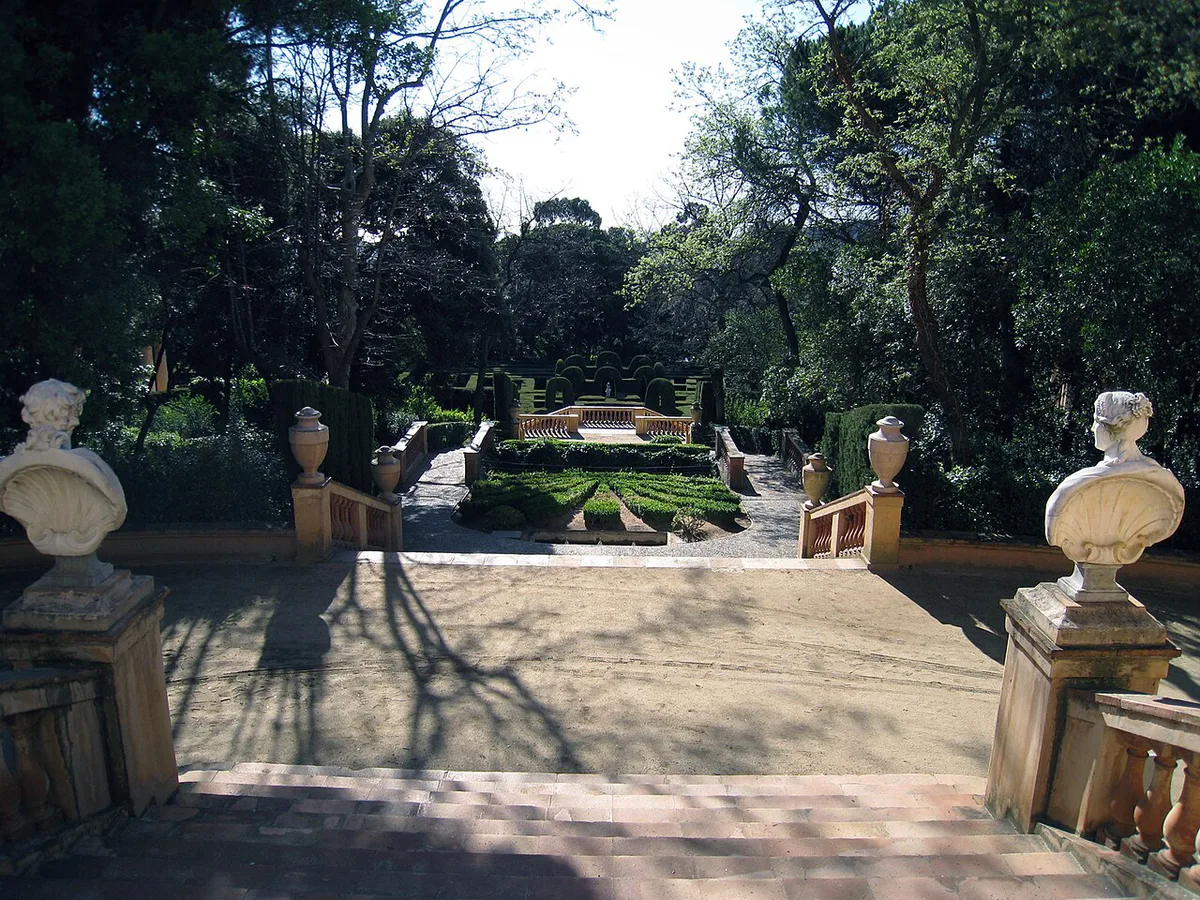
Featured image: dconvertini, CC BY-SA 2.0, via Flickr.
Is the Labyrinth Park of Horta worth visiting?
Yes, if you want shaded terraces, a maze and a quiet afternoon on a hillside. Park Güell is the usual comparison, and Horta is the calmer alternative away from the central tourist core. Our verdict: go for the maze and the staircases, and pair the visit with a nearby stop.
- Best for couples and families, with picnic tables and a playground outside the gate.
- Best for slow walkers who like water features, from the upper reservoir to the romantic garden waterfall.
- Consider Park Güell instead if you want a better-known stop nearer the main visitor circuit.
- One-line verdict: a half-day garden visit, not a ten-minute photo stop.
What the park is, and how its two gardens differ
Parc del Laberint d'Horta covers 9.1 hectares (about 22 acres) on the former Desvalls estate. Works began in 1791, when Joan Antoni Desvalls designed a neoclassical garden with Italian architect Domenico Bagutti. In the mid-19th century, architect Elies Rogent added a romantic garden with flower beds, gazebos, large trees and a waterfall. Desvalls descendants handed the park to the city in 1967, and it opened to the public in 1971. A restoration followed in 1994. Neoclassical terraces and statues occupy the lower slope, while the romantic garden sits in a shadier valley.
How to get to the Labyrinth Park of Horta
Take Metro line L3 to Mundet. Leave through the Arturo Mundet exit, the one with the elevator, because the other exit puts you on the far side of the Ronda de Dalt ring road. Signs lead to the park, and the walk takes about 7 minutes past the Velodrome. Address: Passeig dels Castanyers, 1, 08035 Barcelona. Bus lines 27, 60, 76 and H4 serve the area, but none links directly with the city centre. Line 27 reaches Sants station, and H4 passes near CosmoCaixa. Hop-on hop-off buses do not stop at the park. Check route details with the city's transport operator before you set out.
Tickets, free days and opening hours
Prices and hours below were compiled in November 2026, so check the current fee on Barcelona's tourism site before you go. Doors open at 10:00 daily. Closing time is 18:00 from November to March and 20:00 from April to October. Christmas Day closes at 14:00. Entry has been reported at €2.23, an older figure that may have changed. Wednesdays and Sundays are free, and neighbours, seniors and children under 5 do not pay. Tickets are reported to be sold only at the park ticket office, with no online sale. Visitor numbers are capped at 750, described either as a daily limit or as a limit at any one time. On free days, expect a queue at the gate if the cap bites.
Plan for the slow, about 3 hours route only if you can stay until 20:00 from April to October, since winter closing is 18:00.
- Free day (Wednesday or Sunday): €0, but busier, so arrive at 10:00.
- Paid weekday: a small fee, fewer people and easier photos of the maze.
- Late arrival: avoid it from November to March, when the park closes at 18:00.
What to see, terrace by terrace
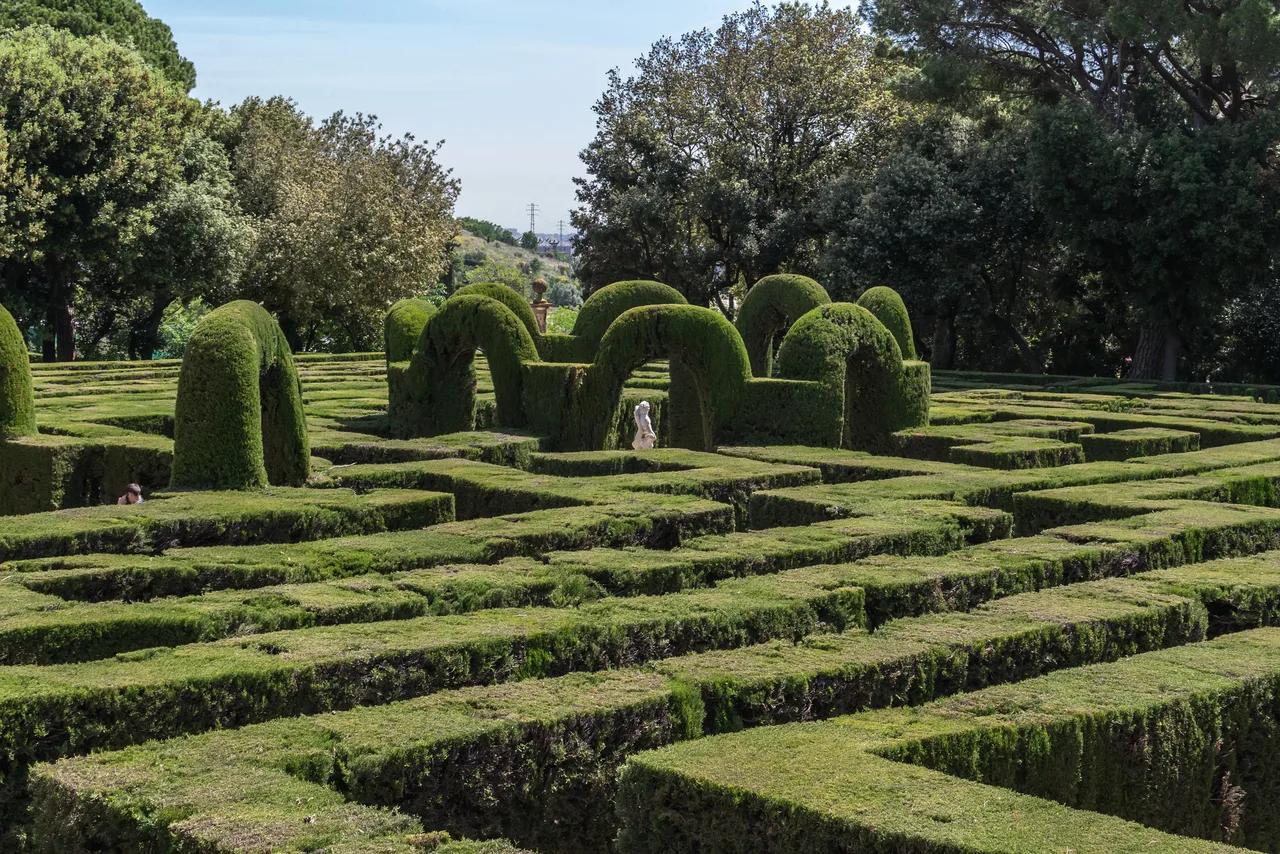
Follow the route in order and the park reads as a story about love told through statues. The maze alone is 750 m (about 2,460 ft) of trimmed cypress paths. Enjoy it rather than hunting for a shortcut, because getting lost is the point.
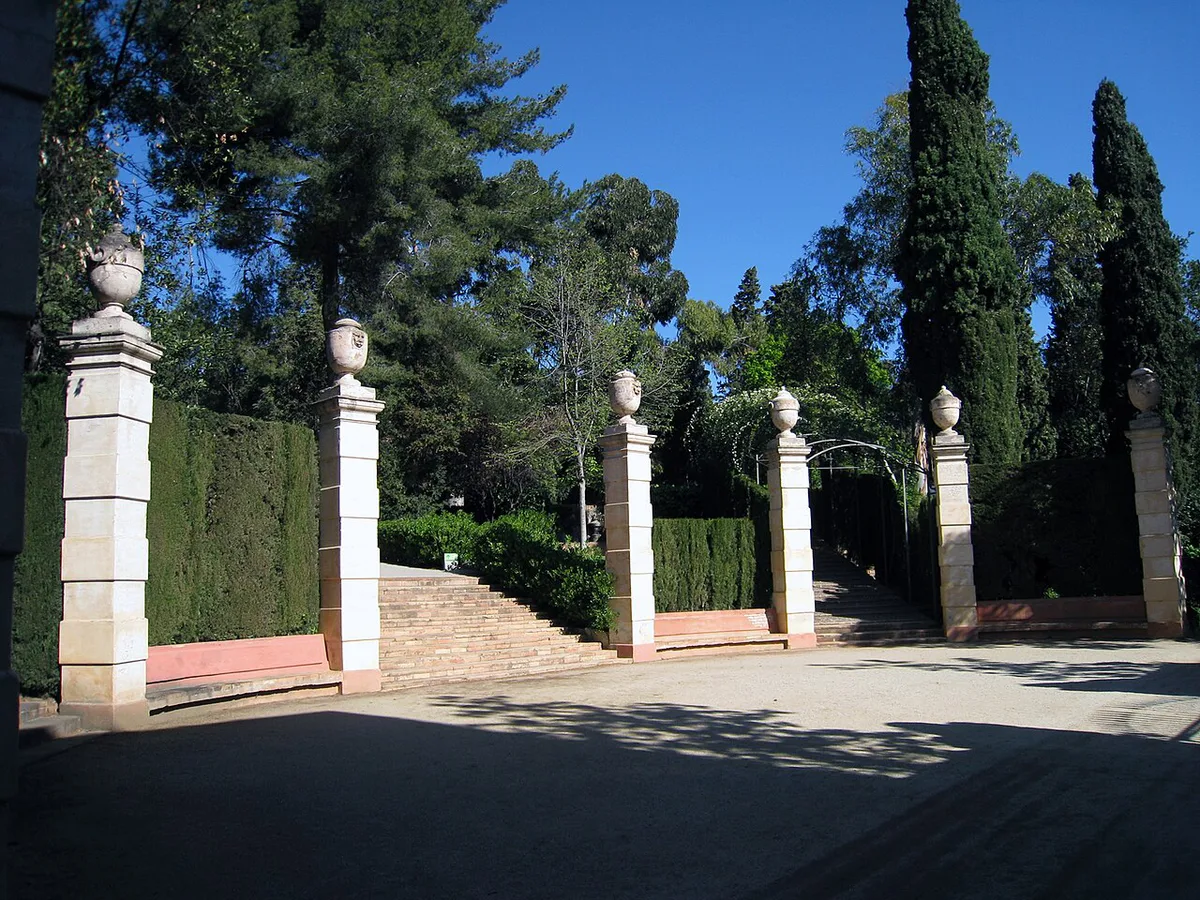
- Entrance and manor: the former Desvalls palace stands by the gate, with the medieval Torre Sobirana. It is not open to visitors, and the domestic garden behind it is usually closed.
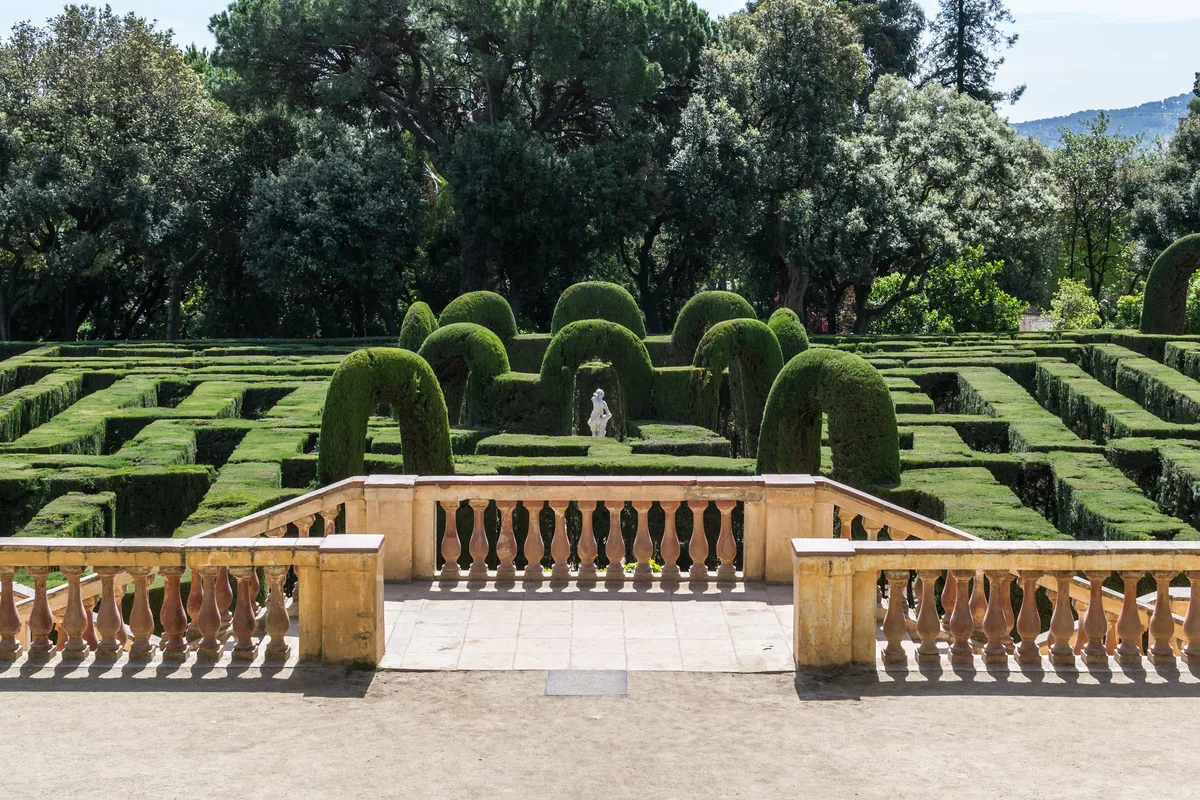
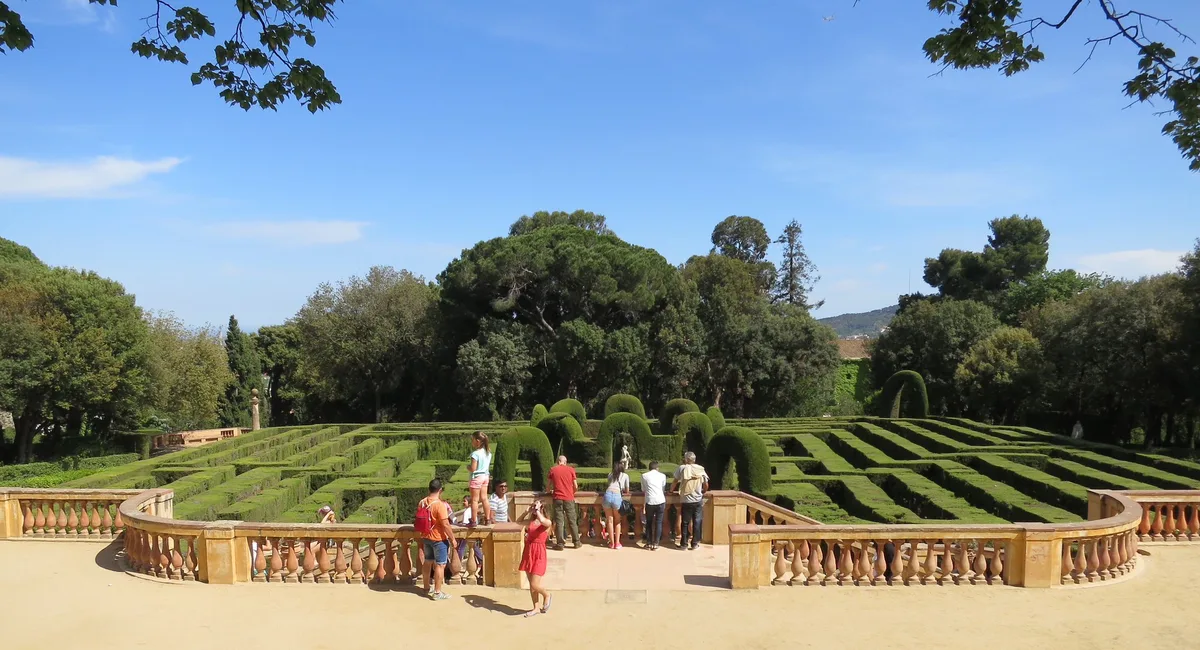
- Lower terrace, the maze: a marble relief of Ariadne and Theseus marks the entrance, and a statue of Eros stands at the centre.
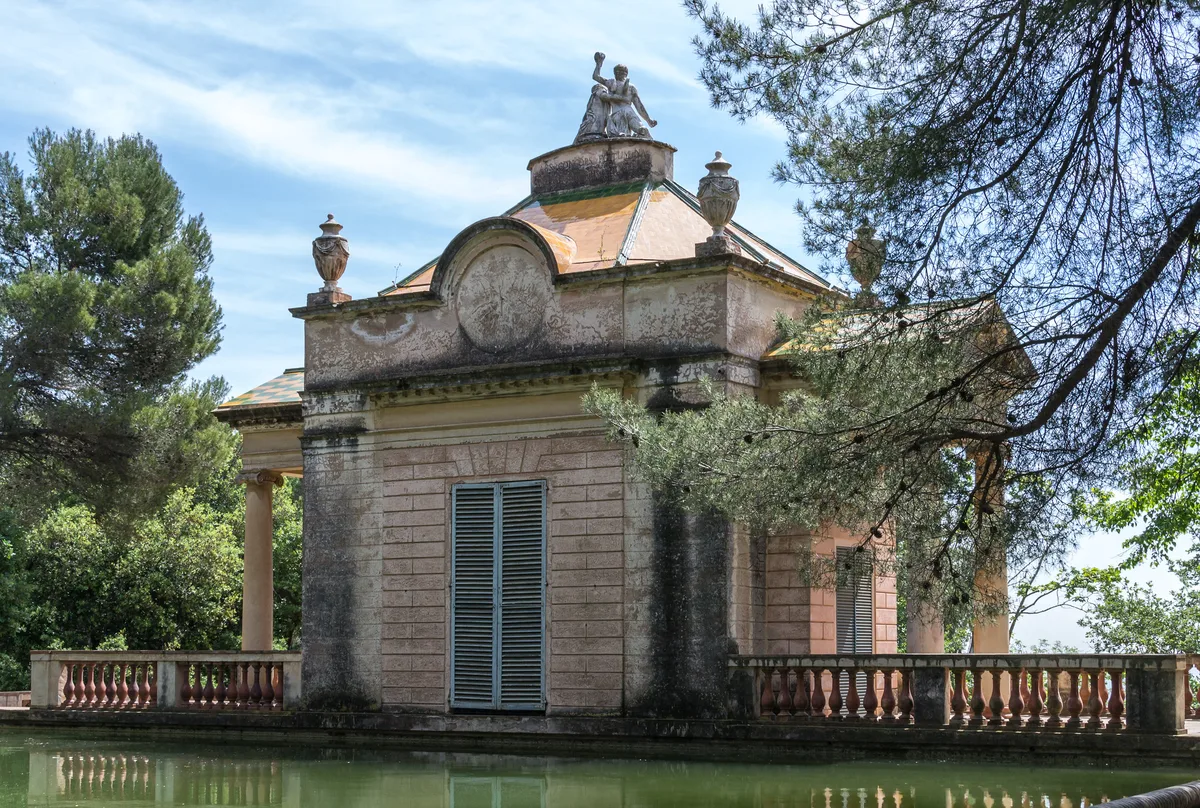
- Intermediate terrace: two Italian-style pavilions with Tuscan columns hold statues of Danae and Ariadne above the maze, beside the great staircase.
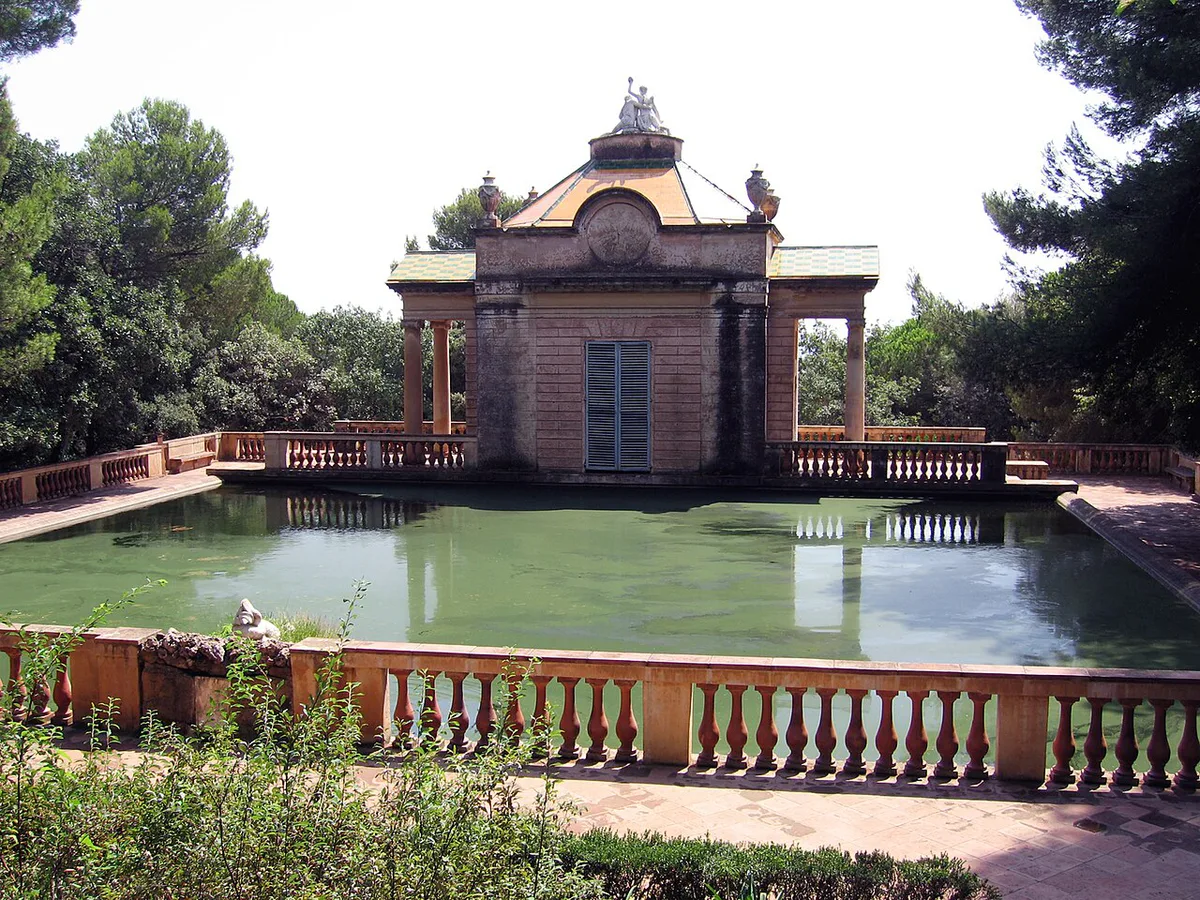
- Upper terrace: a pavilion dedicated to the nine muses faces a large pond. The pavilion is usually closed, though public toilets sit beside it.
- Reservoir: built in 1791 to collect water for the gardens, it is a short climb above the pavilion.
- Romantic garden: a small valley of flower beds, large trees and a waterfall, shadier and quieter than the terraces.
How long to spend and when to go
These time budgets are editorial estimates, not official figures. Arrive at 10:00 for the quietest paths, or choose a weekday to avoid free-day crowds. In winter, the 18:00 closing leaves less daylight, so start early. On hot days, head for the romantic garden, where large trees shade the flower beds. Wet weather suits the park less, since there are no indoor sights.
- Quick, about 1 hour: maze, double staircase and the intermediate terrace.
- Standard, about 2 hours: add the upper terrace, pond and reservoir.
- Slow, about 3 hours: add the romantic garden, a picnic and the playground.
Who it suits: families, couples, photographers and access
Families get the easiest day: picnic tables and a playground sit outside the gate, and a small kiosk by the entrance sells chips, ice cream, sodas and snacks. Children under 5 enter free. Public toilets stand beside the upper pavilion. Stairs and slopes are constant, with a double staircase from the maze to the terrace, another staircase up to the pavilion and a path with occasional steps into the romantic garden. That makes strollers and wheelchairs hard work, so ask the park office about accessible routes before you travel. Photographers get the best view of the maze from the intermediate terrace, which looks down over the hedges.
Mistakes to avoid at the Horta maze
Most disappointments come from logistics, not the garden. A little planning avoids them.
- Taking the wrong metro exit: Arturo Mundet puts you on the park side, while the other lands across the Ronda de Dalt.
- Expecting a central bus link: lines 27, 60, 76 and H4 do not connect with the city centre.
- Arriving near closing: the park shuts at 18:00 from November to March.
- Treating it as a photo stop: the full route takes about 2 hours at a relaxed pace.
- Expecting indoor sights: the manor is closed to visitors, and the pavilions are usually shut.
Combine it with nearby stops
Pair the park with a half-day plan around Horta. Check each stop's opening hours before you build the route.
- Palau de les Heures: more gardens close to the park.
- Plaça Botticelli: street art and graffiti.
- Els Mistos: Claes Oldenburg's giant-matches sculpture.
- CosmoCaixa: a science museum, reached by bus H4.
- Horta neighbourhood: a walk through everyday local streets.
- Lunch: Can Cortada and Can Travi Nou (Catalan farmhouse restaurants), Can Ginesta (paella and tapas) or Summum (run by tourism school students).
More gardens in Spain after Horta
Horta is one stop in our garden guide for Spain. For coastal planting, see Marimurtra on the Costa Brava. Another option is Cap Roig's coastal gardens. Plan the wider region with Costa Brava tourism. For courtyards instead of terraces, try the Palacio de Viana courtyards in Córdoba.
Frequently Asked Questions
What are the best gardens to visit in Barcelona?
Parc del Laberint d'Horta is the oldest, with its cypress maze. Park Güell is the usual comparison, and Parc de la Ciutadella and the Mossèn Costa i Llobera Gardens are other options.
What are some natural attractions in Barcelona?
Parc del Laberint d'Horta backs onto the Collserola ridge and is ringed by Mediterranean forest. Its romantic garden adds a waterfall and old trees within the park.
Bloom-season notes
Optional updates when we add or revise garden guides.
Continue reading
Guides on the same trip