Eden Project Cornwall: Visitor Guide & Planning Tips
Planning the Eden Project in Cornwall? Get a worth-it verdict, ticket and timing checks, travel tips, and how it compares with nearby gardens.
Last updated November 2026: the Eden Project is worth a slot on a Cornwall garden trip if you want large indoor biomes and a rain-proof plan. It sits in a former china clay pit at Bodelva near St Austell and is run by the Eden Project charity. Families and first-time visitors get the most from it, while readers who want only historic or coastal gardens may prefer the options in our Cornwall gardens guide. This guide covers the Cornwall visitor attraction, not the climate courses site or the music results that share the name.

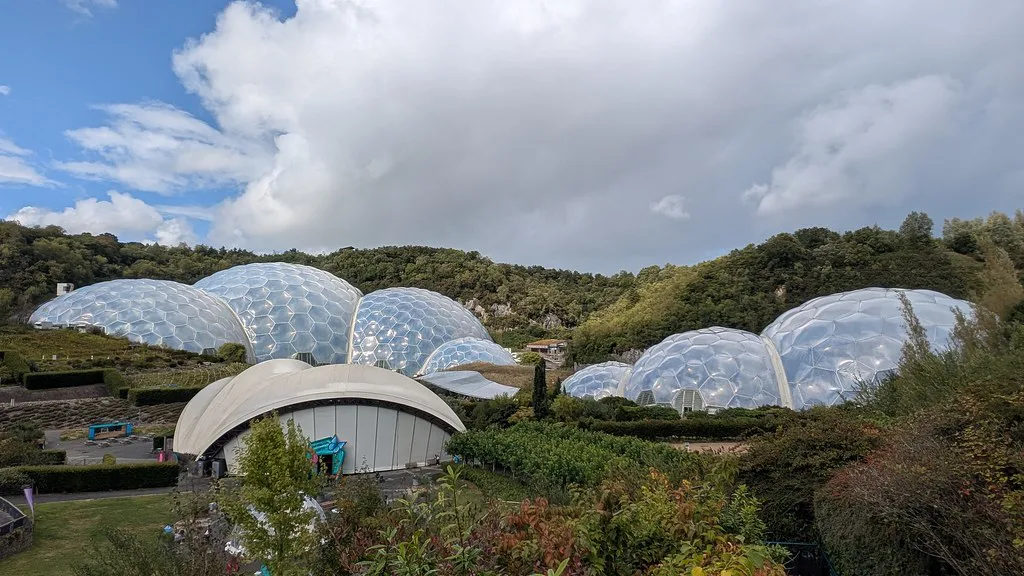
Featured image: Gidzy, CC BY 2.0, via Flickr.
What you'll see at the Eden Project

Two giant biomes anchor the visit. The Rainforest Biome holds tropical planting under cover, so it works in any weather. The Mediterranean Biome shows plants from warmer, drier regions. Outdoor gardens surround both biomes in the clay pit, and those parts are the ones that depend on the weather. Seasonal events and trails change from year to year, so the Eden Project official site is the place to see what is running on your dates.
Eden Project tickets, opening hours and booking

Published prices, opening hours and last-entry times change by season, and no verified figure is quoted here. Check the official site for current rates before you book.
- Compare advance online pricing with on-the-day entry.
- Look for an annual-pass or return-visit option if you may come back.
- Check seasonal closures and the last-entry time for your date.
- Ask about concession or discount-card eligibility before you travel.
How much time to allow

In our editorial estimate, most visitors need at least half a day. Families with children usually fill a full day because the biomes, outdoor gardens and food stops all take time. Plant lovers should leave extra time for slow walking through the Rainforest Biome. On a wet day you can shelter in both biomes, but the outdoor gardens will take less of your time. Official visitor information on the Eden Project site is the better guide for your exact date.
Best time to visit the Eden Project by season
The biomes make Eden a year-round stop, but the season changes what you get from the outdoor gardens and how busy the site feels. Opening hours and special events vary by date, so confirm both on the official site before you set the day.
- Spring (March to May): outdoor planting starts to fill out and the weather is often dry enough for the gardens. It is a good time if you want to pair Eden with a second Cornwall garden on a different day.
- Summer (June to August): the busiest period, especially during school holidays. Arrive near opening time and do the Rainforest Biome first, before the heat and crowds build. Evening concerts have been held on site in past summers, so check the events listing if you want one.
- Autumn (September to October): quieter outside school holidays, with cooler outdoor temperatures that make the warm Rainforest Biome feel like more of a treat.
- Winter (November to February): the biomes keep the visit comfortable, but the outdoor gardens are less appealing and daylight is short. Plan the outdoor parts for the middle of the day. Seasonal programmes run in the festive period; our guide to Christmas at the Eden Project covers what to expect.
As a rule, a weekday outside school holidays gives the most relaxed pace. If your dates are fixed to a school break, book a timed slot early and arrive well before last entry so you are not rushing both biomes.
Getting to the Eden Project and getting around
A car is often the easier way to link Cornwall's gardens, and Bodelva is a short drive from St Austell. A car-free visit is possible but more limited, so check the nearest rail station and bus links on the official site. Parking rules, on-site walking gradients and accessibility details are published there as well. If you need somewhere to stay, start with our Cornwall gardens hub and choose a base near your planned route.
What to wear and pack for a day at Eden
Eden's conditions change sharply within a single visit, which catches many people out. A short checklist helps.
- Layers: the Rainforest Biome is deliberately warm and humid, while the Mediterranean Biome is milder and the outdoor clay pit can be windy and cool. Wear layers you can take off and carry.
- Comfortable, grippy shoes: paths slope throughout the pit and can be slick after rain. Walking between the biomes and the outer gardens adds up over a half-day.
- A light waterproof: Cornwall weather turns quickly, and you will be outdoors between the biomes even on a wet day.
- Water and sun protection: useful in summer, when the open parts of the site have little shade.
- A small bag: you will carry coats on and off as you move between climates, so a light backpack is easier than a large one.
If you are visiting with young children or anyone who finds slopes tiring, build in rest stops and consider a push-free route through the biomes first, saving the outdoor gardens for the end. Mobility access, buggy rules and what you may bring in are set by the site, so read the visitor information on the official page before you travel rather than relying on general advice.
Eden Project vs Cornwall's classic gardens
Eden is an indoor-and-outdoor attraction, while the other gardens are mainly outdoor planting. The table below shows where each one fits. Entry costs and visit times differ, so each garden's own site is the source for those.

| Garden | Type of experience | Best weather | Best for |
|---|---|---|---|
| Eden Project | Giant biomes plus outdoor gardens | Any weather, thanks to the biomes | Families and first-time visitors |
| Lost Gardens of Heligan: Visit Guide, Tickets & Tips | Restored historic gardens and woodland walks | Dry, mild days | Walkers and garden history fans |
| Trebah Garden, Cornwall: Visitor Guide & Planning Tips | Subtropical ravine garden running to a beach | Dry days | Plant lovers and coastal views |
| Glendurgan Garden Guide: Maze, Valley Walk & Durgan Beach | Valley garden with a maze, near the Helford River | Dry, sunny days | Relaxed half-day visits |
| Trelissick Garden: Visitor Guide and Planning Tips | Estate garden with river views | Dry days | Gentle walks |
| Caerhays Castle & Garden: Opening, Tickets, Best Time | Castle garden with woodland planting | Spring and dry days | Seasonal planting displays |
Sample Cornwall garden days

Keep each day to two stops at most. Drive times are not verified here, so check them on a map before you commit.
- Eden plus Heligan: give Eden a full morning and early afternoon, then save Heligan's woodland walks for a separate day if the weather is dry. Squeezing both into one day leaves little time at either.
- Eden on a wet day: use both biomes as your main plan and add a short indoor stop nearby rather than a second garden.
- Coastal day away from Eden: pair Trebah's subtropical ravine with Glendurgan's valley garden for a quieter pace.
- Island option: Tresco Abbey Garden: Visiting Guide, Seasons & Getting There on the Isles of Scilly is a separate trip and does not fit an Eden day. See Visit Isles of Scilly for travel details.

Mistakes to avoid
Most planning errors come from treating all Cornwall gardens as interchangeable. Avoid these:
- Planning outdoor gardens for a wet day and skipping the biomes.
- Arriving close to last entry and rushing both biomes.
- Underestimating walking distances between the biomes and the outdoor areas.
- Skipping the official site check for tickets, hours and access.
- Combining three or more gardens in one day.
- Forgetting that nearby alternatives, such as gardens across the border in Devon, need a longer trip.
Frequently Asked Questions
What is the purpose of the Eden Project?
Eden is a charity-run visitor attraction in Cornwall that uses large biomes and gardens to show plants from different climates. Its wider work covers environmental and educational projects.
Which is better, Eden Project or Lost Gardens of Heligan?
Choose Eden for indoor biomes and a rain-proof day. Choose Heligan for restored historic gardens and woodland walks. Many visitors do both on separate days.
Bloom-season notes
Optional updates when we add or revise garden guides.
Continue reading
Guides on the same trip