Het Loo Palace and Gardens: Dutch Baroque Garden Guide
Plan a visit to Het Loo Palace near Apeldoorn: the Baroque garden, how to combine palace and grounds, getting there, and who should skip it.
Last updated November 2026. Het Loo Palace in Apeldoorn is a 17th-century royal palace, and its formal Baroque gardens, restored in the Dutch Classicist style, are the reason to go. Garden lovers get a symmetrical, enclosed pleasure garden rather than a landscape park. Read on for what to see, how to plan the day, and who should pick a different stop in our guide to Dutch gardens.
Featured image: Zairon, CC BY-SA 4.0, via Wikimedia Commons.
Het Loo at a glance
Building began in 1684 for Stadtholder William III and Mary II of England. For over three hundred years it served as the summer residence of the House of Orange-Nassau. Queen Wilhelmina died there in 1962, and the palace then passed to the State. Today it is a national museum, and the gardens are the strongest draw for horticultural travelers.
- Location: near Apeldoorn, Netherlands.
- Style: Dutch Baroque palace set between court and garden.
- Garden: a symmetrical Great Garden with parterres, fountains, basins and statues.
- Best for: formal garden fans and readers of royal history.
- Opening hours, ticket prices and garden-only access: listed on the official Paleis Het Loo site.
What to see: the palace and the Baroque Great Garden
Start with the layout. Het Loo sits entre cour et jardin, meaning between a paved court and a private garden behind the house. Sources describe the court as lightly screened from the road by a wrought-iron grill, with a box-bordered green at its center.
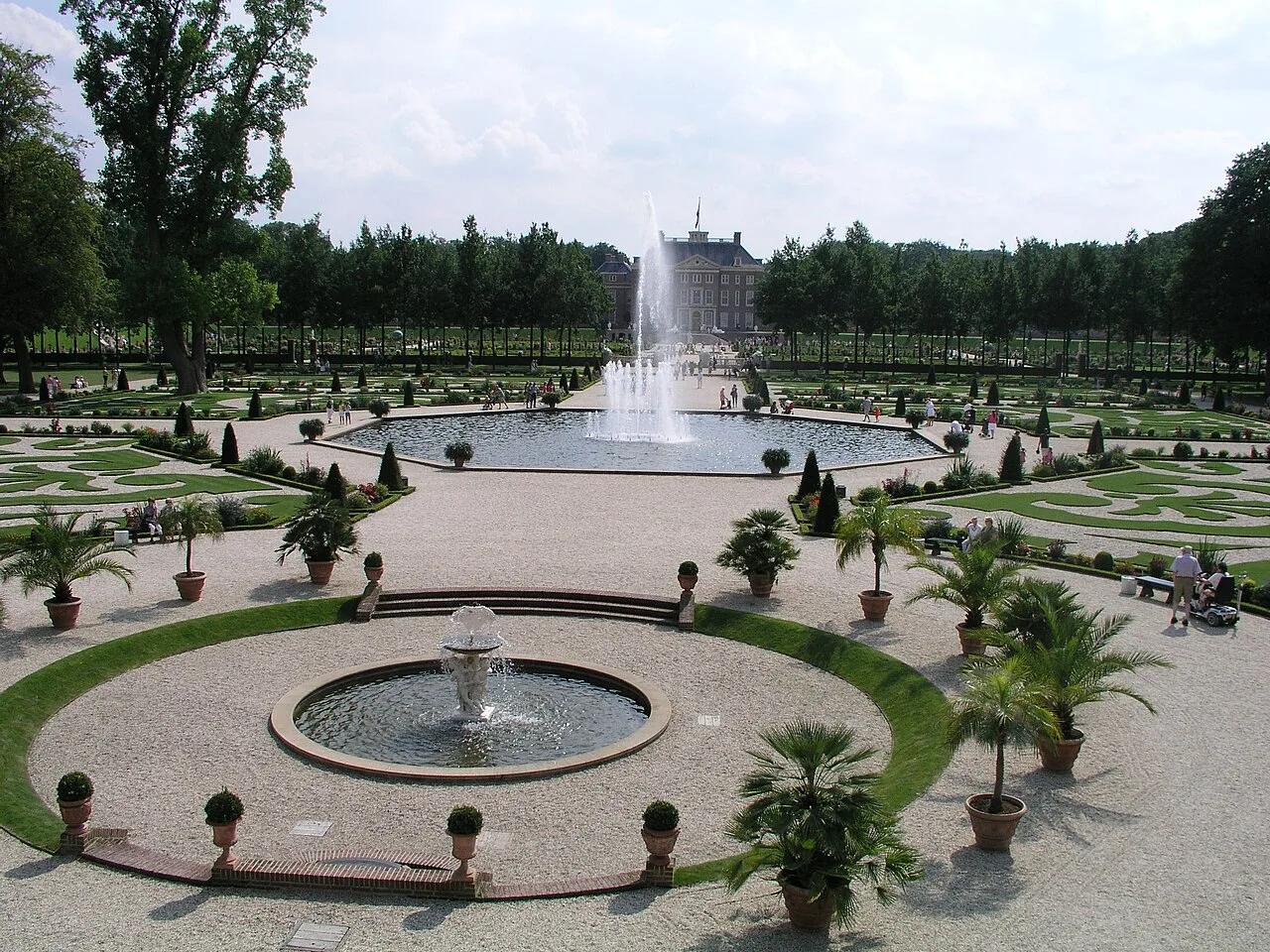
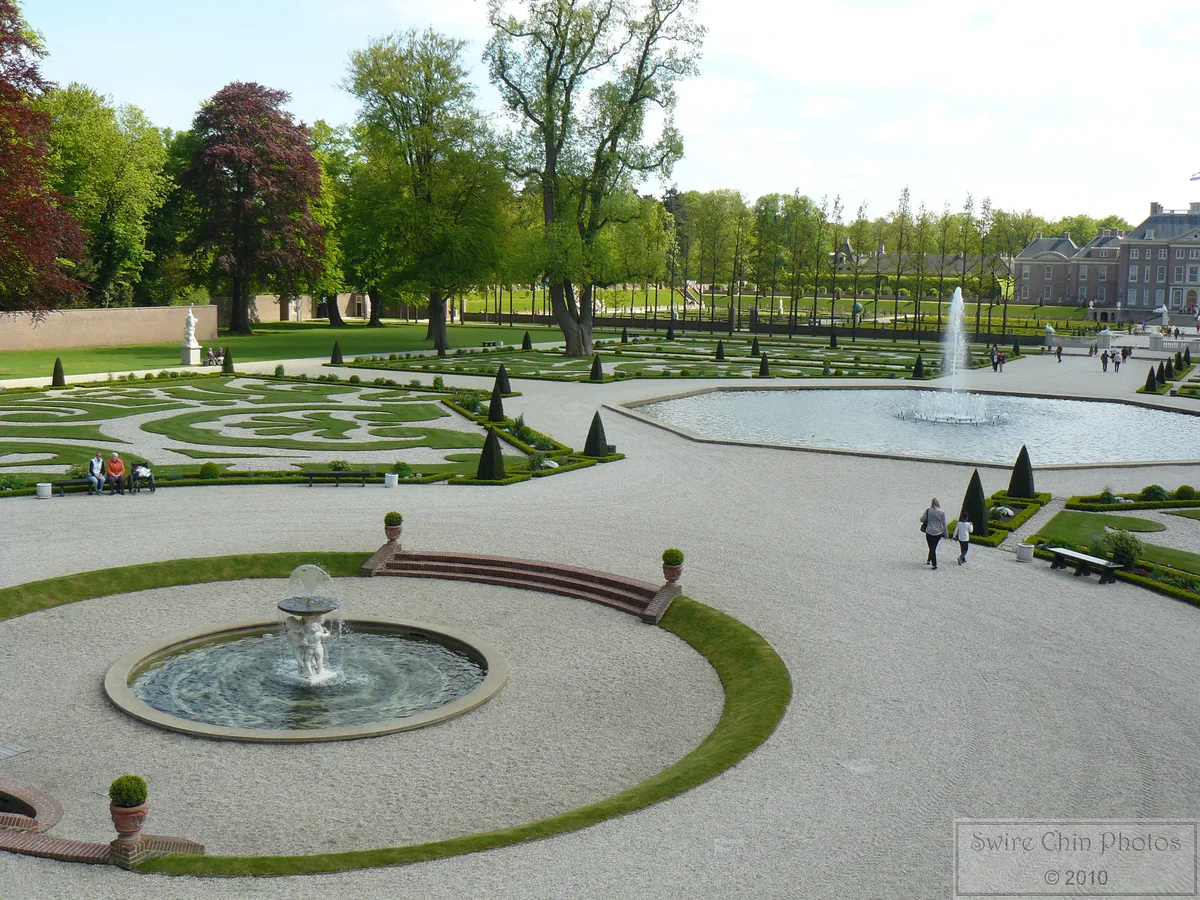
Behind the palace lies the Great Garden. Its design follows the Baroque formula associated with André Le Nôtre: perfect symmetry, an axial layout, radiating gravel walks, and parterres with fountains, basins and statues. Claude Desgotz, Le Nôtre's nephew, is credited with the garden design, working alongside Daniel Marot.

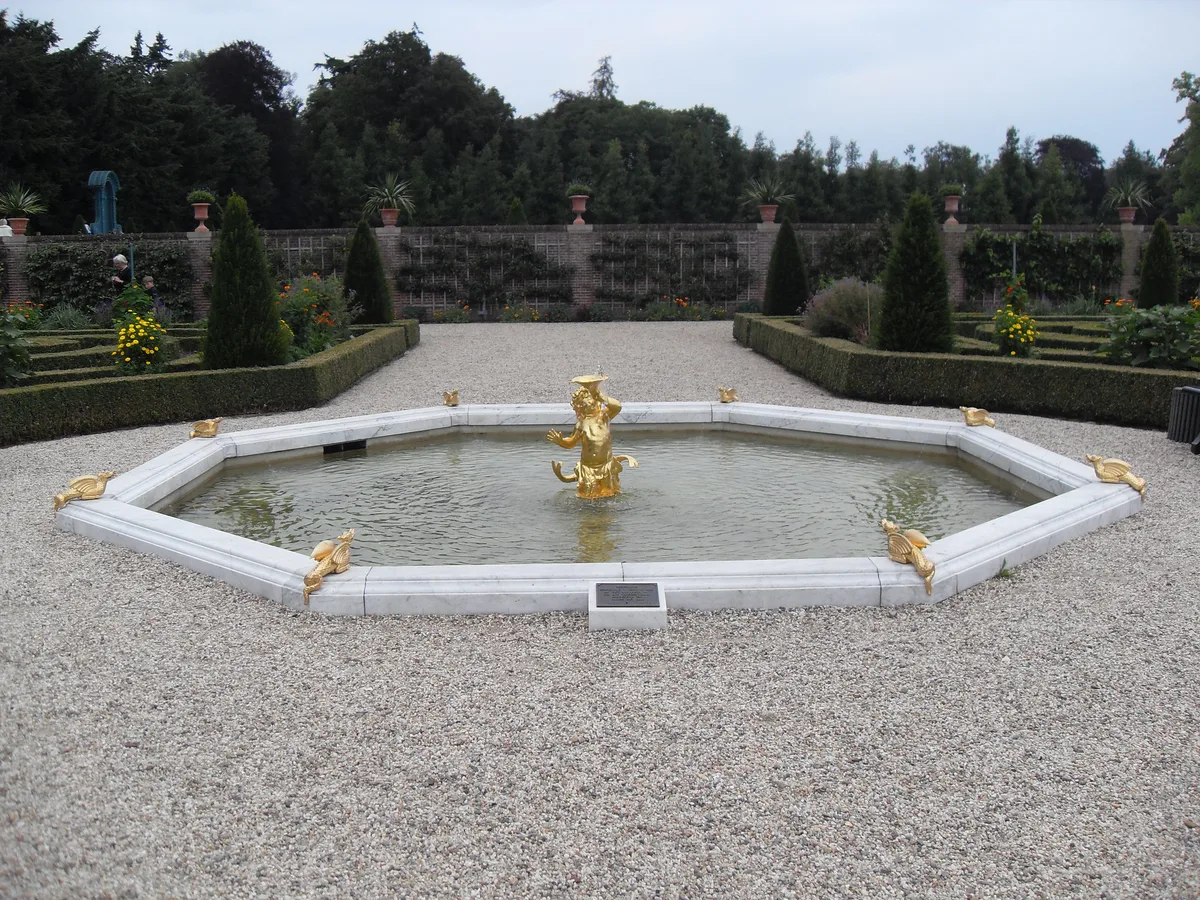
Expect an enclosed space with conservative rectangular beds, bounded by raised walks. Visitors move between the Lower Garden and the Upper Garden, and the official site shows the current route. Orange trees once stood in wooden boxes and wintered in an Orangery, a detail that links the planting to the House of Orange-Nassau.
People sometimes call Het Loo the Versailles of Holland. Garden writers argue the comparison shows more differences than similarities. Het Loo is smaller in ambition, tucked into woodland, and meant as a stadholder's retreat rather than a king's show of power.
The gardens you see today are a modern reconstruction. Restoration of the lost gardens began in 1970 and finished in time for the 1984 tricentennial. New brickwork and trelliswork were raw at first and continue to mellow.
How to plan your time at Het Loo Palace

Treat palace and garden as one decision. If time is short, put the Great Garden first and the museum rooms second. Garden-first suits dry weather, since the parterres and raised walks are the part you cannot see from inside.
In rain, reverse the order. Spend the wet hours in the palace museum, then walk the garden when the sky clears. Rain is realistic here, and a restaurant terrace on the grounds appears in one visitor's wet-day photographs.
A half day covers the highlights. A full day suits readers who want the museum collections and slow garden walks. Official guidance on how long visits take is better than any estimate we could give.
Tickets, opening hours and booking
Prices, opening days and garden-only access change by season. Check the official Paleis Het Loo site for current figures before you book. Winter hours often differ from summer ones, so confirm what is open if you travel in November or December.

Getting there and getting around
Het Loo lies near Apeldoorn, so Apeldoorn is the natural base. From Amsterdam, Utrecht or Arnhem, plan a train to Apeldoorn followed by a local transfer to the palace. Timetables and bus options belong to the operators, so check NS and the regional bus company for the current route.
Staying overnight in Apeldoorn makes sense if you want the garden in morning light. Day trips from Amsterdam or Utrecht work for a single focused visit. Parking and accessibility details sit on the official site.
Is it worth it? Who should skip it
Het Loo rewards people who like formal design, clipped symmetry and royal context. Readers who prefer loose planting will find it rigid. Use this table to decide.

| Visitor type | Best fit | Suggested focus | Skip if |
|---|---|---|---|
| Formal Baroque garden fans | Strong | Great Garden parterres, fountains and raised walks | You want naturalistic planting |
| History and royal-family fans | Strong | Palace museum and Orange-Nassau story | You only want outdoor time |
| Families | Moderate | Garden walks plus a short museum visit | Children dislike formal grounds |
| Limited time or mobility | Depends | Garden terrace views; check access first | Terrain details are unclear |
Pair it with other Dutch gardens
For another castle-and-park day out, try Kasteel de Haar's park. Plant collectors may prefer Arboretum Trompenburg: Visitor Guide and Best Season in place of formal design. Hortus Botanicus Leiden: Visitor Guide, Tickets and Tips offers a historic botanic garden instead.
Skip Het Loo if you want modern planting. Head to the Mien Ruys gardens for that. Piet Oudolf's garden in Hummelo shows a naturalistic style that contrasts sharply with Baroque symmetry. For a multi-stop trip, Tuinen van Appeltern (Bloemenpark Appeltern): Visitor Guide offers many themed gardens in one place.
Bloom-season notes
Optional updates when we add or revise garden guides.
Continue reading
Guides on the same trip